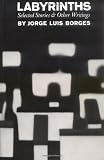
Jorge Luis Borges Books in Order: Complete Bibliography & Best Starting Points
Jorge Luis Borges's complete bibliography in order — from Ficciones and Labyrinths to The Aleph and Dreamtigers. Best starting points for new readers.
Jorge Luis Borges is the most influential short story writer of the twentieth century — not in terms of readership (he never reached mass audiences) but in terms of his effect on literary fiction globally. The Argentine writer who spent most of his career as a librarian in Buenos Aires invented several of the key techniques of postmodern fiction, demonstrated that philosophical ideas could be the subject of narrative art, and gave permission to a generation of Latin American writers to combine European modernism with their own traditions.
He wrote almost entirely in short forms — stories, essays, poems, parables — and his total fiction output is compact. He is among the easiest major writers to read completely.
Where to Start
Ficciones (1944)
The essential starting point. Seventeen stories that established Borges’s method: using fiction as a vehicle for philosophical exploration, with rigorous logical precision and elegant prose. Begin with “The Library of Babel” (a universe that is an infinite library) or “The Garden of Forking Paths” (a detective story about branching time). Each story is dense enough to reward multiple readings; the first reading may leave you uncertain what happened, the second will reveal the architecture.
Labyrinths (1962)
The comprehensive English-language anthology — stories drawn from Ficciones and El Aleph, plus essays and parables. The better choice for a reader who wants the fullest introduction in one volume. Includes “The Aleph” (a point in space from which the entire universe is visible), “Death and the Compass” (a detective story about a detective who reasons himself to his own death), and “The Garden of Forking Paths.”
Complete Works (Major Collections)
| Title | Year | Note |
|---|---|---|
| A Universal History of Iniquity | 1935 | First fiction; criminals; biographical |
| Ficciones | 1944 | Essential; best starting point |
| El Aleph | 1949 | Second major collection; equally essential |
| Dreamtigers | 1960 | Prose poems and sketches; more personal |
| Labyrinths | 1962 | Best English anthology; includes both collections |
| A Personal Anthology | 1961 | Borges’s own selection |
| The Book of Sand | 1975 | Later stories; darker |
The Master of the Philosophical Short Story
Jorge Luis Borges is one of the most influential and original figures in twentieth-century literature, the Argentine master who transformed the short story into a vehicle for philosophical and metaphysical inquiry of extraordinary depth and concision. Borges worked primarily in the short form, and his great achievement was to make the short story a vehicle for philosophical and metaphysical exploration, compressing into a few pages ideas and inventions of extraordinary depth, originality, and resonance. His stories are not conventional narratives but philosophical fictions, intellectual labyrinths that explore the deepest questions of metaphysics, knowledge, time, and infinity through narratives of remarkable compression and elegance. This transformation of the short story into a form of speculative philosophy is among Borges’s greatest contributions to literature, and it established a new possibility for fiction, the story as philosophical inquiry, that has influenced writers throughout the world. Borges never wrote a novel, working instead in the compressed forms of the short story and the essay, and his influence on world literature, achieved through these short philosophical fictions, has been immense. For readers, Borges offers the extraordinary achievement of the philosophical short story, fictions of remarkable compression and depth that explore the deepest questions of metaphysics, knowledge, and infinity. The master of the philosophical short story, Borges transformed the short form into a vehicle for philosophical and metaphysical inquiry, compressing into a few pages ideas and inventions of extraordinary depth and originality, and his influence on world literature, achieved through these short philosophical fictions, has been immense.
Labyrinths, Infinity, and the Library
The distinctive imaginative world of Borges’s fiction is built from a set of recurring images and ideas, the labyrinth, infinity, the library, the mirror, that have become emblematic of his work and that embody his profound metaphysical preoccupations. Borges’s fiction is populated by a set of recurring and emblematic images, the labyrinth, the infinite library, the mirror, the endless book, the garden of forking paths, and these images embody his deepest preoccupations with infinity, time, knowledge, and the nature of reality. The labyrinth, perhaps his most characteristic image, embodies his fascination with complexity, with the structures of reality and thought, and with the human search for meaning and order in a bewildering universe. Infinity, another central preoccupation, runs through his fiction in the forms of endless libraries, infinite books, and unending series, embodying his fascination with the infinite and its paradoxes. The library, most famously in his story of an infinite library containing all possible books, embodies his preoccupation with knowledge, totality, and the relationship between language and reality. These recurring images, the labyrinth, infinity, the library, the mirror, give Borges’s fiction its distinctive imaginative world and embody his profound metaphysical preoccupations with infinity, time, knowledge, and reality. For readers, these emblematic images are central to the Borges experience, the labyrinths, infinities, and libraries that embody his metaphysical vision. Labyrinths, infinity, and the library are the emblematic images of Borges’s fiction, recurring throughout his work and embodying his profound preoccupations with infinity, time, knowledge, and the nature of reality, and they give his fiction its distinctive and unmistakable imaginative world.
Fiction as Metaphysical Inquiry
At its heart, Borges’s fiction is a form of metaphysical inquiry, using the resources of the story to explore the deepest questions of philosophy, the nature of reality, time, identity, knowledge, and infinity, with a depth and originality that have made him one of the most intellectually influential of modern writers. Borges used fiction as a means of philosophical and metaphysical exploration, treating the short story as a vehicle for inquiry into the deepest questions of metaphysics, and his stories are, in effect, philosophical thought experiments rendered as narrative, exploring the nature of reality, time, identity, knowledge, and infinity. This use of fiction as metaphysical inquiry is the defining characteristic of his work, for his stories are less concerned with character and conventional narrative than with ideas, with the exploration of profound philosophical questions through the resources of fiction. Borges’s metaphysical fictions explore such questions as the nature of time and its possible structures, the relationship between language and reality, the nature of identity and the self, the paradoxes of infinity, and the possibility of knowledge, treating these profound questions with a depth, originality, and elegance that have made him one of the most intellectually influential of modern writers. His fiction has shaped not only literature but philosophy and thought, for his metaphysical inquiries, rendered as elegant and compressed fictions, have influenced thinkers as well as writers throughout the world. For readers, Borges offers fiction as metaphysical inquiry, the exploration of the deepest philosophical questions through narratives of extraordinary depth and elegance. Fiction as metaphysical inquiry is the defining characteristic of Borges’s work, which uses the resources of the story to explore the deepest questions of reality, time, identity, knowledge, and infinity, with a depth and originality that have made him one of the most intellectually influential of modern writers.
Reading Order Recommendations
New to Borges: Labyrinths → Ficciones → El Aleph.
Stories only: Ficciones → El Aleph → The Book of Sand.
Short introduction: Read “The Library of Babel” and “The Garden of Forking Paths” from Ficciones, then “The Aleph” from El Aleph.
Frequently Asked Questions
What is the best Borges book to start with?
Ficciones (1944) is the standard starting point — seventeen stories that established Borges's essential method: rigorous fictional explorations of philosophical puzzles about time, identity, infinity, and the nature of reality. Labyrinths is the more comprehensive English-language anthology and includes stories from both Ficciones and El Aleph — for a reader who wants the broadest introduction in one volume, it is the better choice. Begin with 'The Garden of Forking Paths' or 'The Library of Babel' — either story demonstrates in a few pages what Borges does.
What is Ficciones about?
Ficciones (1944) collects seventeen stories — many of which present themselves as reviews, essays, or critiques of fictional books, blurring the line between literature and commentary. The stories explore philosophical ideas (infinity, circular time, the labyrinth as metaphor for existence) through precise, elegant narratives. 'The Library of Babel' imagines a universe that is an infinite library containing every possible book; 'The Garden of Forking Paths' uses a detective story to explore the idea that time branches at every moment into all possible futures. The stories are short (rarely more than ten pages) and immensely dense.
What is the difference between Ficciones and Labyrinths?
Ficciones is a specific collection published in Spanish in 1944, containing seventeen stories in two parts. Labyrinths is an English-language anthology first published in 1962 that draws on multiple Borges collections (including Ficciones and El Aleph) and includes some essays and parables. Labyrinths is the broader introduction and is what most English-language readers encounter first; it includes some of Borges's finest stories from El Aleph, including 'The Aleph' itself. Both are excellent starting points; Labyrinths is simply more comprehensive.
Why is Borges so influential?
Borges invented or anticipated several of the key moves of postmodern fiction — the unreliable narrator, the fiction-within-fiction, the text that comments on its own status as text, the story structured as an argument, the fiction that uses genre (detective story, fantasy, adventure) as a vehicle for philosophical ideas. Writers as different as Umberto Eco, Italo Calvino, John Barth, Thomas Pynchon, and David Foster Wallace have cited him as essential. He also demonstrated that Latin American literature could be the peer of European modernism — a permission that made García Márquez and the boom of the 1960s and 1970s possible.