Where to Start with Jorge Luis Borges: A Reading Guide
Where to start with Jorge Luis Borges — whether to begin with Ficciones, Labyrinths, or The Aleph. A complete reading guide to Borges's short stories and essays.
Jorge Luis Borges (1899–1986) is the most influential short story writer of the twentieth century and the founding figure of the Latin American literary tradition that produced García Márquez, Vargas Llosa, and Cortázar. His stories — densely philosophical, perfectly constructed, built around ideas that have haunted the imagination of every subsequent serious writer — are among the most significant contributions to world literature in any form. He never wrote a novel; his influence, operating entirely through short prose, is nevertheless enormous.
Where to Start
The Essential Collection: Ficciones (1944)
The best first Borges — the collection that contains his most celebrated stories and the clearest demonstration of his method. ‘The Garden of Forking Paths’ (a spy story that is simultaneously a meditation on time and choice), ‘The Library of Babel’ (the universe as an infinite library), ‘Pierre Menard, Author of the Quixote’ (a story about a man who rewrites Don Quixote word for word and whose version is a different book), ‘Tlön, Uqbar, Orbis Tertius’ (a conspiracy to invent a world) — these are among the most formally original stories in any literature, and they are short: each can be read in under an hour, and each contains more ideas than most novels.
The English Compilation: Labyrinths (1962)
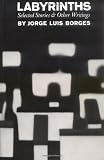
The best starting point for English-language readers — an anthology assembled from Ficciones and The Aleph, plus essays and parables, that has served as the standard introduction to Borges for decades. The selection includes all the essential stories and is widely available; many readers encounter Borges first in this form. The translators (Yates, Irby, and others) are reliable; the editorial introduction is useful context. If Ficciones is not available, begin here.
The Aleph and Other Stories (1949)
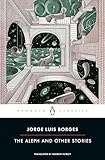
The companion collection to Ficciones — containing the title story (‘The Aleph’, in which a point in space contains all other points, and the narrator, descending into a cellar, sees the entire universe simultaneously) and ‘The Garden of Forking Paths’ in a different translation. The title story is the most personal of Borges’s major stories — the Aleph belongs to a man whose beloved has died and who refuses to give it up — and the most emotionally direct. The collection as a whole is somewhat less concentrated than Ficciones but contains several equally brilliant stories.
Why Ficciones Is the Ideal First Book
For a reader new to Jorge Luis Borges, Ficciones is the ideal first book because it is his most famous collection and the fullest expression of his distinctive genius, the transformation of the short story into a vehicle for philosophical and metaphysical inquiry. Ficciones gathers some of his most celebrated stories, intellectual labyrinths that explore infinity, time, knowledge, and the nature of reality through narratives of extraordinary compression, elegance, and originality. As an entry point, it offers the fullest expression of Borges’s genius, the philosophical short story, the dazzling invention, and the exploration of the deepest metaphysical questions in a few luminous pages. It welcomes the newcomer with its extraordinary stories, its intellectual depth, and its elegant brevity, drawing the reader into Borges’s labyrinthine imagination. It is his most famous collection and the one that best represents his genius, so that the new reader encounters Borges at his most characteristic. For the newcomer, then, Ficciones is the natural and ideal starting point.
What to Expect as a New Reader
As a new reader, you can expect Ficciones to be a collection of extraordinary, compressed, and intellectually dazzling short stories, philosophical fictions of remarkable originality. You can expect philosophical short stories, for Borges transformed the short story into a vehicle for metaphysical inquiry, and his stories are intellectual labyrinths exploring the deepest questions of reality, time, and knowledge. You can expect extraordinary compression and elegance, for Borges packs into a few luminous pages ideas and inventions of remarkable depth, originality, and beauty. You can expect his emblematic images and ideas, the infinite library, the garden of forking paths, the labyrinth, the endless book, which embody his preoccupations with infinity, time, and reality. You can expect fiction that is less concerned with character and conventional plot than with ideas, with the exploration of profound philosophical questions through narrative. Expect, in short, a collection of extraordinary, compressed, and intellectually dazzling philosophical short stories, a brilliant introduction to Borges’s genius.
Going Deeper After Your First Book
Once Ficciones has introduced you to Borges’s genius, the reader who wishes to go deeper can explore his other collections, particularly The Aleph and Other Stories, and the wider range of his work, which continues his transformation of the short story into philosophical and metaphysical inquiry. His other celebrated collection continues his exploration of infinity, time, identity, and reality through stories of the same compression, elegance, and originality, while his essays and poetry extend his characteristic preoccupations into other forms. Reading these after Ficciones deepens your appreciation of Borges’s distinctive genius, the philosophical short story, the dazzling invention, and the exploration of the deepest metaphysical questions that mark his work. His characteristic preoccupations, infinity, labyrinths, time, and the nature of reality, run through his work, and the reader who has been dazzled by Ficciones will find them across his stories. Building your reading journey through Borges’s work is a matter of following his philosophical fictions from Ficciones into his other collections. The reader who begins with Ficciones and continues through his work will encounter one of the most original and influential writers of the twentieth century.
Reading Borges
Borges’s stories are unlike anything else in fiction — they operate as philosophical thought experiments narrated in the form of first-person accounts, literary criticism, historical summaries, or reviews of non-existent books. The pleasure of reading him is the pleasure of following a rigorous imagination to conclusions that feel both inevitable and impossible. Each story poses a question — what would it mean if the universe were an infinite library? what if a map became as large as the territory it mapped? what if we could remember everything? — and pursues that question without concession.
The best approach is to read each story slowly, without rushing toward conclusion, and to stop when an idea seems to lead somewhere interesting and think about where it goes. Borges rewards readers who bring their own philosophical curiosity; readers who approach his stories as conventional narrative will find them merely puzzling.
Frequently Asked Questions
Where should I start with Borges?
Ficciones (1944) is the best starting point — the collection that contains Borges's most celebrated stories, including 'The Garden of Forking Paths', 'The Library of Babel', and 'Pierre Menard, Author of the Quixote'. The stories are short (most are under twenty pages) and immediately engaging; the ideas — infinite libraries, stories that branch in all possible directions, literary forgery as a philosophical act — are among the most original in twentieth-century fiction. Labyrinths is an equally good starting point: it is an English-language compilation of stories from Ficciones and The Aleph and is the collection most often encountered first by English readers.
What is The Library of Babel about?
'The Library of Babel' (in Ficciones, 1944) is a story of about ten pages in which the narrator describes the universe as an infinite library, containing all possible combinations of the twenty-five orthographic symbols, in which every book that could ever exist already exists somewhere — including the true catalogue of all the books, and the book that is the perfect answer to every question. The narrator is a librarian who has spent his life in the library; the story is Borges's meditation on infinity, on the relationship between order and chaos, and on the human search for meaning in a universe that contains everything including the denial of everything. One of the most philosophically rich stories in world literature.
Is Borges difficult to read?
Borges's stories are difficult in the sense of being philosophically dense — each story is typically built around a single idea (infinity, recursion, circular time, the relationship between a map and the territory it represents) that is pursued with rigorous imagination. The prose itself is not difficult: it is clear, elegant, and precise, and the stories are short. The difficulty is conceptual: readers who want conventional plot and character will be frustrated; readers who are comfortable with ideas as the primary subject of fiction will find him immediately engaging and endlessly rewarding. The best approach is to read each story twice: once for the narrative surface and once for the philosophical structure.
How has Borges influenced literature?
Borges's influence on world literature is incalculable — he is arguably the most influential short story writer of the twentieth century. His invention of stories built around philosophical paradoxes (the infinite library, the map that covers the territory, the man who remembers everything) opened possibilities in fiction that the novelists of magic realism (García Márquez, Calvino) and postmodernism (Pynchon, DeLillo, Eco) all drew on. His practice of writing stories in the form of essays about fictional books (reviews, critical introductions) directly influenced the metafictional experiments of the late twentieth century. He never wrote a novel; it is remarkable that a career entirely composed of short prose produced such global literary influence.