Where to Start with Isabel Allende: A Reading Guide
Where to start with Isabel Allende — whether to begin with The House of the Spirits, Eva Luna, or Daughter of Fortune. A complete reading guide to her novels.

Isabel Allende (born 1942) is the most widely read Latin American novelist in the world — a Chilean writer whose combination of magical realism, multigenerational family saga, feminist politics, and narrative warmth has made her work beloved across five continents. A niece of Chilean president Salvador Allende (assassinated in the 1973 coup), she wrote her first novel as a letter to her dying grandfather after fleeing Pinochet’s Chile for Venezuela, and the political violence of that history runs through everything she has written. She has since published more than twenty novels and is among the most translated authors in the Spanish language.
Where to Start: The House of the Spirits (1982)
The essential Allende — and one of the foundational texts of Latin American magical realism. The Trueba family saga moves through most of the twentieth century in Chile: Esteban Trueba, the reactionary landowner who builds his fortune and his power through domination and violence; his wife Clara, who levitates, communicates with the dead, and writes clairvoyant diary entries; their daughter Blanca, who loves the peasant Pedro Tercero across the class divide; and Blanca’s daughter Alba, who is caught in the political terror of the Pinochet era. Allende alternates between Esteban’s unreliable first-person narration and a third-person narration using Clara’s diaries.
The novel’s magic (the spirits, the clairvoyance, the family’s supernatural gifts) and its brutal political history (the coup, the torture, the disappeared) coexist with complete conviction. Written as a letter to her dying grandfather: it has that directness and that love.
Eva Luna (1987)
Allende’s most picaresque and most celebratory novel — the story of Eva Luna, a girl born to a maidservant who discovers she is an extraordinary storyteller and uses that gift to survive and eventually to flourish. Eva is an orphan, a servant, a fugitive, a telenovela writer; she moves through a landscape of political upheaval, passionate love affairs, and vivid community with the resilience and narrative intelligence of Scheherazade. The novel is Allende’s love letter to storytelling itself — its power to transform experience, to give meaning to suffering, to connect people across every divide.
Looser in structure than The House of the Spirits but equally generous in spirit and incident.
Daughter of Fortune (1998)
Allende’s most historically adventurous novel — set during the California Gold Rush of 1849, following Eliza Sommers, a young Chilean woman raised by a British merchant family in Valparaíso, who stows away on a ship to California to follow the man she loves. The novel traces Eliza’s picaresque journey through the lawless, multicultural world of Gold Rush California — a world where women were scarce and independent women nearly unheard of — as she discovers that the man she followed has disappeared and that freedom is what she actually came for. Rich historical detail, warm characterisation, and Allende’s characteristic narrative momentum.
Why The House of the Spirits Is the Ideal First Book
For a reader new to Isabel Allende, The House of the Spirits is the ideal first book because it is her acclaimed debut and the fullest expression of her distinctive gifts, the sweeping family saga, the magical realism, and the blend of the personal and the political across the history of a Latin American nation. The House of the Spirits follows several generations of a family through love, conflict, and political upheaval, weaving the magical and the everyday in the tradition of Latin American magical realism. As an entry point it is ideal, for it is the novel that made her name and a stunning showcase of her storytelling gifts. It welcomes the newcomer with its sweeping saga, its vivid characters, and its blend of magic, passion, and political history, drawing the reader into her rich and immersive fiction. It is her most famous work and the one that best represents her gifts, so the new reader encounters Allende at her most characteristic. For the newcomer, then, The House of the Spirits is the natural and ideal starting point.
What to Expect as a New Reader
As a new reader, you can expect The House of the Spirits to be a sweeping, vivid, and emotionally rich family saga. You can expect a multigenerational saga, for the novel follows several generations of a family through love, conflict, and the turbulent history of their country. You can expect magical realism, for Allende blends the magical and the everyday, in the tradition of Latin American magical realism, with characters of supernatural gifts woven into a realistic world. You can expect vivid characters and passionate storytelling, for the novel is full of memorable, larger-than-life figures and intense emotion. You can expect the blend of the personal and the political, for the family’s story unfolds against, and is swept up in, the political upheavals of their nation. You can expect lush, immersive, emotionally engaging prose. Expect, in short, a sweeping, vivid, and emotionally rich family saga, a captivating introduction to Allende’s gifts.
Going Deeper After Your First Book
Once The House of the Spirits has introduced you to Allende’s gifts, the reader who wishes to go deeper can explore her many other novels, which continue her sweeping storytelling, her vivid characters, and her blend of the personal, the historical, and sometimes the magical. Her large and varied body of work includes further family sagas, historical novels spanning continents and centuries, and stories rich in passion, memory, and the lives of women, all marked by her immersive, emotionally engaging style. Reading these after The House of the Spirits deepens your appreciation of Allende’s distinctive gifts, the sweeping sagas, the vivid characters, and the blend of the personal and the political. Her characteristic strengths run through her work, and the reader who has loved The House of the Spirits will find them across her novels. Building your reading journey through Allende is a matter of following her storytelling from The House of the Spirits into her many other novels. The reader who begins here and continues will find one of the most beloved and prolific storytellers in contemporary literature.
Reading Isabel Allende
Allende’s fiction is built on two foundations that might seem incompatible: the extravagance of Latin American oral storytelling tradition (magic, coincidence, passion at operatic scale) and the precise, politically serious consciousness of a woman who has watched military dictatorship destroy a country and its people. Her novels are warm, generous, and deeply felt; they are also politically explicit and historically grounded. Begin with The House of the Spirits — it is her masterpiece and the most complete statement of her vision. Read Eva Luna for the purest celebration of narrative itself; read Daughter of Fortune for the most adventurous historical range.
Frequently Asked Questions
Where should I start with Isabel Allende?
The House of the Spirits (1982) is both the most widely celebrated and the essential starting point — the multigenerational saga of the Trueba family in Chile across the twentieth century, from the patriarchal landowner Esteban Trueba through his clairvoyant wife Clara and granddaughter Alba, told with the magical realism Allende absorbed from García Márquez and the feminist political consciousness entirely her own. It is the most complete statement of her themes and her most fully achieved novel. Eva Luna is the best alternative for readers who want Allende's most inventive storyteller-as-protagonist narrative; Daughter of Fortune for her most historically adventurous.
What is The House of the Spirits about?
The House of the Spirits (1982) is a multigenerational family saga spanning most of the twentieth century in an unnamed South American country (clearly Chile). Narrated alternately by the aging patriarch Esteban Trueba and his granddaughter Alba, it follows the Trueba family — Clara the clairvoyant, whose powers persist across generations; Blanca, who loves a man of the wrong class; and Alba, who is swept into the political violence of the Pinochet era. Allende wrote the novel as a letter to her dying grandfather, and the book's combination of magical realism (levitating girls, precognitive dreams) with the brutal political history of Chile gives it a double force: the magical and the historical illuminate each other.
What is Eva Luna about?
Eva Luna (1987) is narrated by Eva Luna herself — a storyteller of extraordinary gifts, born to a maidservant in an unnamed South American country, who makes her way through a series of extraordinary adventures and encounters before becoming a writer of telenovelas. The novel is Allende's celebration of the oral storytelling tradition she grew up with and the power of narrative to transform experience; Eva is a character who survives everything by making it into a story. It is looser and more picaresque than The House of the Spirits but equally rich in incident, character, and the particular Latin American landscape of political upheaval, passionate love, and vivid community.
How does Isabel Allende relate to Gabriel García Márquez?
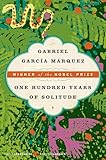
Allende was accused, when The House of the Spirits was published, of imitating García Márquez's One Hundred Years of Solitude — both are multigenerational Latin American family sagas that use magical realism. Allende has always acknowledged García Márquez's influence while insisting on the differences: her novel is centred on women's experience and explicitly feminist in its politics in a way that García Márquez's is not. The comparison is apt in terms of form and mode but misleading about content: Allende's concerns — the political violence against women under patriarchy and dictatorship — are distinctly her own.