Where to Start with Gabriel García Márquez: A Reading Guide
Where to start with Gabriel García Márquez — whether to begin with One Hundred Years of Solitude, Love in the Time of Cholera, or No One Writes to the Colonel.
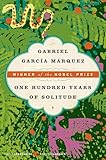
Gabriel García Márquez (1927–2014) is the defining Latin American novelist — the writer who, more than any other, made the literature of the continent visible to the world. His invention of what became known as ‘magical realism’ — the deployment of miraculous events in a realistic fictional world with a tone of matter-of-fact reporting — transformed not only Latin American fiction but the novel globally. He won the Nobel Prize in Literature in 1982.
Where to Start
The Best Entry Point: No One Writes to the Colonel (1961)
The best first García Márquez. This short novella — about a retired colonel who has waited fifteen years for a pension, whose only resource is a fighting cock, and whose pride will not allow him to admit defeat — demonstrates every essential quality of García Márquez’s mature style without the magical elements that can initially disorient new readers. The town’s unnamed political violence is present as background; the colonel’s dignity in poverty is the foreground. At 90 pages, it can be read in an afternoon; its final line is one of the most satisfying in Latin American literature.
The Great Romance: Love in the Time of Cholera (1985)
García Márquez’s most human novel and the best second step for most readers. Florentino Ariza’s fifty-three-year wait for Fermina Daza — from their thwarted adolescent courtship, through her marriage to the doctor Juvenal Urbino, through Florentino’s hundreds of affairs maintained in tribute to his one love — is both a romantic epic and a meditation on what romantic love actually is. The novel’s final chapters, in which the aging Florentino and Fermina finally have their time on a boat sailing the Magdalena River under a quarantine flag, are simultaneously the most romantic and most ironic thing García Márquez ever wrote.
The Masterpiece: One Hundred Years of Solitude (1967)
The most important novel in Spanish since Don Quixote. The Buendía family’s hundred years in the town of Macondo — its founding by José Arcadio Buendía, its growth, its repetitions (seven Aurelianos, each displaying the same qualities as the last), its eventual dissolution — is told in a tone of biblical gravity that makes the miraculous events (a girl who ascends to heaven while folding sheets, a plague of insomnia that causes the inhabitants to forget what things are called) sound as unremarkable as the weather. García Márquez said he wanted the novel to sound like an old woman telling a story — an oral quality that Gregory Rabassa’s translation preserves magnificently. The novel that defined magical realism and changed the novel globally.
Who should approach it first: Readers who have already read and enjoyed either No One Writes to the Colonel or Love in the Time of Cholera. Readers prepared for a novel with a large cast, repeated names, and no reliable chronological anchor. Readers comfortable with the miraculous as unremarkable.
The General in His Labyrinth (1989)
García Márquez’s late historical novel follows Simón Bolívar, the liberator of South America, on the final journey down the Magdalena River before his death — a last, exhausted attempt to reassemble the political unity he spent his life building and that is already disintegrating around him. The novel is García Márquez’s meditation on political failure, on the impossibility of sustaining revolutionary achievement, and on the relationship between historical greatness and physical decline. More straightforwardly historical than his earlier fiction; the most politically explicit of his major works.
Why No One Writes to the Colonel Is a Fine First Book
For a reader new to Gabriel García Márquez, the Nobel Prize-winning Colombian novelist, No One Writes to the Colonel is a fine first book because it is a short, perfectly crafted novella that introduces his distinctive gifts, the precise yet lyrical prose, the deep humanity, and the engagement with dignity, poverty, and hope, in an accessible form. No One Writes to the Colonel follows a retired colonel who has waited many years for a pension that never comes, in a spare, moving, and quietly powerful short novel. As an entry point it is ideal, for it is more concise and accessible than his great sprawling masterpiece while displaying his gifts. It welcomes the newcomer with its moving story, its precise prose, and its deep humanity, drawing the reader into his distinctive vision. It is a fine representation of his gifts in a brief form, so the new reader encounters García Márquez at his most accessible. For the newcomer, then, No One Writes to the Colonel is an excellent starting point.
What to Expect as a New Reader
As a new reader, you can expect No One Writes to the Colonel to be a spare, moving, and quietly powerful short novel. You can expect a moving story, for the novella follows a retired colonel who has waited many years for a pension that never arrives. You can expect precise yet lyrical prose, for García Márquez writes with both exactness and beauty. You can expect deep humanity, for the novella renders the colonel’s dignity, poverty, and stubborn hope with profound compassion. You can expect engagement with dignity, poverty, waiting, and hope. You can expect a spare, concentrated form, more restrained than his sprawling masterpiece. You can expect emotional power achieved through understatement. You can expect a brief, accessible, and deeply affecting read. Expect, in short, a spare, moving, and quietly powerful short novel, a fine introduction to García Márquez’s gifts.
Going Deeper After Your First Book
Once No One Writes to the Colonel has introduced you to García Márquez’s gifts, the natural next step is his masterpiece, One Hundred Years of Solitude, the great novel of magical realism that chronicles many generations of a family in a mythical town, in a dazzling, sweeping, and unforgettable work. His other acclaimed novels, including his beloved novel of enduring love and his other works, continue his lyrical prose, his magical realism, and his deep humanity, while his stories distill his gifts in shorter form. Reading these after No One Writes to the Colonel deepens your appreciation of García Márquez’s distinctive gifts, the precise yet lyrical prose, the magical realism, and the deep humanity. His characteristic qualities run through his work. Building your reading journey through García Márquez is a matter of following his fiction from No One Writes to the Colonel into One Hundred Years of Solitude and his other novels. The reader who begins here and continues will encounter one of the supreme novelists of the twentieth century, and a Nobel laureate.
Reading García Márquez
The central quality of García Márquez’s prose — accessible and fluid on the surface, philosophically serious beneath it — rewards rereading. The first reading of One Hundred Years of Solitude is often bewildering; the second is revelatory. The magical events are not interruptions of the real but expressions of it: the miraculous is the form that the novel’s emotional logic takes. Once the reader has absorbed this convention, which is the convention of Latin American oral storytelling rather than European realist fiction, García Márquez becomes one of the most pleasurable writers in the canon.
Frequently Asked Questions
Where should I start with Gabriel García Márquez?
No One Writes to the Colonel (1961) is the best starting point — a short (90 pages), perfectly constructed novella about a retired colonel who has waited fifteen years for a pension that never arrives. It is immediately accessible, emotionally powerful, and demonstrates García Márquez's combination of political realism and dark comedy without the magical elements that can initially disorient new readers. After the novella, the natural progression is Love in the Time of Cholera, then One Hundred Years of Solitude.
Should I start with One Hundred Years of Solitude?
One Hundred Years of Solitude (1967) is García Márquez's masterpiece and the most important novel in Spanish since Don Quixote, but it is not the best starting point. The novel's complexity — its cast of characters sharing repeated names across seven generations, its matter-of-fact deployment of magical events — can be disorienting for readers new to García Márquez's style. Begin with No One Writes to the Colonel (for the political realism) or Love in the Time of Cholera (for the romantic scope), then approach One Hundred Years of Solitude with confidence.
What is Love in the Time of Cholera about?
Love in the Time of Cholera (1985) follows Florentino Ariza, who falls in love with Fermina Daza as an adolescent and waits fifty-three years — through her marriage to another man, his own hundreds of casual affairs, and the aging of both — for his chance. The novel is an argument about the nature of romantic love: whether it is primarily a story we tell about ourselves or an experience with objective reality; whether it can be sustained across decades of separation and change. García Márquez called it his best novel; it is certainly his most human.
What is No One Writes to the Colonel about?
No One Writes to the Colonel (1961) is a novella about a seventy-five-year-old retired colonel in an unnamed Colombian town who has waited fifteen years for a military pension that never arrives. His only asset is a fighting cock that he believes will win the money his family needs to survive. The novella is a study in dignity, poverty, and hope maintained against all evidence; its final line — an obscenity from the colonel who has held himself together with such care — is one of the most cathartic endings in Latin American literature.