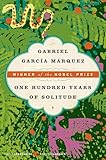
Editors Reads Verdict
The greatest novel in Spanish and one of the most important of the twentieth century. García Márquez's magical realism is not a technique but a way of seeing — and the world he sees is devastating and beautiful.
What We Loved
- The most celebrated novel in Latin American literature — Nobel Prize 1982
- Magical realism as García Márquez practises it is a philosophical as well as aesthetic mode
- The cycle of history and human solitude is rendered with profound originality
- Every page contains sentences of extraordinary beauty
Minor Drawbacks
- The recurring names in the Buendía family require patient tracking
- The tone of detached wonder can frustrate readers wanting conventional narrative tension
- The translation quality varies — the Gregory Rabassa version is considered definitive
Key Takeaways
- → Magical realism renders the extraordinary as ordinary and the ordinary as extraordinary
- → History is cyclical — the same passions, mistakes, and illusions recur across generations
- → Solitude is the fundamental human condition and the cost of individual consciousness
- → Political violence and exploitative capitalism are as natural as the weather — and as destructive
- → Memory and forgetting are not opposites but partners in the human relationship with time
| Author | Gabriel García Márquez |
|---|---|
| Publisher | Harper Perennial |
| Pages | 448 |
| Published | May 30, 1967 |
| Language | English |
| Genre | Fiction, Magical Realism, Literary Fiction |
| Difficulty | Advanced |
| Best For | Readers of literary fiction interested in the most celebrated novel in Spanish, Latin American history, and magical realism. |
How One Hundred Years of Solitude Compares
One Hundred Years of Solitude at a glance against 3 similar books readers weigh alongside it.
| Book | Author | Rating | Best for |
|---|---|---|---|
| One Hundred Years of Solitude (this book) | Gabriel García Márquez | ★ 4.6 | Readers of literary fiction interested in the most celebrated novel in Spanish, |
| Beloved | Toni Morrison | ★ 4.5 | Serious readers of literary fiction with the patience for challenging, |
| Crime and Punishment | Fyodor Dostoevsky | ★ 4.8 | Classic Fiction |
| Siddhartha | Hermann Hesse | ★ 4.6 | Anyone at a turning point in their life or curious about Eastern philosophy, |
The Novel That Changed Literature
When Gabriel García Márquez published One Hundred Years of Solitude in 1967, it changed what people understood a novel could do. It had a specific formal technique — magical realism, the matter-of-fact blending of the supernatural and the ordinary — but it was far more than a technique. It was a worldview: a way of seeing Latin American history, Colombian reality, and human existence that the Spanish-language tradition had been developing for decades and that García Márquez crystallised with unprecedented power.
The novel won the Nobel Prize for Literature in 1982. The Nobel committee called it “the supreme expression of a whole continent’s life.”
The Buendía Family
The novel follows the Buendía family through seven generations in the fictitious Colombian town of Macondo, from its founding by the patriarch José Arcadio Buendía through its destruction in a final apocalyptic wind. Each generation of Buendías repeats, with variations, the same patterns of ambition, isolation, obsessive love, revolutionary passion, and solitude. The repetition of names across generations — José Arcadio, Aureliano, in endless alternation — is not a bug but a feature: García Márquez is demonstrating the cyclical nature of history.
Magical Realism
The magical events in the novel — a priest who levitates when he drinks hot chocolate, a beautiful woman who ascends to heaven while hanging laundry, a plague of insomnia that causes the entire town to forget language — are narrated in the same matter-of-fact tone as births, deaths, and political coups. This evenness of tone is the formal achievement of magical realism: by declining to distinguish between the magical and the real, García Márquez challenges the reader to question what “real” means.
History and Solitude
The novel is profoundly historical: it maps the arc of Colombian history from the Spanish colonial era through the banana plantation period and the United Fruit Company massacres of the 1920s. The historical events are rendered mythically, which paradoxically makes them more vivid than conventional historical narrative.
The title word — solitude — is the novel’s deepest theme. Each Buendía is ultimately alone: unable to fully communicate with others, trapped in the repetitions of their inherited nature, reaching toward connection and finding it always just out of reach.
The Manuscript and the Publisher
The story of how One Hundred Years of Solitude reached its publisher has become one of the central myths of twentieth-century literature. García Márquez wrote the novel in eighteen months in Mexico City, during which time his family ran out of money, his wife Mercedes managed the household finances by buying food on credit, and he wrote in a locked room that he emerged from only to deliver pages. When the manuscript was finished, they could only afford to mail half of it to the Buenos Aires publisher Editorial Sudamericana. Mercedes pawned the family’s hair dryer and other belongings to send the second half.
The manuscript arrived at the desk of the editor Francisco Porrúa in 1966. Porrúa recognized it immediately as something extraordinary and published it in June 1967. The first edition of 8,000 copies sold out within weeks.
The Translation Question
The English translation by Gregory Rabassa, published in 1970, is widely considered one of the great translations of the twentieth century. Rabassa translated without reading ahead — he began at the first sentence and translated in sequence, which he argued preserved the original’s quality of surprise. García Márquez, who read English well, said Rabassa’s translation was better than the original.
The translation opens with one of the most celebrated first sentences in literature: “Many years later, as he faced the firing squad, Colonel Aureliano Buendía was to remember that distant afternoon when his father took him to discover ice.”
The Nobel Prize and Its Context
The Nobel Prize in Literature 1982, awarded to García Márquez “for his novels and short stories, in which the fantastic and the realistic are combined in a richly composed world of imagination, reflecting a continent’s life and conflicts,” arrived fifteen years after the novel’s publication and consolidated a reputation that was already international. In his Nobel Lecture, García Márquez spoke about the reality of Latin America — a reality he argued was itself so extreme that it required no invention, only accurate description — and made the argument that magical realism was not a technique for avoiding reality but a method for rendering it accurately.
The novel has sold more than fifty million copies worldwide and has been translated into forty-six languages. It is the most widely translated and sold work of Spanish-language literature, and its influence on subsequent fiction — from Latin American magical realism to the entire tradition of contemporary literary fantasy — is incalculable. Toni Morrison, Salman Rushdie, Isabel Allende, Laura Esquivel, and dozens of other major writers have cited it as the book that changed what they understood fiction could do.
Final Verdict
One Hundred Years of Solitude is one of the genuinely indispensable novels of the twentieth century. It requires patience and rewards it with one of the most extraordinary fictional experiences available.
Our rating: 4.6/5 — A masterpiece that repays every ounce of effort it requires. García Márquez at the peak of world literature.
Reading Guides
- Books Like One Hundred Years of Solitude: Magical Realism and Epic Family Sagas
- Books Like Anna Karenina: Society, Passion, and the Cost of Following Your Heart
- Books Like Beloved: Historical Fiction About Trauma, Memory, and Survival
- Books Like Doctor Zhivago: Love, Art, and Survival Under History
- Books Like Don Quixote: Idealism, Illusion, and the Madness of Literature
- Books Like Everything Is Illuminated: Memory, the Holocaust, and Comedy as a Vehicle for Horror
- Books Like Homegoing: Multigenerational African Diaspora and the Long Shadow of Slavery
Frequently Asked Questions
What is "One Hundred Years of Solitude" about?
Gabriel García Márquez's Nobel Prize-winning epic follows the Buendía family through seven generations in the mythical town of Macondo, blending magical and real with luminous prose.
Who should read "One Hundred Years of Solitude"?
Readers of literary fiction interested in the most celebrated novel in Spanish, Latin American history, and magical realism.
What are the key takeaways from "One Hundred Years of Solitude"?
Magical realism renders the extraordinary as ordinary and the ordinary as extraordinary History is cyclical — the same passions, mistakes, and illusions recur across generations Solitude is the fundamental human condition and the cost of individual consciousness Political violence and exploitative capitalism are as natural as the weather — and as destructive Memory and forgetting are not opposites but partners in the human relationship with time
Is "One Hundred Years of Solitude" worth reading?
The greatest novel in Spanish and one of the most important of the twentieth century. García Márquez's magical realism is not a technique but a way of seeing — and the world he sees is devastating and beautiful.
Ready to Read One Hundred Years of Solitude?
Check the current price on Amazon.
Check Price on Amazon (paid link)Prices and availability are subject to change. See Amazon for current price.
Review last updated: