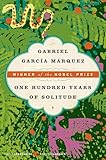
Gabriel García Márquez was a Colombian Nobel laureate whose novels One Hundred Years of Solitude and Love in the Time of Cholera defined magical realism and transformed world literature.
Gabriel García Márquez is the writer most responsible for establishing magical realism as a recognised literary mode. One Hundred Years of Solitude, published in 1967, traces seven generations of the Buendía family in the fictional Colombian town of Macondo — a history that encompasses civil wars, banana company imperialism, and supernatural phenomena that the novel’s characters accept with the same equanimity they apply to ordinary events. The prose, in Gregory Rabassa’s English translation, is luminous, and the novel’s capacity to hold the political and the mythological in simultaneous focus is extraordinary.
Love in the Time of Cholera, published in 1985, works on a smaller scale — a love story that unfolds over more than fifty years, beginning in unrequited adolescence and returning, improbably, in old age. The novel’s argument — that love is less a feeling than a commitment, and that it can survive virtually everything including time — is made with such sensuousness and patience that it becomes genuinely moving. García Márquez’s prose style, unhurried and precise, is at its most accessible here.
Some readers find the scale and circularity of One Hundred Years of Solitude overwhelming rather than epic, and García Márquez has been criticised for the way women function in his fiction — often as symbols or catalysts rather than fully independent agents. But as a writer of sentences, of place, and of the relationship between history and myth, he has few equals in 20th-century literature.
A Giant of World Literature
Gabriel García Márquez was one of the most important and beloved writers of the twentieth century, a Colombian novelist whose work brought Latin American literature to global prominence and whose name became virtually synonymous with magical realism. Awarded the Nobel Prize in Literature, “Gabo,” as he was affectionately known across the Spanish-speaking world, created fiction of extraordinary imaginative richness, blending the everyday and the fantastical, the political and the poetic, into a singular vision. His influence on literature worldwide has been immense, and his major works are counted among the essential masterpieces of modern fiction.
One Hundred Years of Solitude
His masterpiece, One Hundred Years of Solitude, is rightly counted among the most celebrated novels ever written, a multigenerational saga of the Buendía family in the mythical town of Macondo that has sold tens of millions of copies and been translated into dozens of languages. In it, García Márquez perfected the technique of magical realism, narrating extraordinary, impossible events — ascensions, plagues of insomnia, ghosts, a rain that lasts for years — in the same matter-of-fact tone as ordinary life. The novel is at once an intimate family chronicle and a sweeping allegory of Latin American history, and it remains the cornerstone of his reputation.
The Magic of the Ordinary
The hallmark of García Márquez’s fiction is the seamless fusion of the magical and the mundane. In his world, the miraculous is treated as unremarkable and the ordinary as wondrous, dissolving the boundary between reality and fantasy in a way that captures something true about the texture of life, memory, and belief. This technique was not mere whimsy but a profound way of representing a reality in which myth, history, and the everyday are inextricably entwined, and it gave him a means of expressing the richness and strangeness of his culture and his continent.
Love and Solitude
Beyond the fantastical elements, García Márquez was a profound chronicler of human emotion, and his great recurring themes are love, solitude, time, and memory. Love in the Time of Cholera, his other most beloved novel, is a sweeping meditation on love in all its forms across a lifetime, demonstrating that his genius extended well beyond the magical. His characters are driven by passion, longing, and loneliness, and his exploration of the persistence of love and the inevitability of solitude gives his work an emotional depth that resonates universally, beneath the dazzling surface of his invention.
Journalist and Storyteller
Before and alongside his fiction, García Márquez was an accomplished journalist, and the influence of reportage is felt in the concrete, observant quality of his prose. He drew deeply on the oral storytelling traditions of his childhood, particularly the tales of his grandmother, who recounted the most fabulous things in a perfectly calm voice — the very technique he would make famous. This grounding in both journalism and folk narrative gave his writing its distinctive blend of vivid realism and boundless imagination, the marriage of the credible and the marvellous.
Reading Gabriel García Márquez Today
García Márquez’s impact on world literature is difficult to overstate; he inspired generations of writers across the globe and helped define how the world reads Latin American fiction. For newcomers, One Hundred Years of Solitude is the essential, if demanding, masterwork, while Love in the Time of Cholera and the shorter Chronicle of a Death Foretold offer superb entry points into his vision. Decades after their publication, his novels retain their power to enchant and move readers, and Gabriel García Márquez endures as one of the supreme storytellers in the history of literature.
A Lasting Enchantment
What ensures García Márquez’s permanence is the sheer enchantment of his storytelling, the way his fiction casts a spell that readers carry with them for life. His seamless blending of the real and the magical, his profound understanding of love and solitude, and the luminous beauty of his prose combine to create works that feel timeless and inexhaustible. Generations of readers around the world have fallen under the spell of Macondo and the Buendías, and his influence continues to shape how writers and readers alike imagine the possibilities of fiction. He remains not only a Nobel laureate but one of the most genuinely beloved storytellers literature has ever produced.
More to Explore
Of Love and Other Demons, In Evil Hour, and Leaf Storm deserve a place on any serious Gabriel García Márquez shelf.
Reading Guides