Best Magical Realism Books: The Essential Reading List
The best magical realism novels from García Márquez and Borges to Toni Morrison and Salman Rushdie — books where the magical and the mundane coexist without explanation, and the result is more real than realism.
Magical realism is one of the few literary modes that is both precisely named and widely misunderstood. The magic in magical realism is not fantasy — it does not create a secondary world governed by invented rules. It is not surrealism — it does not prioritise the irrational over the rational. It is magic that is accepted by the characters as part of the fabric of ordinary life, and it is almost always rooted in specific cultural conditions: the Latin American tradition in which García Márquez worked, the African-American oral traditions that Morrison drew on, the colonial histories that shape Rushdie’s India.
The best magical realism novels are not primarily about the magic. The magic is the method by which the novels access truths that realism cannot reach — about memory, about history, about the way communities sustain themselves through story, about the violence that official accounts of the past cannot accommodate.
The Essential Novels
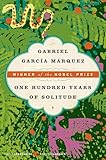
One Hundred Years of Solitude — Gabriel García Márquez (1967)
The novel that defined the genre for international readers and has never been surpassed within it. The Buendía family of Macondo — a fictional Colombian town — is followed through seven generations from its founding to its apocalyptic end. The magic is everywhere and unremarked: a woman who ascends to heaven while hanging the laundry, a plague of insomnia that causes the inhabitants to forget the names of things, José Arcadio Buendía working out the rotation of the earth from alchemical experiments in his workshop.
García Márquez wrote the first sentence of the novel in a flash of inspiration (the old colonel standing before the firing squad remembering his father showing him ice) and then turned around and drove back from a holiday to write the rest. The Nobel Prize committee called it “the great mythological novel of Latin America.” Neither description is an overstatement.
Beloved — Toni Morrison (1987)
The magical elements of Beloved are precise and deliberate: the ghost of Sethe’s dead daughter, killed to save her from slavery, haunts the family’s house and eventually manifests as a physical presence — a young woman who appears at the door claiming to be Beloved. Morrison uses this apparition to do something realism cannot: give the dead daughter a body, a voice, and a place in the narrative, making the act of infanticide and the system that made it necessary impossible to reduce to abstract history.
Beloved won the Pulitzer Prize and is the novel that confirmed Morrison as one of the most important American writers of the twentieth century. It is demanding — Morrison’s prose is dense and her chronology is deliberately fragmented — but it is among the most important novels in this list.
The House of the Spirits — Isabel Allende (1982)
Allende’s first novel follows the Trueba family through four generations of Chilean history — from the early twentieth century to the Pinochet coup of 1973 — through the eyes of Clara, a clairvoyant girl who can move objects with her mind and whose magical gifts exist alongside the brutal political violence of Chilean history. The novel is consciously modelled on García Márquez but finds its own voice in the feminist perspective that Morrison and García Márquez both lack, and in the specificity of Chilean political history.
The Wider Canon
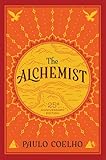
The Alchemist — Paulo Coelho (1988)
The most widely read novel in this list globally — it has sold over 65 million copies, is the most translated book by a living author, and has been adopted as a self-help text as much as a work of fiction. Santiago, an Andalusian shepherd boy, follows an omen to Egypt to find treasure. The magic of the novel is parabolic rather than folkloric: Coelho is writing allegory, not García Márquez-style magical realism, and the magic is explicitly symbolic rather than culturally embedded.
Its status in the canon is contested — literary critics tend to find it schematic where García Márquez is complex — but its reach and its readers are real, and it serves as an accessible entry point for readers new to magical realism as a mode.
Like Water for Chocolate — Laura Esquivel (1989)
The most immediately accessible of the Latin American magical realism novels. Tita, the youngest daughter of a Mexican family, is forbidden by tradition to marry — she must care for her mother until the mother dies. Her only outlet is cooking, and her emotions literally infuse the food she prepares: her tears in the wedding cake cause the guests to weep uncontrollably; her desire for the man she loves makes the rose-petal quail cause the dinner guests to feel overwhelming longing.
The premise is simple and the execution is warm rather than dark. An ideal starting point for readers who find García Márquez’s scale daunting.
Magical Realism Beyond Latin America
Midnight’s Children — Salman Rushdie (1981)
Rushdie’s Booker Prize-winning novel is the most important work of magical realism in English outside Morrison. Saleem Sinai is born at the exact midnight of India’s independence and finds that all children born in that midnight hour have telepathic powers. The novel’s magic is a metaphor for the hopes and contradictions of postcolonial India, rendered with the verbal exuberance and historical density that characterises Rushdie’s entire body of work.
The Graveyard Book — Neil Gaiman (2008)
A novel in which a toddler is raised by the dead residents of a graveyard — they teach him the skills they can offer: fading, dreamwalking, and Freedom of the Graveyard. The magic here is folkloric and British rather than Latin American, but the mode is recognisably magical realist: the supernatural is accepted without explanation, and its relationship to the social world of the living (from which Bod is isolated) is the subject of the novel.
Reading Recommendations
New to magical realism: The Alchemist → Like Water for Chocolate → One Hundred Years of Solitude. This moves from the most accessible to the most demanding.
Literary reader: Beloved → One Hundred Years of Solitude → The House of the Spirits. These three represent the mode at its most ambitious.
Global perspective: One Hundred Years of Solitude → Beloved → Midnight’s Children. Latin America, the American South, postcolonial India — three versions of the same mode in three very different political contexts.
Frequently Asked Questions
What is magical realism?
Magical realism is a literary mode in which magical or supernatural elements are presented matter-of-factly within an otherwise realistic narrative — without explanation, apology, or the sense that the magic is exceptional. The term originates with the Cuban writer Alejo Carpentier and was popularised internationally through Latin American literature, particularly Gabriel García Márquez's One Hundred Years of Solitude. The magic in magical realism is cultural and social as much as supernatural: it belongs to a worldview in which the boundaries between the ordinary and the extraordinary are permeable.
What is the best magical realism novel for beginners?
One Hundred Years of Solitude by Gabriel García Márquez is the canonical starting point — it invented the popular conception of the genre and remains its definitive example. For readers who find García Márquez's density challenging, Like Water for Chocolate by Laura Esquivel is more immediately accessible (its magical premise is simple: the protagonist's emotions literally infuse the food she cooks). The Alchemist by Paulo Coelho is the most widely read magical realism novel globally, though scholars sometimes classify it separately as allegorical fiction.
Is Toni Morrison magical realism?
Morrison is often classified as magical realism, though she preferred the term 'Black American magical realism' or simply described her technique as drawing on African-American oral and spiritual traditions. Beloved is her most clearly magical work — the ghost of Sethe's dead daughter manifests as a physical presence — but Morrison's magic is grounded in historical trauma rather than in the folkloric traditions of Latin American magical realism. The category fits, imperfectly, and the imperfection is instructive.
What is the difference between magical realism and fantasy?
In fantasy, the magical elements create a secondary world or operate by their own internal rules, which the narrative usually explains. In magical realism, the magical elements exist within the real world, are accepted without explanation by the characters, and function as part of the social and cultural fabric of the narrative. The distinction is one of attitude as much as content: fantasy marvels at the magical; magical realism treats it as ordinary.
Are there magical realism novels outside Latin America?
Many. Toni Morrison (US), Salman Rushdie (India/UK), Angela Carter (UK), and Günter Grass (Germany) are among the most important practitioners outside the Latin American tradition. Haruki Murakami's fiction operates in a similar register, though he is sometimes categorised separately as surrealist fiction. The magical realism mode has become genuinely global, adapted to the cultural and political conditions of many different literary traditions.