Best Latin American Literature: Essential Reading List
The best Latin American literature — from One Hundred Years of Solitude and Ficciones to Love in the Time of Cholera and The Aleph. Essential novels and stories.
Latin American literature of the twentieth century is one of the great bodies of fiction in any language — produced in the period between the 1940s and the 1980s by a generation of writers in Argentina, Colombia, Mexico, Peru, and Cuba who combined European modernism with indigenous storytelling traditions, oral culture, and the specific history of colonialism, revolution, and dictatorship to create something entirely their own.
The tradition has its foundations in Borges’s philosophical short fiction and culminates in García Márquez’s Nobel Prize-winning magical realism, but it includes a range of styles and concerns that the label ‘magical realism’ only partly captures.
The Defining Works
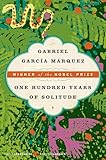
One Hundred Years of Solitude — Gabriel García Márquez (1967)
The novel that gave Latin American literature its global readership. Seven generations of the Buendía family in the fictional Colombian town of Macondo, from founding to extinction — García Márquez’s narrative invention is relentless, his prose is like music, and the magical elements (the insomnia plague that erases memory, the rise of butterflies around the beauty Mauricio Babilonia, the woman who ascends to heaven while folding laundry) are woven into the narrative as naturally as the political upheavals and the banana company’s arrival. The Nobel Committee in 1982 cited it as the most important novel of the second half of the twentieth century.
Ficciones — Jorge Luis Borges (1944)
The other indispensable Latin American work — though it is a collection of short stories rather than a novel, its influence is comparable to García Márquez’s. Borges’s seventeen stories are rigorous philosophical constructions: “The Library of Babel” (a universe that is an infinite library containing every possible book), “The Garden of Forking Paths” (a detective story about branching time), “Tlön, Uqbar, Orbis Tertius” (a fictional country that begins to become real). Borges invented or anticipated most of the techniques of postmodern fiction and is the most cited influence of the Latin American Boom and beyond.
The Accessible Masterwork
Love in the Time of Cholera — Gabriel García Márquez (1985)
García Márquez’s most accessible novel and a profound love story — Florentino Ariza, who falls in love with Fermina Daza as a teenager, waits fifty-one years for her to be free from her marriage to the respectable Dr. Juvenal Urbino. The novel is about the nature of love at different ages, about the relationship between love and illness (cholera and love share their symptoms), and about what it means to keep faith with a feeling for half a century. More immediately accessible than One Hundred Years of Solitude, and its best-known equal.
The Short Fiction
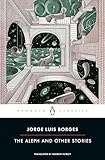
The Aleph and Other Stories — Jorge Luis Borges (1949)
Borges’s second major collection — including “The Aleph” (a point in a Buenos Aires cellar from which the entire universe is visible simultaneously), “The Zahir” (an object that, once seen, cannot be forgotten), and “The Garden of Forking Paths.” If Ficciones introduced Borges’s method, The Aleph developed it in more personal and more emotionally resonant directions.
Understanding the Boom
The cluster of writers represented on this list belongs to one of the most extraordinary moments in literary history: the Latin American Boom of the 1960s and 1970s, when a generation of novelists from across the continent suddenly commanded the attention of the entire literary world. Understanding this phenomenon enriches everything one reads from the period. The Boom was not merely a coincidence of talent but a genuine movement, born of a particular convergence — the political ferment surrounding the Cuban Revolution, which galvanized a generation of intellectuals; the maturation of Latin American publishing and the role of Spanish publishers and literary agents in carrying these writers to a global audience; and a shared ambition to create a literature that was authentically Latin American rather than derivative of European models. García Márquez’s One Hundred Years of Solitude, published in 1967, became the movement’s defining text and a worldwide sensation, but the Boom encompassed a constellation of major figures: Mario Vargas Llosa of Peru, Julio Cortázar of Argentina, Carlos Fuentes of Mexico, and others who together transformed the global novel. What unites them, beneath their considerable differences, is the fusion of formal experimentation inherited from European modernism with distinctly Latin American materials — oral storytelling traditions, indigenous and folk belief, and the region’s turbulent history of colonialism, revolution, and dictatorship. To read the Boom is to encounter a literature that achieved the rare feat of being simultaneously avant-garde and popular, intellectually ambitious and irresistibly readable.
Beyond Magical Realism
The term “magical realism” has become so attached to Latin American fiction that it threatens to obscure as much as it reveals, and serious readers benefit from understanding both its meaning and its limits. At its best, magical realism describes a specific and powerful technique, perfected by García Márquez, in which the fantastical is presented with the same matter-of-fact narrative tone as the everyday — a woman ascends to heaven while folding laundry, a plague of insomnia erases a town’s memory, and the prose registers no surprise. This is not whimsy or escapism; it reflects a worldview in which the marvelous and the ordinary genuinely coexist, rooted in the folk and indigenous cultures of the region where such a blending is part of how reality is understood. But it is a serious error to reduce all Latin American literature to this single mode. Borges, the tradition’s other founding giant, wrote nothing that could properly be called magical realism; his fiction is philosophical and metaphysical, constructing rigorous intellectual labyrinths — infinite libraries, branching times, impossible objects — that belong to a different imaginative universe entirely. The continent’s literature also includes stark political realism, the experimental gamesmanship of Cortázar, the historical sweep of Fuentes and Vargas Llosa, and much else. Magical realism is one extraordinary achievement of this tradition, not its totality, and the reader who approaches Latin American fiction expecting only floating women and perpetual rain will miss half of its genius.
Where the Tradition Leads
The foundational works on this list open onto one of the world’s deepest and most vital literary landscapes, and readers who fall under their spell have an immense territory to explore in every direction. Within the Boom itself, the essential next steps are clear: Julio Cortázar’s Hopscotch, a novel that can be read in multiple orders and embodies the movement’s experimental daring; Mario Vargas Llosa’s politically charged masterworks like The Feast of the Goat; Carlos Fuentes’s explorations of Mexican identity and history. The generation that followed, sometimes positioning itself against the Boom’s magical realism, produced figures of the first rank, above all the Chilean Roberto Bolaño, whose The Savage Detectives and the monumental 2666 have made him perhaps the most influential Latin American writer of recent decades. Isabel Allende carried elements of the García Márquez inheritance to an enormous global readership. And the contemporary scene is flourishing with writers like Valeria Luiselli, Samanta Schweblin, and Fernanda Melchor, who are extending and reinventing the tradition for the twenty-first century, often in dialogue with its founders and often in revolt against them. Behind all of it stand the towering figures here — García Márquez and Borges — whose work remains the indispensable foundation. To begin with them is to receive the keys to a literature of unmatched imaginative richness, and to set off on one of the most rewarding journeys available to any reader.
Reading Order
Start accessible: Love in the Time of Cholera → One Hundred Years of Solitude → Ficciones.
Borges first: Ficciones → One Hundred Years of Solitude → Love in the Time of Cholera.
The Boom: One Hundred Years of Solitude → Ficciones → Love in the Time of Cholera → Isabel Allende’s The House of the Spirits.
Frequently Asked Questions
What is the best Latin American novel?
One Hundred Years of Solitude by Gabriel García Márquez is the defining Latin American novel — the work that established magical realism as the dominant mode of the Latin American literary boom of the 1960s and 1970s and won the Nobel Prize for Literature. Jorge Luis Borges's Ficciones is the other indispensable work — though it consists of short stories rather than a novel, its influence on subsequent literature (not just Latin American but global) is comparable to García Márquez's. Love in the Time of Cholera is more accessible than One Hundred Years of Solitude and equally powerful as a love story.
What is the Latin American Boom?
The Latin American Boom refers to the international recognition of Latin American literature in the 1960s and 1970s — specifically the sudden global readership for novels by Gabriel García Márquez (Colombia), Mario Vargas Llosa (Peru), Julio Cortázar (Argentina), and Carlos Fuentes (Mexico). The Boom was not a movement with a manifesto but a moment of international recognition for a generation of writers who had been influenced by European modernism and by earlier Latin American writers like Borges and Rulfo, and who developed a style (often called magical realism) that used mythological and folk elements within realistic narratives. García Márquez's One Hundred Years of Solitude (1967) is generally considered the central Boom text.
What is magical realism?
Magical realism is a literary style in which magical or supernatural events are presented matter-of-factly, as part of ordinary experience, without authorial commentary about their impossibility. In García Márquez's One Hundred Years of Solitude, a woman ascends bodily to heaven while folding laundry; a man is followed by yellow butterflies wherever he goes. These events are described in the same tone as the cooking and the weather. The style draws on the oral storytelling traditions of Latin America, which incorporated folk beliefs and mythology alongside realistic observation, and it is both a literary technique and a challenge to European realism's claim to represent all of experience.
What is One Hundred Years of Solitude about?
One Hundred Years of Solitude (1967) by Gabriel García Márquez follows the Buendía family through seven generations in the fictional Colombian town of Macondo — from its founding by patriarch José Arcadio Buendía through the arrival of the banana company, civil war, and the family's eventual extinction. The novel is simultaneously a family saga, a history of Colombia, a meditation on the cyclical nature of history, and a display of narrative invention so extreme that it established magical realism as a global literary mode. Gabo (as García Márquez is known) said he dictated it in one year and never revised a word; what is certain is that it reads as if it arrived whole.