Best African Literature: Essential Novels from the Continent
The best African literature — from Things Fall Apart and Half of a Yellow Sun to Americanah and Homegoing. Essential novels from Nigeria, Ghana, and across Africa.

African literature in English represents one of the richest bodies of fiction of the last seventy years — beginning with the Nigerian literary renaissance of the 1950s and 1960s (Achebe, Wole Soyinka, Chinua Achebe’s generation) and continuing through Chimamanda Ngozi Adichie and Yaa Gyasi to a contemporary generation writing in English, French, and African languages. The novels below are the essential starting points.
The Foundational Works
Things Fall Apart — Chinua Achebe (1958)
The novel that established African literature as a global literary tradition. Achebe’s portrait of Okonkwo and the Igbo village of Umuofia is the first major work of fiction by an African writer to represent African society from within — its social structures, its religious life, its internal debates and hierarchies — rather than through the distorting lens of colonial literature. The novel’s title comes from Yeats’s “The Second Coming,” and Achebe’s point is that the world that falls apart is not primitive but coherent, with its own logic and beauty, and that colonialism destroys something that had real value.
Arrow of God — Chinua Achebe (1964)
Often considered Achebe’s finest novel — more complex and more tragic than Things Fall Apart. Ezeulu, the chief priest of Ulu in a village of the Igbo confederacy, becomes caught between traditional authority and British colonial administration, each trying to use him for its own purposes. Achebe’s portrait of Ezeulu — prideful, intelligent, and ultimately destroyed by his own intransigence — is one of the great character studies in African literature.
Contemporary Nigerian Fiction
Half of a Yellow Sun — Chimamanda Ngozi Adichie (2006)
The essential novel about the Biafran War — a conflict that is inadequately known outside Nigeria but in which between one and three million people died. Adichie’s three characters (twin sisters Olanna and Kainene, and Richard, a British writer in love with Kainene) experience the war’s escalation from a period of optimism and intellectual life in the new Nigeria to the refugee camps and starvation of the Biafran defeat. The novel is politically engaged, historically specific, and emotionally devastating.
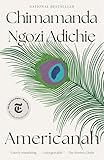
Americanah — Chimamanda Ngozi Adichie (2013)
The most widely read contemporary African novel — Ifemelu, a young Nigerian woman who emigrates to America for university, and Obinze, her first love who ends up as an illegal immigrant in London. The novel uses their separation and reunion to explore race (Ifemelu becomes Black in America in a way she was never Black in Nigeria), class, immigration, and the gap between African and American experience. Ifemelu’s blog posts on race in America, woven through the narrative, are some of the sharpest cultural commentary in recent fiction.
Pan-African Fiction
Homegoing — Yaa Gyasi (2016)
A structurally inventive novel that follows two family lines — one in West Africa through colonialism and Ghanaian independence, one in America through slavery, Reconstruction, the Great Migration, and the present — across fourteen chapters and seven generations. Each chapter is a self-contained story and a step in the long history of fracture caused by the transatlantic slave trade. Gyasi’s achievement is to make seven generations of history feel intimate and specific rather than schematic.
From the Nigerian Renaissance to the World Stage
The story of modern African literature in English begins, to a remarkable degree, in mid-twentieth-century Nigeria, and this list reflects that origin. The Nigerian literary renaissance of the 1950s and 1960s — centered on figures emerging from institutions like University College Ibadan — produced an extraordinary concentration of talent that launched African fiction onto the global stage. Chinua Achebe was its towering figure, but he was part of a generation that included the dramatist and future Nobel laureate Wole Soyinka and the poet Christopher Okigbo, all writing as their nation moved toward and through independence. What made this moment so generative was its historical position: these writers were the first to render African societies from the inside for a global readership, seizing the colonizer’s language and turning it to the task of telling African stories on African terms. The achievement was not only literary but foundational — it established that there was such a thing as African literature commanding serious international attention, and it created the tradition within which every subsequent generation would work. That the contemporary giants of the form, above all Chimamanda Ngozi Adichie, are themselves Nigerian is no coincidence; they write in conscious dialogue with Achebe’s generation, extending and complicating a project that began more than half a century ago. To read this list is to trace a continuous line from the founding moment of African fiction to its flourishing present.
The Weight of History
A defining characteristic of the major works of African literature, evident throughout this list, is their sustained engagement with history — not as inert background but as a living force that shapes and often shatters individual lives. This is not incidental; it reflects the reality that the African experience of the modern era has been forged by enormous historical ruptures, and the literature bears witness to them. Achebe’s novels capture the catastrophic encounter between traditional Igbo society and British colonialism, the moment a coherent world was disrupted and remade. Adichie’s Half of a Yellow Sun recovers the Biafran War, a conflict in which between one and three million people perished and which remains inadequately known beyond Nigeria, insisting that this history be felt rather than merely recorded. Gyasi’s Homegoing spans the entire arc of the transatlantic slave trade and its aftermath across two continents and seven generations, tracing how a single historical crime propagates through centuries of intimate lives. Even Americanah, the most contemporary novel here, is shaped by the history of migration and the differing constructions of race across societies. This profound historical consciousness gives African literature much of its moral seriousness and emotional power. These are novels that refuse to let history remain abstract, that turn the great upheavals of the past hundred and fifty years into the felt experience of individuals, and in doing so they perform the essential work of memory and witness.
A Continent of Literatures
It is important to recognize that “African literature” is a useful but radically incomplete shorthand, and the books on this list, magnificent as they are, represent only one part of an immense and varied landscape. Africa is a continent of more than fifty nations and over a thousand languages, and its literature is correspondingly diverse. This list, like much of what reaches global Anglophone readers, skews heavily toward West Africa and especially Nigeria, and toward writing in English. Readers who fall in love with these books should know how much more awaits. The Francophone African tradition is vast and essential, from Senegal’s Mariama Bâ and Ousmane Sembène to the contemporary work of writers like Mohamed Mbougar Sarr. East Africa produced Ngũgĩ wa Thiong’o, whose decision to abandon English for his native Gikuyu posed fundamental questions about language and decolonization, alongside writers like the Somali novelist Nuruddin Farah. Southern Africa gave the world Nadine Gordimer and J.M. Coetzee, both Nobel laureates who wrestled with apartheid, and the searing testimony of writers across the region. The newest generation, spanning the continent and its diaspora, is expanding the map further still, into speculative fiction, queer narratives, and forms that defy easy categorization. The foundational works here are the ideal entry point, but they open onto one of the richest and most rapidly growing literary landscapes in the world.
Reading Order
Start here: Things Fall Apart → Arrow of God → Half of a Yellow Sun.
Contemporary: Americanah → Homegoing → Half of a Yellow Sun.
Historical arc: Things Fall Apart → Half of a Yellow Sun → Americanah → Homegoing.
Frequently Asked Questions
What is the best African novel ever written?
Things Fall Apart by Chinua Achebe is the most important African novel — the first major work of African literature to depict African society from the inside rather than through a colonial lens, and one of the most translated books in the world. Half of a Yellow Sun by Chimamanda Ngozi Adichie is the finest contemporary Nigerian novel — an account of the Biafran War through the lives of two sisters that is simultaneously intimate and historically comprehensive. Homegoing by Yaa Gyasi is the best novel about the long consequences of the transatlantic slave trade.
What is Things Fall Apart about?
Things Fall Apart (1958) by Chinua Achebe follows Okonkwo, a respected warrior and farmer in the Igbo village of Umuofia in what is now Nigeria, in the decades before and during British colonisation. The novel depicts Igbo culture in the pre-colonial period with complexity and specificity — its social structures, its religion, its gender dynamics, its internal tensions — and shows how British colonial administration and Christian missionary work disrupt a world that had its own coherent form. It is both a tragedy of an individual and an account of cultural collision.
What is Half of a Yellow Sun about?
Half of a Yellow Sun (2006) by Chimamanda Ngozi Adichie is set before and during the Biafran War (1967–1970) — a conflict that killed between one and three million people through violence and famine, and that has been largely written out of Western historical consciousness. Three characters — twin sisters from the Igbo elite and a village boy who works as a houseboy — experience the war's escalation, the refugee crisis, and the final defeat of Biafra. Adichie's achievement is to make the war legible and personal simultaneously.
What is Homegoing about?
Homegoing (2016) by Yaa Gyasi traces two half-sisters in eighteenth-century Ghana and their descendants — one sister marries a British slave trader; the other is sold into slavery and transported to America. Each chapter follows one descendant in each family line, across seven generations, tracking how the original fracture propagates through history: the Gold Coast family through colonialism and independence; the American line through slavery, Reconstruction, the Great Migration, and the present. The structure is unusual and the execution extraordinary.