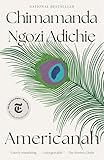
Editors Reads Verdict
Adichie's most ambitious novel is a love story, a sharp immigration narrative, and one of the most incisive examinations of American racial categories written in English — its wit and precision make the sociological insights feel organic rather than imposed.
What We Loved
- The blog sections offer satirical critique of American race discourse with remarkable wit
- Ifemelu and Obinze are fully realized, utterly convincing characters
- Adichie's prose is elegant without being self-consciously literary
- The Lagos sections are as richly rendered as the American ones
Minor Drawbacks
- The middle section in America can feel episodic
- Some secondary characters serve primarily as ideological sounding boards
- The romantic resolution may feel convenient to some readers
Key Takeaways
- → Race is a social category that means different things in different national contexts
- → Immigration forces a confrontation with identity that staying home never requires
- → Hair as a site of political negotiation for Black women is real and pervasive
- → Love that survives years of separation is transformed by them, not preserved
- → Returning home is its own form of immigration
| Author | Chimamanda Ngozi Adichie |
|---|---|
| Publisher | Knopf |
| Pages | 477 |
| Published | May 14, 2013 |
| Language | English |
| Genre | Literary Fiction |
| Difficulty | Intermediate |
| Best For | Literary fiction readers interested in immigration narratives, race in America, and the Nigerian diaspora experience, as well as anyone drawn to intelligent, character-driven love stories. |
How Americanah Compares
Americanah at a glance against 3 similar books readers weigh alongside it.
| Book | Author | Rating | Best for |
|---|---|---|---|
| Americanah (this book) | Chimamanda Ngozi Adichie | ★ 4.4 | Literary fiction readers interested in immigration narratives, race in America, |
| Half of a Yellow Sun | Chimamanda Ngozi Adichie | ★ 4.5 | Readers of literary historical fiction, students of African history and |
| The Kite Runner | Khaled Hosseini | ★ 4.5 | Readers who appreciate literary fiction dealing with guilt, cultural |
| Things Fall Apart | Chinua Achebe | ★ 4.5 | All readers of literary fiction |
Becoming American, Becoming Black
Ifemelu grows up in Lagos without thinking of herself as Black — she’s Igbo, she’s Nigerian, she’s herself. It’s only when she arrives in America for graduate school that she discovers race as a category that will follow her everywhere. The revelation is one of Americanah’s central observations: Blackness as Americans understand it is not a universal identity but a specific American construction, and immigrants from Africa or the Caribbean encounter it as something imposed from outside rather than inherited from within.
Chimamanda Ngozi Adichie’s third novel is her most formally ambitious and her most politically alert. It’s also, at its core, a love story: between Ifemelu and Obinze, high school sweethearts separated by immigration and years of separate becoming, circling back toward each other from across a continent and a decade.
The Blog as Literary Device
Adichie’s most brilliant structural choice is Ifemelu’s blog: “Raceteenth or Various Observations About American Blacks (Those Formerly Known as Negroes) by a Non-American Black.” The posts, scattered through the novel, offer satirical analysis of American racial dynamics from the perspective of someone who encounters them without the conditioning that makes them feel natural to Americans who’ve lived inside them their entire lives.
The posts are wickedly funny and acutely observed — on hair, on the politics of “articulate,” on the particular social performances required of Black people in white professional spaces. They don’t feel like essays dropped into a novel; they feel like an extension of Ifemelu’s voice and mode of understanding.
Two Countries, Two Lives
The parallel structure — Ifemelu in America, Obinze in Britain (where his visa applications are rejected) and eventually back in Lagos — allows Adichie to map the experience of global migration without reducing it to a single story. Both characters are changed by their time away from Nigeria in ways they don’t fully recognize until they’re back.
The Lagos sections, which many readers expect to feel like a letdown after the American narrative, are in fact among the novel’s richest — a vivid portrait of a city and a class navigating postcolonial modernity with sophistication and contradiction.
A Novel That Earns Its Scope
Americanah is a big book in every sense: big ideas, big geography, big emotional stakes. Adichie manages all of it with a lightness of touch that makes the intellectual rigor feel like entertainment rather than instruction.
Our rating: 4.4/5 — Adichie’s most comprehensive novel offers one of the sharpest and most entertaining analyses of American race in recent fiction, wrapped in a love story that genuinely moves.
Race Seen From the Outside In
One of the freshest things about Americanah is its perspective on American race relations. Ifemelu, a Nigerian woman who emigrates to the United States, arrives without the inherited assumptions of an American and discovers race as a new and bewildering category that did not define her at home — and Adichie uses that outsider’s eye, sharpened in the satirical blog Ifemelu writes, to observe American attitudes with a clarity that an insider might miss. The novel distinguishes between the experiences of African immigrants and African Americans, and its willingness to anatomise race, hair, class, and belonging with wit and precision is one of its great strengths.
A Love Story Across Continents
For all its social insight, Americanah is built on a love story — the long, interrupted relationship between Ifemelu and Obinze, separated by emigration and the divergent lives they build in America and a Britain of precarious immigration, and drawn back toward each other across the years. Adichie uses the romance as a thread to follow her characters through the immigrant experience in two countries and their eventual returns to a transformed Nigeria, so that the personal and the political are always entwined. The reunion the novel moves toward gives the sweeping social canvas an intimate emotional centre.
Wit, Confidence, and Scope
The novel is notable for its sheer confidence and range. Adichie writes with warmth and sharp humour, and she is unafraid to let her characters and her narrator hold strong opinions — about race, about hair, about the condescension immigrants face, about what is gained and lost in leaving home. The blog posts woven through the narrative let her be pointed and funny in a register the novel proper could not sustain, and the result is a book that is both an absorbing story and a bracing piece of cultural observation.
Why It Earns Its Scope
Americanah is an ambitious, big novel that takes on emigration, race, identity, and love across three countries and many years, and it succeeds because Adichie grounds the large themes in vivid, specific characters whose lives the reader comes to care about. It is one of the defining novels of the contemporary immigrant experience, widely read and taught, and admired for refusing to simplify the questions it raises. As an intelligent, witty, and emotionally rich exploration of what it means to leave home, change, and return, it has earned its place among the most significant novels of its decade, and confirmed Adichie as one of the essential voices in contemporary fiction — a writer who can be at once a sharp social critic and a generous, absorbing storyteller without ever sacrificing one role to the other.
Why It Belongs on the Shelf
Americanah has become a fixture of contemporary reading lists and book clubs because it does several difficult things at once and does them well: it is a satisfying love story, a sharp work of social observation, and an absorbing portrait of the immigrant experience across three countries. Adichie refuses to flatten any of these into the others, and she trusts her readers to handle complexity, contradiction, and strong opinion. The result is a novel that entertains and provokes in equal measure, and that has introduced an enormous global readership to a particular African and immigrant perspective on race, identity, and belonging. It is, simply, one of the books most worth reading from a major contemporary writer at the height of her powers.
Frequently Asked Questions
What is "Americanah" about?
A young Nigerian woman navigates love, identity, and race in America and Britain before returning to Lagos, where she must reconcile who she has become with who she was.
Who should read "Americanah"?
Literary fiction readers interested in immigration narratives, race in America, and the Nigerian diaspora experience, as well as anyone drawn to intelligent, character-driven love stories.
What are the key takeaways from "Americanah"?
Race is a social category that means different things in different national contexts Immigration forces a confrontation with identity that staying home never requires Hair as a site of political negotiation for Black women is real and pervasive Love that survives years of separation is transformed by them, not preserved Returning home is its own form of immigration
Is "Americanah" worth reading?
Adichie's most ambitious novel is a love story, a sharp immigration narrative, and one of the most incisive examinations of American racial categories written in English — its wit and precision make the sociological insights feel organic rather than imposed.
Ready to Read Americanah?
Check the current price on Amazon.
Check Price on Amazon (paid link)Prices and availability are subject to change. See Amazon for current price.
Review last updated: