Best Books About Home and Belonging: Novels of Place, Identity, and Return
The best novels about home and belonging — from Brooklyn to The Remains of the Day to Americanah. Books about place, identity, and what it means to belong somewhere.

Home — the place where you are known, where you belong, where you have roots — is one of literature’s most ancient and most persistent preoccupations. But the greatest novels about home are rarely simple: they know that home can be a place of suffocation as well as comfort, that belonging can be imposed as well as chosen, and that the most intense awareness of what home means often comes from its absence — from emigration, exile, or the discovery that the place you left has changed beyond recognition while you were away. What follows are the novels that have explored the experience of home and belonging with the most depth and the most honesty.
Brooklyn — Colm Tóibín (2009)
The essential novel about emigration and the double life it creates. Eilis Lacey leaves County Wexford in the early 1950s because Ireland offers her nothing — no work, no independence, no future she can imagine. In Brooklyn she builds a life: department store job, night-school bookkeeping courses, Tony Fiorello and the slow growth of love. Then a death in the family requires her return to Ireland, and Ireland has become imaginable again — there is a man who wants her, work she could do, a life she could have chosen instead. Tóibín does not make this choice easy; he makes it real.
The novel is about how we construct belonging — the effort it takes, the things it requires us to leave behind — and about what happens when the question of where you belong is reopened.
The Remains of the Day — Kazuo Ishiguro (1989)
Ishiguro’s most celebrated novel — and the quietest study of a life defined by a specific, devastating idea of home. Stevens the butler has given his life to Darlington Hall — its order, its standards, its embodiment of a particular ideal of Englishness — and in doing so has sacrificed everything personal: his feeling for Miss Kenton, his relationship with his father, his own interiority. The novel is narrated as Stevens drives across England to visit Miss Kenton, and its surface calm — his recollections of the hall, his reflections on dignity, his careful avoidance of self-examination — is the most perfectly controlled exercise in unreliable narration in British fiction.
Home, for Stevens, is the hall — and the novel’s tragedy is that the hall, as Stevens understood it, no longer exists.
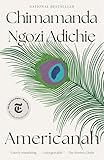
Americanah — Chimamanda Ngozi Adichie (2013)
Adichie’s most ambitious novel traces Ifemelu’s fifteen years in America and her eventual return to Nigeria — to Lagos, where everything is familiar and nothing is the same, and where she discovers that she has become, in American terms, a different person than the country expects her to be. The novel is simultaneously a study of how race is constructed differently in Nigeria, Britain, and America, and a love story (Ifemelu and Obinze) about two people who chose different forms of belonging and must discover whether what drew them together in youth can survive what they have become.
The novel’s portrait of returning — the disorientation of finding that home is not what you remembered, that you are not who you were — is one of the most honest in contemporary fiction.
Never Let Me Go — Kazuo Ishiguro (2005)
Ishiguro’s most disturbing novel — a science fiction novel that is also a meditation on acceptance, belonging, and the narrowness of any life. Kathy, Tommy, and Ruth grow up at Hailsham, a boarding school that seems slightly strange; as adults, they discover the nature of what Hailsham prepared them for, and the novel’s tragedy is how fully they have accepted it. Hailsham is their home — the only world they know — and their attachment to it, their nostalgia for its small pleasures and small humiliations, is the most painful expression in Ishiguro’s work of how we can love the conditions of our own confinement.
The novel asks what belonging to a place does to a person’s sense of what is possible — and what the answer is when those possibilities are very small.
The Kite Runner — Khaled Hosseini (2003)
Hosseini’s debut follows Amir from his privileged Kabul childhood (kites, the Ali Baba stories, his friendship with Hassan) through his family’s flight after the Soviet invasion, his years in California, and his eventual return to Taliban-era Afghanistan. The return is the novel’s emotional climax: Afghanistan is unrecognizable, Hassan is dead, and what remains of Amir’s childhood is almost entirely destroyed. But Amir’s guilt about what he did there — and did not do — is what has kept him connected to it.
Home here is inseparable from guilt: Amir cannot fully belong to America because Afghanistan still claims him.
A Fine Balance — Rohinton Mistry (1995)
Mistry’s most comprehensive novel — set in India during the Emergency of the mid-1970s, following four people who share a cramped apartment in Bombay: Dina Dalal, a widow trying to maintain her independence; Maneck Kohlah, a Parsi student; and Ishvar and Omprakash Darji, two tailors from a Dalit family trying to escape the violence of the villages. The novel is a study of how political upheaval destroys the conditions that make home possible — how the Emergency’s forced sterilizations, slum clearances, and police violence uproots communities and individual lives.
One of the great novels about what home means when it is most vulnerable to being taken away.
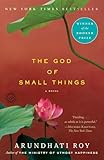
The God of Small Things — Arundhati Roy (1997)
Roy’s debut novel follows Rahel’s return to Ayemenem in Kerala, the town she left after the events of the summer of 1969 destroyed her family. The novel moves between present and past — between Rahel’s disorienting return and the history she finds waiting — and it is about how a specific place and its social rigidities (the caste system, the communist politics, the Syrian Christian community) can feel like home and trap simultaneously. Kerala is beautiful; it is also the place where everything went wrong; and Rahel’s return forces her to hold both truths.
The Namesake — Jhumpa Lahiri (2003)
Lahiri’s first novel follows the Ganguli family from their arrival in Cambridge, Massachusetts from Calcutta in 1968 through the next thirty years — Ashoke and Ashima building a home in America while remaining partly Bengali; their son Gogol’s rejection of his parents’ world and his eventual return to something like understanding of it. The novel is about the different relationships two generations of immigrants have to home: the first generation’s homesickness (Ashima misses Calcutta every day of her American life) and the second generation’s ambivalence (Gogol doesn’t fully belong to either world and must construct something new).
Reading Books About Home and Belonging
The best novels about home understand that belonging is constructed rather than given — created through the accumulation of experience, relationship, and commitment — and that its absence (through emigration, exile, or displacement) is one of the most profound forms of loss a person can experience. They also understand that home can be a site of oppression as well as comfort, and that the most honest account of belonging must hold both possibilities. Begin with Brooklyn for the most intimate and most precisely observed; with Americanah for the most politically aware; with Never Let Me Go for the most philosophically disturbing version of the question.
Frequently Asked Questions
What are the best novels about home and belonging?
The best novels about home and belonging include: Brooklyn by Colm Tóibín (a young Irish woman emigrates to New York in the 1950s and must choose between her adopted country and the Ireland that calls her back); The Remains of the Day by Kazuo Ishiguro (a butler reflects on a lifetime of professional dedication and what it cost him personally); Americanah by Chimamanda Ngozi Adichie (a Nigerian woman returns to Lagos after fifteen years in America and discovers what she has become and what she has lost); and Never Let Me Go, in which the characters' acceptance of their place in the world is the novel's most heartbreaking quality.
What is Brooklyn by Colm Tóibín about?
Brooklyn (2009) follows Eilis Lacey, a young woman from Enniscorthy in County Wexford, who emigrates to Brooklyn in the early 1950s because there is nothing for her in Ireland — no work, no opportunity, no future she can see. She builds a life in Brooklyn: a job, night school, a boyfriend; and then returns to Ireland for a death in the family and discovers that Ireland has become imaginable again. The novel is about how belonging is created (through effort, through love, through the accumulation of a life) and how it can be disrupted; its ending is among the most precisely observed in contemporary fiction.
What makes a great novel about home?
The best novels about home are not simply nostalgic — they understand that home is a contested, constructed, and sometimes painful category. The most powerful treatments (Americanah, The God of Small Things, A Fine Balance) recognize that home can be a place of oppression as well as of belonging; that the desire to return is complicated by what you become while away; and that the feeling of not-quite-belonging — of being between places — is as significant a human experience as the feeling of being home. Home in the best fiction is almost always a question rather than an answer.
What are some books about returning home?
The best novels about returning home include: Americanah (Ifemelu's return to Lagos after fifteen years in America); The Kite Runner (Amir's return to Taliban-era Afghanistan after decades in the United States); Brooklyn (Eilis Lacey's unexpected re-engagement with Ireland); and The God of Small Things (Rahel's return to Ayemenem in Kerala after years abroad, and the history she finds waiting). All grapple with the discovery that the home you return to has changed, and so have you.