Best Books About Diaspora and Exile: Essential Fiction
The best books about diaspora and exile — from Americanah and White Teeth to The Namesake and The Brief Wondrous Life of Oscar Wao. Essential fiction.
The experience of living between two cultures — of carrying one country inside you while inhabiting another — has produced some of the most important fiction of the past three decades. These novels share a particular analytical advantage: the diaspora writer sees the cultures they inhabit from the outside, with a precision unavailable to those entirely embedded within them. They are the most reliable guides to what any culture looks like from a position of partial belonging.
The Essential List
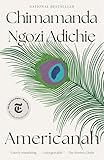
Americanah — Chimamanda Ngozi Adichie (2013)
The most analytically precise contemporary novel about race, identity, and the diaspora experience. Ifemelu’s journey from Lagos to Philadelphia to London and back to Lagos is structured around her discovery that racial categories are not universal but American-specific — that she was not ‘Black’ in Nigeria, only in America, where Blackness carries the weight of a specific history she didn’t live but inherits on arrival. Adichie’s observations, filtered through Ifemelu’s blog posts about ‘Race in America for Non-American Blacks,’ are simultaneously funny, uncomfortable, and rigorously honest. The novel is also a love story — the relationship with Obinze spans continents and decades — and one of the great recent novels about what it means to go home when home has changed.
White Teeth — Zadie Smith (2000)
The defining British novel about immigration and multiculturalism. Archie Jones (English) and Samad Iqbal (Bangladeshi) — friends since the Second World War — live as neighbours in Willesden, North London, their families intertwined over two generations. Smith’s comedy of cultural collision and historical irony is both exuberant and serious: the novel argues that the cultural and historical baggage that immigrant communities carry with them cannot be left at the border, and that the children of immigrants — who grew up in Britain but carry the expectations of another country — navigate a particularly complicated form of double belonging. The most joyful of the novels listed here.
The Namesake — Jhumpa Lahiri (2003)
The quietest and most emotionally affecting of the novels listed here. Lahiri’s portrait of the Ganguli family — Bengali immigrants in Boston, and their American-born son Gogol — is a study of the transmission of cultural identity across generations and the distance between the India that Ashoke and Ashima carry inside them and the America that Gogol inhabits. The novel’s central image — the name Gogol, which the son rejects as he asserts his American identity and later reclaims as he mourns his father — carries the entire weight of the immigrant experience: the inheritance that children reject, and only later understand.
The Kite Runner — Khaled Hosseini (2003)
Hosseini’s first novel, set in Afghanistan and California, is the most widely read novel about the Afghan diaspora — and about the specific guilt of departure: leaving a country and its people to a fate you escaped. Amir’s betrayal of Hassan as a boy, and his attempt at redemption decades later from California, is structured as a personal moral narrative; but the destruction of Afghanistan that provides the backdrop (the Soviet invasion, the Taliban, the civil war) is always present, the context that makes Amir’s individual failure part of a larger catastrophe.
The Brief Wondrous Life of Oscar Wao — Junot Díaz (2007)
The most formally innovative of the diaspora novels. The story of Oscar de León — an overweight, nerdy Dominican-American fantasy-fiction obsessive growing up in New Jersey — is narrated by Yunior, his college roommate, in a prose style that mixes English and Spanish, footnotes about Dominican history, and references to science fiction and superhero mythology. Díaz uses Oscar’s story to tell the history of the Dominican Republic under Trujillo and its long shadow over the diaspora community. The novel won the Pulitzer Prize; it is the most fully realised account of the Dominican-American experience available.
The Sympathizer — Viet Thanh Nguyen (2015)
The most politically demanding of the novels listed here. The unnamed narrator — a communist spy passing as a South Vietnamese Army officer — is simultaneously a study in double consciousness (believing in the revolution while living within the system it opposes) and a critique of American cultural power in Vietnam. Nguyen’s account of the Hollywood version of the Vietnam War — in which Vietnamese people appear only as backdrop for American psychology — is devastating. The novel’s comic tone and philosophical depth make it the most intellectually ambitious diaspora novel of its decade.
The Wound of Displacement
At the heart of the literature of diaspora and exile lies the profound wound of displacement — the deep and often lifelong pain of being torn from one’s homeland, severed from the place, the people, and the culture that formed one, and forced to live in separation from the world to which one belongs — and the books on this list explore this wound with an intimacy and a power that illuminate one of the most painful of human experiences. The condition of exile and diaspora is fundamentally a condition of loss, of separation from the homeland and all it represents, and the literature that emerges from this condition bears witness to the deep pain of that separation, the grief of displacement, and the lasting wound that being torn from one’s roots inflicts on the human spirit. This wound has many dimensions: the loss of the physical homeland, the landscapes and places that formed one’s earliest sense of belonging; the separation from family, community, and all the human connections that rootedness provides; the rupture from one’s culture, language, and traditions, the loss of the world in which one was at home; and the deep psychological injury of displacement, the sense of being uprooted, adrift, and severed from the source of one’s identity and belonging. The literature of diaspora and exile explores all these dimensions of the wound, giving voice to the profound pain of displacement and bearing witness to the lasting injury that exile inflicts. This unflinching exploration of the wound of displacement is among the most powerful contributions of the literature, for it gives expression to an experience of loss and separation that millions have endured, and it illuminates, with intimacy and depth, the deep pain of being torn from one’s homeland and forced to live in exile from the world to which one belongs. The wound of displacement is the central reality of the diasporic and exilic condition, and the literature that bears witness to it speaks to one of the most painful and widespread of human experiences.
Memory and the Lost Homeland
A defining feature of the literature of diaspora and exile is its preoccupation with memory — with the remembered homeland that the exile carries within, the lost world preserved and often idealized in recollection, and the complex and poignant relationship between the displaced person and the home they can no longer inhabit — and this preoccupation gives the literature much of its emotional power and its distinctive character. For the exile and the member of the diaspora, the homeland exists primarily in memory, a remembered world carried within the heart, preserved in recollection across the distance of separation, and this remembered homeland occupies a central place in the exilic imagination and the literature it produces. The relationship to the remembered homeland is complex and poignant: the exile clings to the memory of home as a source of identity and belonging, preserving it against the erosions of time and distance, yet the remembered homeland is also a source of pain, a constant reminder of what has been lost, and it is often idealized and transformed in memory, becoming a place that exists more in recollection than in reality. The literature of diaspora and exile explores this complex relationship to the remembered homeland, depicting the exile’s preservation of and longing for the lost world, the way memory both sustains and torments the displaced, and the poignant gap between the remembered homeland and the real place that can never be fully recovered. This preoccupation with memory and the lost homeland gives the literature its characteristic tone of longing and loss, its backward-looking gaze toward a world left behind, and its exploration of the complex ways that the displaced carry their homeland within them across the distance of exile. Memory, in this literature, is both a consolation and a wound, preserving the lost homeland while perpetuating the pain of its loss, and the exploration of this complex relationship to the remembered home is among the most poignant and distinctive features of the literature of diaspora and exile.
Exile and the Creative Imagination
A remarkable and consoling truth that emerges from the literature of diaspora and exile is the paradoxical relationship between displacement and creativity — the way that the painful condition of exile, for all its suffering, has proven extraordinarily generative for art and literature, producing some of the greatest creative achievements and lending the displaced a distinctive perspective and imaginative power. The condition of exile, though founded in loss and pain, has repeatedly proven a powerful stimulus to creativity, and the ranks of the world’s greatest writers and artists are filled with exiles and members of diasporas, whose displacement, far from silencing them, seems often to have intensified and enriched their creative power. This generative relationship between exile and creativity has several sources. The exile’s position outside the homeland, looking back from a distance, can confer a heightened perspective and a clarity of vision, the capacity to see one’s culture and origins more sharply from outside than from within. The experience of inhabiting two worlds, the homeland of memory and the new world of exile, can produce a rich double consciousness and a fertile imaginative tension. The pain of displacement and loss can drive the creative impulse, finding in art a means of preserving the lost homeland, expressing the wound of exile, and constructing meaning from the experience of displacement. And the exile’s distance from the homeland can free the imagination, allowing the displaced writer to reimagine and recreate the lost world in art. The literature of diaspora and exile bears witness to this generative power of displacement, demonstrating how the painful condition of exile has produced extraordinary creative achievement, and revealing the distinctive perspective and imaginative power that displacement can confer. This paradoxical relationship between exile and creativity offers a measure of consolation amid the literature’s exploration of loss, suggesting that even the wound of displacement can become a source of creative power, and that the exile’s loss of homeland can be transformed, through art, into a distinctive and powerful imaginative achievement.
The Common Thread
The novels listed here share a preoccupation with what cannot be left behind: the history, the language, the expectations, the guilt, the love for a country that is no longer fully accessible. They are also studies in double vision — the capacity of the person who belongs partially to two worlds to see both more clearly than those who belong entirely to one. This analytical advantage is the gift that diaspora literature consistently offers its readers.
Frequently Asked Questions
What is the best novel about the diaspora experience?
Americanah (2013) by Chimamanda Ngozi Adichie is the most incisive contemporary novel about the diaspora experience — specifically about what it means to be African in America and in Britain, to navigate racial categories that didn't exist in the country you came from, and to return to a home that has changed as much as you have. White Teeth (2000) by Zadie Smith is the best British novel about immigrant communities — a multigenerational portrait of two families (Bangladeshi and Jamaican) in North London that is also a comedy about the impossibility of escaping your history.
What is Americanah about?
Americanah (2013) by Chimamanda Ngozi Adichie follows Ifemelu, a young Nigerian woman, from her girlhood in Lagos, through her relationship with Obinze, to her years as a student in Philadelphia and then a blogger writing about race in America from a non-American African perspective. The novel's central subject is what race means: Ifemelu is not aware of being Black until she arrives in America, where Blackness is a social category with specific history and consequences. Adichie observes the American racial landscape with the clarity of an outsider who understands what insiders have normalised.
What is The Namesake about?
The Namesake (2003) by Jhumpa Lahiri follows the Ganguli family — Ashoke and Ashima, who emigrate from Calcutta to Boston in the late 1960s, and their American-born son Gogol — across several decades as they negotiate the distance between the India their parents carry inside them and the America they inhabit. The novel's central subject is naming: Gogol's unusual name (after Nikolai Gogol, the Russian writer who saved Ashoke's life in a train crash) becomes the focus of his ambivalence about his inheritance. Lahiri's prose is precise and emotionally restrained; the novel's power is cumulative.
What is The Sympathizer about?
The Sympathizer (2015) by Viet Thanh Nguyen is a darkly comic political novel narrated by an unnamed communist spy who is simultaneously a South Vietnamese Army officer — a man of two minds, two loyalties, and two countries who escapes to America after the fall of Saigon. The novel is a meditation on the Vietnam War from a Vietnamese perspective, a critique of American cultural imperialism (particularly the Hollywood version of the war), and a study of ideological commitment and its costs. Won the Pulitzer Prize; the most politically ambitious of the diaspora novels listed here.