Best Books Set in India: Essential Indian Fiction and Literature
The best books set in India — from Midnight's Children and The God of Small Things to A Passage to India and A Fine Balance. Essential Indian fiction.
The literature of India — in English, as well as in the many languages of the subcontinent — constitutes one of the richest and most diverse national literary traditions in the world. The best English-language fiction set in India is preoccupied with the legacies of British colonialism, the making of independent India, the persistence of caste, and the experience of ordinary people under extraordinary political circumstances. It is also among the most formally innovative: Rushdie’s magical realism, Roy’s lyrical fragmentation, and Mistry’s devastating realism have each influenced the literary tradition far beyond South Asia.
The Essential List
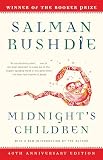
Midnight’s Children — Salman Rushdie (1981)
The defining novel of postcolonial Indian literature. Saleem Sinai, born at the exact moment of independence, narrates India’s first three decades through the lens of his own extraordinary life — and through the 1,001 children of midnight, each with a different magical power. Rushdie’s prose is exuberant, allusive, and structurally unprecedented in English fiction; the novel draws on the oral traditions of South Asian storytelling and on the formal inheritance of García Márquez to create something genuinely new. Won the Booker Prize; chosen as the best Booker Prize novel of the first twenty-five years.
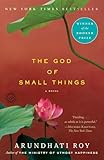
The God of Small Things — Arundhati Roy (1997)
Roy’s debut is the most formally elegant of the novels listed here — the story of the Ipe family’s catastrophe revealed backwards, structured around the slow disclosure of what happened in Ayemenem in 1969. The novel’s central subject is caste: the untouchable Velutha and Ammu’s relationship, and the consequences that the ‘Love Laws’ impose on both of them. Roy’s prose is among the most distinctive in contemporary fiction — lyrical and precise, structuring the novel around repeated phrases and images that accumulate meaning as the narrative unfolds. Won the Booker Prize.
A Fine Balance — Rohinton Mistry (1995)
The most devastating of the books listed here. Mistry’s account of four characters — a widow, a student, and two tailors from an untouchable caste — whose lives intersect in a Mumbai apartment during Indira Gandhi’s Emergency (1975–77) is a comprehensive portrait of how political brutality crushes ordinary lives. The novel is long, specific, and unsparing; Mistry does not allow his characters the consolation of resolution. One of the most important novels about political oppression and caste written in the twentieth century.
The White Tiger — Aravind Adiga (2008)
The most accessible and politically direct of the recent India novels. Balram Halwai, born into poverty in a rural village and raised to be a servant, narrates his rise to entrepreneurship — through crime — as a letter to the Premier of China, who is visiting India and needs to understand how the ‘new India’ actually works. The novel is a savage portrait of the caste system, economic inequality, and the myth of India’s economic miracle. Won the Booker Prize. The shortest and most immediately engaging of the books listed here.
A Passage to India — E.M. Forster (1924)
Forster’s masterpiece and the most searching English-language account of British colonialism in India. Dr. Aziz — a young Muslim doctor in Chandrapore — befriends Mrs. Moore and her companion Adela Quested, who are newly arrived from England, and takes them on an expedition to the Marabar Caves. Adela’s accusation of assault against Aziz — false, but believed, and the social divisions it exposes — is the novel’s central event. Forster’s sympathy is with the Indians rather than with the British, and his account of how colonial power distorts every relationship between coloniser and colonised is as acute as anything written about the subject.
Interpreter of Maladies — Jhumpa Lahiri (1999)
Lahiri’s debut story collection won the Pulitzer Prize and established the template for the contemporary South Asian American literary voice. The nine stories follow characters at the intersection of India and America — Indian immigrants in Boston, Americans in Calcutta, second-generation children navigating between two cultures — with Lahiri’s characteristic precision and emotional intelligence. The title story, in which a Calcutta tour guide who moonlights as an interpreter for a doctor falls into a fantasy about an Indian American tourist, is the most anthologised.
The Namesake — Jhumpa Lahiri (2003)
Lahiri’s first novel follows the Ganguli family — Ashoke and Ashima, who immigrate from Calcutta to Massachusetts, and their American-raised son Gogol — across three decades and two continents. The novel is about the specific burden of the second generation: the children of immigrants who are neither fully at home in America nor able to return to a country they have never fully known. Lahiri’s account of the Ganguli family’s lives is quiet and precise; the novel is a masterpiece of the genre.
The Vastness and Diversity of India
The literature set in India confronts, as its great and defining challenge and opportunity, the sheer vastness and diversity of the subcontinent — a land of staggering scale, encompassing a multitude of languages, religions, cultures, regions, and ways of life, whose complexity exceeds that of most entire continents and provides the literature with an inexhaustible richness of material. India is not a single, unified place but a vast and astonishingly diverse subcontinent, home to a multitude of languages, religions, ethnicities, cultures, and regions, encompassing extremes of wealth and poverty, tradition and modernity, and a diversity of human experience that exceeds that of most entire continents. This vastness and diversity is the great subject of the literature set in India, providing it with an inexhaustible richness of material and presenting it with the challenge of capturing a reality of such immense scale and complexity. The best literature set in India embraces this vastness and diversity, capturing the multitude of languages, religions, cultures, and ways of life that compose the subcontinent, the extremes and contrasts that mark it, and the staggering diversity of human experience that it contains. This engagement with the vastness and diversity of India gives the literature much of its richness and its scope, for the writers who take India as their subject draw on a reality of immense scale and complexity, a land that contains within itself a diversity of human experience exceeding that of most entire continents. To read the literature set in India is to encounter this vastness and diversity, the multitude of languages, religions, cultures, and ways of life, the extremes and contrasts, and the staggering richness of human experience that compose the subcontinent. The vastness and diversity of India is the great subject of its literature, providing an inexhaustible richness of material and presenting the challenge of capturing a reality of immense scale and complexity, and the best literature set in India embraces this challenge, capturing the extraordinary diversity and richness of the subcontinent.
The Weight of History and Tradition
The literature set in India is profoundly engaged with the weight of history and tradition — with the ancient civilization and deep cultural traditions of the subcontinent, the legacy of colonialism and the struggle for independence, and the ongoing tension between an ancient heritage and the forces of modernity — and this engagement with history and tradition gives the literature much of its depth and its distinctive character. India possesses one of the world’s oldest civilizations and deepest cultural and religious traditions, a heritage of extraordinary antiquity and richness that continues to shape the life and consciousness of the subcontinent. The literature set in India is profoundly engaged with this heritage, with the ancient traditions, religions, and cultural forms that continue to shape Indian life, and with the weight of a history of extraordinary depth and antiquity. The literature is also deeply engaged with the more recent history of colonialism and the struggle for independence, with the profound impact of British rule on the subcontinent and the long struggle to throw it off, and with the legacy of this colonial history on independent India. And the literature explores the ongoing tension between tradition and modernity, between the ancient heritage of the subcontinent and the transforming forces of modernization, a tension that runs through much of contemporary Indian life and that provides the literature with a central and recurring subject. This engagement with the weight of history and tradition, with the ancient heritage, the colonial legacy, and the tension between tradition and modernity, gives the literature set in India much of its depth and its distinctive character. To read this literature is to engage with the weight of history and tradition that shapes the subcontinent, the ancient heritage, the colonial legacy, and the ongoing tension between tradition and modernity. This engagement with history and tradition is among the defining features of the literature set in India, lending it depth and a distinctive character, and reflecting the profound importance of history and tradition in the life and consciousness of the subcontinent.
Insiders, Outsiders, and the Idea of India
The literature set in India encompasses the perspectives of both Indian writers and foreign authors, of both insiders writing from within the culture and outsiders encountering it from without, and the interplay of these perspectives illuminates the complex and contested idea of India itself — the question of how the subcontinent is to be understood and represented, and by whom. The literature set in India has been written both by Indian authors, writing from within the culture with intimate knowledge and lived experience, and by foreign writers, encountering India from without with the perspective of the outsider, and the interplay of these perspectives is itself illuminating. The Indian writers bring to their work an intimate knowledge of the subcontinent, an insider’s understanding of its cultures, languages, and ways of life, and the authority of lived experience, writing India from within and capturing dimensions of its reality available only to those who know it intimately. The foreign writers bring the perspective of the outsider, the heightened awareness of what the insider takes for granted, and the particular vision of cross-cultural encounter, though their representations of India have sometimes been marked by the distortions of the outsider’s gaze, by exoticization and misunderstanding. The interplay of these insider and outsider perspectives illuminates the complex and contested idea of India itself, the question of how the subcontinent is to be understood and represented, and by whom, a question made especially charged by the legacy of colonialism and the history of outsiders representing and defining India. To read the literature set in India is to encounter both insider and outsider perspectives, the intimate knowledge of Indian writers and the encountering vision of foreign authors, and to engage with the complex and contested idea of India itself. The interplay of insider and outsider perspectives is among the illuminating features of the literature set in India, raising the important question of how the subcontinent is to be understood and represented, and revealing the complex and contested nature of the very idea of India. This question of who represents India and how, of the relationship between insider and outsider perspectives, is among the most significant raised by the literature, and it illuminates the complex and contested idea of India that the literature both explores and embodies.
Why Indian Literature Matters
The literature of India is inseparable from the experience of British colonialism and its aftermath — the arbitrary borders drawn at partition, the persistence of caste, the ongoing negotiation of what ‘India’ means across its extraordinary linguistic and religious diversity. The best fiction set in India is political not because it chooses to engage with politics but because the material itself is saturated with political history. What these books demonstrate is that the personal and the historical are inseparable — that the most intimate stories (a family’s catastrophe, a man’s rise from poverty, a woman’s impossible love) are shaped by forces that are always also political.
Frequently Asked Questions
What is the best book set in India to start with?
The God of Small Things (1997) by Arundhati Roy is the best starting point — the story of the Ipe twins, Estha and Rahel, in Kerala, and the summer in 1969 when their family was destroyed. Roy's prose is the most distinctive in contemporary Indian fiction: lyrical, precise, and structured around the revelation of what happened rather than its chronological unfolding. The White Tiger (2008) by Aravind Adiga is the more accessible starting point — a first-person account of a poor man's rise to entrepreneurship in contemporary India, written as a letter to the Premier of China.
What is Midnight's Children about?
Midnight's Children (1981) by Salman Rushdie follows Saleem Sinai, born at the exact moment of India's independence at midnight on August 15, 1947, who discovers that all children born in the first hour of independence have magical powers. Saleem's story is the story of independent India — the Emergency, the partition of Pakistan, the political upheavals of the first three decades — told through his personal narrative and the magical powers of the 'midnight's children.' The novel is simultaneously a magical realist family saga, a political allegory, and a meditation on the relationship between personal and national history. Won the Booker Prize and the 'Booker of Bookers.'
What is The God of Small Things about?
The God of Small Things (1997) by Arundhati Roy follows the Ipe family of Ayemenem, Kerala — specifically the twins Estha and Rahel — across two time periods: 1969, when their lives were destroyed by a series of interconnected events, and the present, when Rahel returns to Ayemenem. Roy reveals the events of 1969 gradually, withholding the central catastrophe until the novel's final pages. The novel is about caste (the untouchable Velutha's relationship with Ammu), about colonialism's legacy in Kerala's social hierarchy, and about the ways in which 'the Love Laws — the laws that lay down who should be loved, and how. And how much' — govern and destroy lives.
What is A Fine Balance about?
A Fine Balance (1995) by Rohinton Mistry is set in an unnamed Indian city during Indira Gandhi's Emergency (1975–77), following four characters — a widow, a student, and two tailors from an untouchable caste — whose lives briefly intersect in a rented apartment. The novel is the most devastating of the books listed here: Mistry's account of how the Emergency's brutality crushes ordinary people who have worked to build small dignities is relentless and specific. One of the most powerful novels about political oppression written in the twentieth century.