Best Booker Prize Novels: The Essential Reading List
The best Man Booker Prize-winning novels — from Wolf Hall and The Remains of the Day to Shuggie Bain and The God of Small Things. Winners chosen for literary excellence, not just prize prestige.

The Booker Prize has been awarded since 1969, and its record is better than any comparable prize’s: more often than not, the Booker identifies the important English-language novel of the year, and the list of winners reads as a rough canon of serious English fiction since the 1970s.
The list below covers the winners that have genuinely earned their place — novels that the prize correctly identified as significant and that have proved their importance in the decades since. It does not attempt to cover every winner, only the essential ones.
The Essential Winners
Wolf Hall — Hilary Mantel (2009)
The most ambitious historical novel in English since A Tale of Two Cities. Mantel’s account of Thomas Cromwell — Henry VIII’s chief minister, a blacksmith’s son who rose to become the most powerful man in England — is written in an unusual third-person present tense that gives the impression of consciousness unfolding in real time. The novel won the Booker Prize; its sequel, Bring Up the Bodies, also won (making Mantel the first author to win twice). Wolf Hall is the greatest achievement of British historical fiction in the last fifty years.
The Remains of the Day — Kazuo Ishiguro (1989)
Stevens, the butler of a great English country house, takes a road trip in the mid-1950s and reflects on his career serving Lord Darlington — a man whose political sympathies in the 1930s turned out to have been with the wrong side. The novel is about what Stevens sacrificed in service of his professional ideal of dignity: his political judgment, his relationship with the housekeeper Miss Kenton, possibly his entire emotional life. It is one of the most precise examinations of self-deception in English fiction.
Ishiguro later won the Nobel Prize in Literature. The Remains of the Day is the novel he is most identified with and the most formally perfect thing he has written.
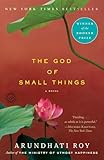
The God of Small Things — Arundhati Roy (1997)
Roy’s debut won the Booker in 1997 and has never been surpassed in her body of work (she has not published a second novel in the twenty years since). Set in Kerala, following the Ipe family across two time periods — the early 1960s and 1993 — the novel deals with India’s caste system, the politics of the Communist Party in Kerala, and a forbidden love whose consequences are catastrophic. Roy’s prose style — dense with wordplay, imagery, and invented compound words — is immediately recognisable and completely distinctive.
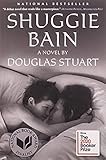
Shuggie Bain — Douglas Stuart (2020)
Douglas Stuart’s debut is the most recent winner on this list and the one most likely to endure. Set in 1980s Glasgow during the Thatcher years, it follows Shuggie Bain — a sensitive, gender-nonconforming boy — and his relationship with his mother Agnes, an alcoholic struggling to survive the destruction of working-class Scotland by deindustrialisation. The novel is devastating, beautiful, and specific: the world it describes is rendered with the precision of lived experience (Stuart grew up in the conditions he describes).
More Essential Winners
Beloved — Toni Morrison (1988)
Morrison’s Pulitzer Prize-winning novel was also shortlisted for the Booker (the rules at the time limited the prize to Commonwealth writers, and Morrison was American). Included here because it is inseparable from the history of the prize in the broader sense — the novel that most serious readers of Booker-calibre fiction have read alongside the winners. The ghost of Sethe’s murdered daughter, the trauma of slavery rendered through form and through magic — this is the great American novel of its generation.
The Luminaries — Eleanor Catton (2013)
The most formally inventive recent Booker winner. Set during the New Zealand gold rush of the 1860s, constructed on a strict astrological schema (each section half the length of the previous one, each character associated with a celestial body), The Luminaries is a mystery novel and a structural demonstration piece simultaneously. Catton was twenty-eight when she won — the youngest winner in the prize’s history. At 830 pages it demands patience, which the plotting and the structural revelation reward.
The Sellout — Paul Beatty (2016)
The only American winner. A Black man in a fictional Los Angeles suburb reinstitutes slavery (of himself) and segregation as a satirical provocation. Beatty’s novel is the most formally radical and the funniest American novel of the last decade — a satirical attack on race in America that uses absurdism to say what realism cannot. It received some of the most divided reviews in Booker history; it is also unmistakably important.
Girl, Woman, Other — Bernardine Evaristo (2019)
Twelve interconnected Black British lives across the twentieth and twenty-first centuries, written in an innovative prose-poetry form (no full stops; sentences running into one another). Evaristo shared the 2019 prize with Margaret Atwood — a decision that generated controversy, as the rules had previously prohibited shared prizes — and the quality of her novel justifies it: this is the fullest rendering of Black British experience in contemporary fiction.
A Guide to Literary Excellence
The Booker Prize has become, over its decades of history, one of the most reliable guides to literary excellence in the English-speaking world — a mark of quality that, while not infallible, identifies with remarkable consistency the finest literary fiction of its time, and that offers readers a valuable guide through the overwhelming abundance of published books. In a world that produces far more books than any reader could hope to navigate, the major literary prizes serve a genuinely useful function as guides to quality, identifying works of exceptional merit and directing readers toward the best of contemporary literature, and among these prizes the Booker has earned a particular authority and prestige. The Booker Prize, awarded annually to what its judges deem the best literary fiction, has compiled over its history a remarkable record of identifying works of genuine and lasting quality, and its list of winners and shortlisted books constitutes a valuable guide to the finest literary fiction of recent decades. The prize’s authority derives from the seriousness and rigor of its judging, the prestige it has accumulated over its history, and its consistent record of recognizing works of genuine merit, many of which have gone on to become acknowledged classics. For readers seeking to navigate the abundance of contemporary fiction and to find works of genuine quality, the Booker Prize offers a valuable guide, its winners and shortlists identifying with remarkable consistency the finest literary fiction of their time. The prize is not infallible, and its choices can be debated, but its record of identifying works of exceptional merit makes it one of the most reliable guides to literary excellence in the English-speaking world. To read the Booker winners is to read some of the finest literary fiction of recent decades, identified by one of the most authoritative and prestigious of literary prizes, and the prize offers readers a valuable guide through the overwhelming abundance of published books toward works of genuine and lasting quality.
The Range of the Winners
One of the most striking features of the Booker Prize, revealed by surveying its winners across the decades, is the extraordinary range of the books it has honored — the remarkable diversity of subjects, styles, settings, and voices among the winners, which reflects both the breadth of contemporary literary fiction and the prize’s openness to the full variety of literary excellence. The Booker winners do not conform to any single type or formula; they encompass an extraordinary range of literary fiction, from historical novels to contemporary stories, from experimental works to more traditional narratives, from intimate personal dramas to sweeping epics, and from the work of established masters to that of debut novelists. This range reflects the breadth of contemporary literary fiction and the prize’s commitment to recognizing literary excellence in all its forms, rather than favoring any single style, subject, or approach. The diversity of the winners is one of the prize’s great strengths, for it ensures that the Booker list offers readers an introduction to the full variety of contemporary literary fiction, a survey of the many forms that literary excellence can take. The range of the winners also reflects the increasingly global and diverse character of literature in English, for the prize has honored writers from across the English-speaking world and has recognized the diverse voices and experiences that contemporary literature encompasses. To survey the Booker winners is to encounter the extraordinary range of contemporary literary fiction, the diversity of subjects, styles, settings, and voices that the prize has honored, and the full variety of forms that literary excellence can take. This range is among the most valuable features of the Booker list, offering readers an introduction to the breadth of contemporary literary fiction and ensuring that the prize recognizes literary excellence in all its diverse forms. The range of the winners reflects both the breadth of contemporary literary fiction and the prize’s openness to the full variety of literary achievement, making the Booker list a valuable survey of the diverse forms that literary excellence can take.
Reading Award Winners Wisely
While the Booker Prize offers a valuable guide to literary excellence, the wise reader approaches award-winning books with a balanced understanding — appreciating the genuine quality that the prize identifies while recognizing the limitations and subjectivity inherent in any literary award, and ultimately trusting their own judgment and taste alongside the guidance the prize provides. Literary prizes like the Booker are valuable guides, but they are not infallible authorities, and the thoughtful reader understands both their value and their limitations. On the one hand, the prize genuinely identifies works of exceptional quality, and its winners are, with remarkable consistency, books of real literary merit worth the reader’s attention. On the other hand, any literary award reflects the subjective judgments of particular judges at a particular moment, is subject to the vagaries of taste, fashion, and circumstance, and cannot claim to be a definitive or objective verdict on literary quality. Some excellent books are overlooked, some debatable choices are honored, and the reader who treats the prize as an infallible authority rather than a valuable but fallible guide misunderstands its nature. The wise reader, therefore, approaches award-winning books with a balanced understanding, appreciating the genuine quality that the prize reliably identifies while recognizing the subjectivity and limitation inherent in any literary award. This means using the prize as a valuable guide to works worth considering, while ultimately trusting one’s own judgment and taste, reading the winners with an open but critical mind, and recognizing that one’s own response to a book matters more than any prize. The prize can direct the reader toward works of genuine quality, but it cannot dictate the reader’s response, and the wise reader uses the guidance of the prize while trusting their own judgment and taste. To read award winners wisely is to appreciate the genuine value of the prize as a guide to literary excellence while recognizing its limitations and subjectivity, and to use its guidance while ultimately trusting one’s own judgment and response. This balanced approach allows the reader to benefit from the valuable guidance the prize provides while maintaining the independence of judgment and taste essential to a genuine and personal engagement with literature.
Reading by Period
Classic winners (1970s–1990s): The Remains of the Day → The God of Small Things → Wolf Hall.
Recent winners (2010s): The Luminaries → The Sellout → Shuggie Bain → Girl, Woman, Other.
Start anywhere: The Remains of the Day is the safest first Booker novel — universally acclaimed, formally accessible, and absolutely devastating.
Also Worth Reading
Another Booker winner well worth seeking out is John Banville’s The Sea, a haunting, beautifully written meditation on memory, loss, and grief.
Frequently Asked Questions
What is the Booker Prize?
The Booker Prize (formerly the Man Booker Prize) is the most prestigious literary award in the English-speaking world for fiction. It was established in 1969, originally open only to Commonwealth writers; from 2014 it opened to any novel written in English and published in the UK. The prize has a strong record of identifying lasting literary achievement — most Booker winners have proved their importance over time, though the prize has also passed over some major works.
What is the best Booker Prize novel to start with?
The Remains of the Day by Kazuo Ishiguro is the most widely recommended starting point — a perfectly controlled novel about repression, regret, and the way a life can be spent in service of the wrong things. Wolf Hall by Hilary Mantel is the most ambitious and rewards readers willing to adjust to its unusual present-tense, third-person narration. The God of Small Things by Arundhati Roy is the most emotionally intense and the most beautiful at the sentence level.
Has the Booker Prize ever been wrong?
The prize has a better record than most — its mistakes are fewer and less embarrassing than the Pulitzer Prize's — but it has had notable misses. Salman Rushdie's Midnight's Children (1981) and The Remains of the Day (1989) are its two most celebrated winners; but some years the prize went to books that have not sustained their reputation. The prize also has a known bias toward British and Irish literature and has at times rewarded formal ambition over readability.
What recent Booker winners are worth reading?
The most acclaimed recent winners: Shuggie Bain by Douglas Stuart (2020) — a working-class Glasgow childhood in the Thatcher years, devastating and beautiful; Girl, Woman, Other by Bernardine Evaristo (2019) — twelve interconnected Black British lives narrated in innovative prose; The Testaments by Margaret Atwood (2019) — the sequel to The Handmaid's Tale, sharing the 2019 prize with Evaristo; The Sellout by Paul Beatty (2016) — the only American winner, a savage satire on race in America.