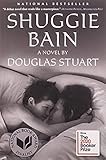
Editors Reads Verdict
Shuggie Bain is a novel of devastating compassion — a portrait of poverty, addiction, and unconditional love that won the 2020 Booker Prize and announced Douglas Stuart as one of the most significant literary voices of his generation.
What We Loved
- Agnes Bain is one of the great characters in contemporary British fiction
- The rendering of 1980s Glasgow is precise, compassionate, and utterly specific
- The love between Shuggie and his mother is heartbreaking and completely credible
- Stuart writes about addiction without either glamorising or demonising it
Minor Drawbacks
- Relentlessly painful — readers should be prepared for sustained emotional difficulty
- The pace is deliberately slow in the early sections
- Some readers find the ending too bleak
Key Takeaways
- → Addiction destroys families while leaving the love within them intact
- → Thatcherite deindustrialisation created conditions of systemic hopelessness in working-class Scotland
- → Children of addicts carry a particular kind of loyalty that can become a trap
- → Queerness in working-class communities in the 1980s carried specific and severe costs
- → Love is not sufficient to save someone from themselves, but it matters anyway
| Author | Douglas Stuart |
|---|---|
| Publisher | Grove Press |
| Pages | 448 |
| Published | February 11, 2020 |
| Language | English |
| Genre | Fiction, Literary Fiction |
| Difficulty | Intermediate |
| Best For | Readers of serious literary fiction prepared for difficult content — particularly those interested in working-class British fiction, addiction narratives, and mother-child relationships. |
How Shuggie Bain Compares
Shuggie Bain at a glance against 2 similar books readers weigh alongside it.
| Book | Author | Rating | Best for |
|---|---|---|---|
| Shuggie Bain (this book) | Douglas Stuart | ★ 4.4 | Readers of serious literary fiction prepared for difficult content — |
| A Fine Balance | Rohinton Mistry | ★ 4.7 | Readers of serious literary fiction with stamina for emotionally demanding |
| White Teeth | Zadie Smith | ★ 4.2 | Readers of contemporary literary fiction interested in multicultural Britain, |
A Novel Born from Memory
Douglas Stuart wrote Shuggie Bain over ten years, drawing on his own childhood in 1980s Glasgow. His mother was an alcoholic. The novel was rejected by forty-four publishers before Grove Press accepted it. It won the 2020 Booker Prize. The facts of its creation feel inseparable from the fact of the novel itself — a book that carries the weight of actual memory.
Agnes Bain is the novel’s heart: beautiful, charming, funny, completely undone by alcohol. She is one of the great characters in contemporary fiction not because she is admirable — she often isn’t — but because she is completely, painfully human. Stuart renders her addiction not as a moral failing but as a disease that has gotten its hooks into someone who deserved better from life.
The book’s structure circles this ruin with care. It opens in 1992, with a sixteen-year-old Shuggie living alone in a grim Glasgow bedsit, before looping back to 1981 to trace how he got there. We meet the family as it fractures: Agnes’s philandering taxi-driver husband, “Big Shug,” who abandons her with three children in the bleak mining scheme of Pithead; the older sister, Catherine, who escapes through marriage and emigration; and the gentle, artistic brother, Leek, who retreats into himself and eventually leaves too. One by one, everyone gets out — except Shuggie, the youngest, who stays and tries to save her.
The Glasgow of Thatcher’s Britain
The novel’s historical setting is not incidental. Stuart captures the specific devastation of Thatcherite deindustrialisation on working-class Scottish communities with the authority of someone who lived it. The closures of factories and mines, the withdrawal of community infrastructure, the unemployment that became structural rather than cyclical — these are not background detail but the conditions that make Agnes’s alcoholism comprehensible.
Shuggie grows up in housing schemes where despair is the ambient atmosphere. His love for his mother, and his particular vulnerability as a boy who doesn’t fit the hard masculinity of his environment, are rendered with extraordinary tenderness.
The Cost of Love
The novel’s central question is what it does to a child to love, completely and without reservation, someone who is destroying themselves. Shuggie can see his mother clearly — he knows what she is — and loves her anyway. That clarity alongside that love is the source of the novel’s unbearable emotional pressure.
Stuart does not provide easy resolution. The ending is exactly as painful as it needs to be.
A Boy Who Doesn’t Fit
Inseparable from the addiction story is Shuggie’s dawning sense that he is “no right” — different in a way his neighbours punish. Effeminate, gentle, and unmistakably queer in a hard, hyper-masculine 1980s working-class world, he is bullied relentlessly and learns young to study and mimic the boys around him in a doomed effort to pass. Stuart draws the particular cruelty of that environment without melodrama, and the parallel between Agnes’s hidden shame and Shuggie’s becomes one of the novel’s quiet structural achievements: two people the world has decided are wrong, clinging to each other. It is also, unmistakably, a portrait of childhood loneliness — of a boy made old before his time by a love that asks too much of him.
From Forty Rejections to the Booker
The story behind the book has become almost as celebrated as the book itself. Douglas Stuart spent a decade writing Shuggie Bain in the evenings while working as a fashion designer in New York, drawing directly on his own Glasgow childhood; his own mother died of alcoholism when he was sixteen. The manuscript was rejected by some thirty to forty-four publishers before the independent Grove Atlantic took it on — and it went on to win the 2020 Booker Prize, making Stuart only the second Scottish writer to win, after James Kelman. It topped best-of-the-year lists at the Times, the Telegraph, the New York Times, and many more, and Stuart followed it with the thematically kindred Young Mungo (2022). That a debut this raw and uncommercial reached the top of the literary world is part of its meaning.
A Stylist’s Eye
What keeps the novel from being merely an ordeal is the quality of the writing. Stuart has an extraordinary eye for the telling physical detail — the careful application of lipstick before a binge, the rituals of pride a poor household maintains against squalor, the specific textures of damp tower blocks and meanly stocked kitchens — and he captures the cadence of Glaswegian speech without ever reducing his characters to dialect or caricature. His prose can turn from grim naturalism to sudden lyricism, and his refusal to judge anyone, even at their most destructive, is the source of the book’s “devastating compassion.” The result is social realism in the tradition of writers like James Kelman and Agnes Owens, but suffused with a tenderness entirely Stuart’s own.
Verdict
Shuggie Bain is not an easy read — it is relentlessly painful, deliberately slow to build, and unsparing to the last page — and readers should come to it prepared. But its bleakness is never gratuitous; it is the honest cost of a story told with overwhelming tenderness. The unsinkable love a child holds for a damaged parent has rarely been rendered with such precision or compassion.
Our rating: 4.4/5 — A masterwork of compassion and precision: one of the most important British novels of the twenty-first century.
Reading Guides
Frequently Asked Questions
What is "Shuggie Bain" about?
Set in 1980s Glasgow during Thatcherite deindustrialisation, Shuggie Bain follows a devoted young boy's desperate love for his alcoholic mother.
Who should read "Shuggie Bain"?
Readers of serious literary fiction prepared for difficult content — particularly those interested in working-class British fiction, addiction narratives, and mother-child relationships.
What are the key takeaways from "Shuggie Bain"?
Addiction destroys families while leaving the love within them intact Thatcherite deindustrialisation created conditions of systemic hopelessness in working-class Scotland Children of addicts carry a particular kind of loyalty that can become a trap Queerness in working-class communities in the 1980s carried specific and severe costs Love is not sufficient to save someone from themselves, but it matters anyway
Is "Shuggie Bain" worth reading?
Shuggie Bain is a novel of devastating compassion — a portrait of poverty, addiction, and unconditional love that won the 2020 Booker Prize and announced Douglas Stuart as one of the most significant literary voices of his generation.
Ready to Read Shuggie Bain?
Check the current price on Amazon.
Check Price on Amazon (paid link)Prices and availability are subject to change. See Amazon for current price.
Review last updated: