Best Books About Addiction: Memoirs, Fiction, and Science
The best books about addiction — from Beautiful Boy and Shuggie Bain to Dopamine Nation. Memoirs, fiction, and science books about substance use and recovery.
By Lena Fischer

Books about addiction fall into three categories: memoirs by addicts and their families, fiction in which addiction is the central subject, and science books that explain what addiction actually is and why it happens. The best books in each category are below.
Memoirs: The Family’s Perspective
Beautiful Boy — David Sheff (2008)
The most widely read addiction memoir from the family’s perspective — David Sheff’s account of his son Nic’s methamphetamine addiction, from the first signs of drug use through multiple cycles of rehabilitation and relapse. Sheff researched the neuroscience of addiction extensively and weaves it into his account; the result is both a personal document and an explanation of what meth does to the brain, why relapse is expected rather than failure, and what families can and cannot do to help. His son Nic wrote a parallel memoir — Tweak — that covers the same period from the inside.
Fiction
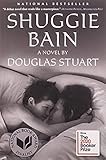
Shuggie Bain — Douglas Stuart (2020)
The Booker Prize-winning novel about alcoholism and its consequences — Agnes Bain, a woman of fierce charm and romantic aspiration, is trapped by her alcoholism and by the post-industrial Glasgow of the 1980s, where her husband has abandoned her and the economic devastation of Thatcher’s Britain has closed every exit. Her son Shuggie, gentle and devoted, loves her without reservation and is gradually destroyed by that love. Stuart’s portrait of a mother and child caught in cycles they cannot break is the most emotionally demanding and most truthful account of addiction’s effect on family in contemporary fiction.
Science and Understanding
Dopamine Nation — Anna Lembke (2021)
The best scientific account of addiction for general readers — Lembke, a Stanford psychiatrist who heads the dual diagnosis addiction clinic, uses patient case studies and neuroscience to explain why addiction is not a moral failure but a consequence of a reward system that was not designed for the scale of stimulation modern life provides. The dopamine balance hypothesis (every high is followed by an equal low; tolerance requires more of the same stimulus to achieve the same effect; the baseline shifts until the addict is using just to feel normal) is the clearest explanation available of why addiction is so hard to overcome. Practical, compassionate, and scientifically grounded.
Why Read All Three Perspectives
The three categories on this list are not interchangeable routes to the same understanding — each one corrects the blind spots of the others, which is why the strongest reading experience comes from crossing between them. The science explains mechanisms but cannot convey what it is like to watch a person you love disappear into the mechanism; Dopamine Nation will tell you precisely why relapse is the expected course of the disease, but only Beautiful Boy makes you feel the specific cruelty of hoping anyway, every time. Memoir supplies that lived truth but is bounded by one family’s circumstances, one drug, one social world. Fiction does what neither can: Shuggie Bain gives you the interior of the child who cannot leave, has no clinical vocabulary, and experiences a parent’s addiction not as a health crisis but as the weather of his entire world.
Read together, the three books also dismantle the most persistent myths about addiction one by one. The moral-failure myth does not survive Lembke’s account of a reward system being predictably overwhelmed. The myth that love is sufficient does not survive Sheff’s decade of evidence that a father’s devotion cannot outcompete methamphetamine. And the myth that addiction is an individual problem does not survive Stuart’s Glasgow, where economic collapse closed every exit before Agnes Bain ever opened a can. Each book leaves a different residue, and the combination is closer to the truth than any single account.
Reading These Books When Addiction Is Personal
A practical note for the many readers who come to this subject not out of curiosity but because someone in their life is in active addiction: the order matters more for you than for anyone else. Dopamine Nation is the gentlest entry point, because understanding the neuroscience creates a measure of emotional distance — it reframes behaviour that feels like betrayal as the predictable output of a hijacked reward system, which for many family members is the beginning of being able to function. Lembke’s chapters on tolerance and the shifted baseline answer the question that torments families — “why can’t they just stop?” — with something better than reassurance: an actual explanation.
Beautiful Boy is the book for the parent, partner, or sibling who needs to feel less alone, but it should be approached with care during a crisis — Sheff’s honesty about relapse cycles is the book’s great virtue and also what makes it harrowing when you are living inside the same cycle. Many readers report it is most valuable slightly after the acute phase, when its refusal of false hope reads as solidarity rather than prophecy. Shuggie Bain is the most emotionally demanding of the three and the one to save for last; its portrait of a child’s loyalty is devastating precisely because it is rendered without any protective distance. For adult children of alcoholics in particular, it is less a novel than a mirror, and worth reading when there is support around you.
None of these books is a substitute for help — Al-Anon, therapy, or medical treatment — but each, in a different register, performs the first necessary task: making an isolating experience legible and shared.
Reading Order
Start with memoir: Beautiful Boy → Shuggie Bain.
Start with science: Dopamine Nation → Beautiful Boy.
Fiction first: Shuggie Bain → Dopamine Nation → Beautiful Boy.
Frequently Asked Questions
What is the best book about addiction?
Beautiful Boy (2008) by David Sheff is the most widely read addiction memoir — a father's account of his son Nic's methamphetamine addiction, alternating with Nic's own memoir Tweak. It is the most accessible account of addiction from the perspective of the family rather than the addict. Shuggie Bain (2020) by Douglas Stuart is the most powerful piece of fiction about addiction — a Booker Prize-winning novel about a child growing up with an alcoholic mother in 1980s Glasgow. Dopamine Nation (2021) by Anna Lembke is the best scientific account of addiction for general readers.
What is Beautiful Boy about?
Beautiful Boy (2008) by David Sheff is a father's account of watching his son Nic become addicted to methamphetamine — the progressive escalation from marijuana to harder drugs, the rehabilitation attempts, the relapses, the lies, the moments of apparent recovery followed by disaster. Sheff researched addiction science extensively and weaves it into his account, making the book both a personal memoir and an explanation of what methamphetamine actually does to the brain. His son Nic wrote a parallel memoir (Tweak) from the addict's perspective.
What is Dopamine Nation about?
Dopamine Nation (2021) by Anna Lembke, a Stanford psychiatrist who specialises in addiction, argues that we live in an age of compulsive overconsumption — not just of drugs but of social media, food, gambling, and shopping — because our environment now provides access to dopamine-releasing stimuli at a scale our brains were not designed to handle. Lembke uses patient case studies (including her own compulsive consumption of romance novels) alongside neuroscience to explain the dopamine reward system, tolerance, and withdrawal. The most practical and scientifically grounded book about why addiction happens and what can be done about it.
What is Shuggie Bain about?
Shuggie Bain (2020) by Douglas Stuart follows Shuggie, a young boy in 1980s Glasgow, and his mother Agnes, a glamorous, funny, fiercely loving woman whose alcoholism progressively destroys her life and her family's. The novel is set against the backdrop of Thatcher's destruction of the Scottish mining communities — the economic devastation that provides the context for Agnes's drinking and the world in which she and Shuggie are trapped. Stuart's novel won the Booker Prize and is the most emotionally powerful portrait of an alcoholic parent and the child who loves them in contemporary fiction.