Best Behavioral Economics Books: Essential Reading
The best behavioral economics books — from Thinking, Fast and Slow and Predictably Irrational to Nudge and Misbehaving. Essential reading on decision-making.
By Marcus Webb
Behavioral economics — the field that combines economic theory with psychological research to explain why people make the decisions they do — has produced some of the most practically useful books of the past thirty years. The key insight of the field is that human decision-making is systematically irrational in predictable ways; understanding these patterns allows better decisions and better policy design.
The Foundational Texts
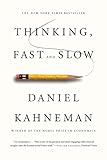
Thinking, Fast and Slow — Daniel Kahneman (2011)
The most comprehensive account of cognitive bias and irrationality — Kahneman’s life’s work, summarised in a book that is simultaneously rigorous and readable. The System 1 / System 2 framework has become the standard vocabulary for thinking about how human cognition works and fails. Kahneman won the Nobel Prize in Economics in 2002 (he is a psychologist — the only non-economist to win it); his collaborator Amos Tversky had died in 1996 and was ineligible. The essential starting point.
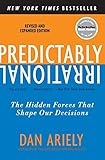
Predictably Irrational — Dan Ariely (2008)
The most entertaining entry point — Ariely’s account of his own experiments reveals how irrational human economic behaviour is in specific, reproducible ways. Why people will stand in a long line for a free product but not for the same product at a very low price. Why a doctor’s advice has the same effect as a sugar pill. Why thinking about money makes people less ethical. More anecdotal than Kahneman, less comprehensive, and the best starting point for readers who prefer stories to theory.
Nudging and Choice Architecture
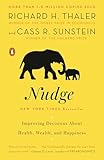
Nudge — Richard Thaler and Cass Sunstein (2008)
The policy application of behavioral economics — how understanding cognitive bias allows the design of better default choices that improve outcomes without restricting freedom. Thaler and Sunstein’s concept of ‘libertarian paternalism’ (designing choices so that the default option is the best one, while preserving the right to opt out) has influenced government policy in the UK, the US, and elsewhere. Won Thaler the Nobel Prize in 2017.
Misbehaving — Richard Thaler (2015)
Thaler’s memoir of the creation of behavioral economics — the intellectual history of the field from his early days finding anomalies in economic data to the Nobel Prize. More personal than Kahneman and more aware of the academic politics involved; the best account of how a new discipline comes into being.
Persuasion and Influence
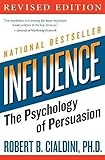
Influence — Robert Cialdini (1984, revised 2021)
The most practical account of persuasion — six principles that govern how and why people say yes, based on fieldwork and research. Essential reading for anyone in business, marketing, or negotiation, and for anyone who wants to understand why they make the decisions they do when being persuaded. The most widely read book in the field.
Pre-Suasion — Robert Cialdini (2016)
Cialdini’s follow-up to Influence — focusing on what happens before the persuasive message, the conditions that make people receptive. The key insight: the moment of maximum persuasive impact is before the message is delivered, not during it.
The Undoing Project — Michael Lewis (2016)
Lewis’s account of the friendship and intellectual collaboration between Daniel Kahneman and Amos Tversky — the story of how the two most important figures in behavioral economics developed their ideas together and were driven apart by success. The most human account of the field’s origin and the most readable.
Statistical Thinking and Noise
Noise — Daniel Kahneman, Olivier Sibony, Cass Sunstein (2021)
Kahneman’s late book — distinguishing between bias (systematic error in one direction) and noise (random variability in judgement). The discovery that judges give different sentences for identical crimes depending on whether their local team won the day before; that doctors give different diagnoses to identical patients; that interviewers rate the same candidate differently depending on the previous candidate. The most rigorous recent account of how human judgement fails.
Why the Rational Actor Had to Die
The whole field of behavioral economics rests on the demolition of a single, once-dominant assumption: that human beings are rational actors who reliably pursue their own best interests. Classical economics built its elegant models on this premise, and for a long time the inconvenient fact that real people constantly violate it was treated as noise. The books on this list document the intellectual revolution that made that evasion impossible — the patient accumulation of evidence, much of it from Kahneman and Tversky’s experiments, showing that human judgment is systematically, predictably irrational. We do not weigh probabilities correctly; we are swayed by how choices are framed, anchored by arbitrary numbers, terrified of losses far more than we are attracted to equivalent gains, and prone to a long catalogue of cognitive biases that operate beneath awareness. The significance of this work is hard to overstate, because the rational-actor model was not merely an academic abstraction but the foundation of how economists, policymakers, and institutions thought about everything from markets to public policy. To show that the foundation was false was to require a rebuilding of the whole edifice on more realistic, more human ground. What makes these books so illuminating is that the irrationality they describe is not random but lawful: the same biases recur across people and situations, which means human misjudgment can be studied, predicted, and to some extent corrected. This is the field’s central and liberating insight — that the flaws in our thinking follow rules, and that understanding those rules is the first step toward thinking better. The death of the rational actor was not a counsel of despair about human reason but the beginning of a more honest and more useful science of how we actually decide.
The Two Systems of the Mind
The most powerful organizing idea to emerge from this literature is the distinction between two modes of thinking — the fast, automatic, intuitive system that handles most of life effortlessly, and the slow, deliberate, effortful system that we engage only when forced. Kahneman’s framing of “thinking fast and slow” has become the field’s central metaphor, and for good reason: it explains both the brilliance and the failures of human cognition in a single, intuitive structure. The fast system is a marvel of efficiency, allowing us to navigate a complex world without conscious calculation, but it achieves that efficiency through shortcuts — heuristics — that work well most of the time and fail predictably in specific circumstances. The slow system can catch and correct these errors, but it is lazy and expensive, and we deploy it far less often than we should, defaulting to intuition even when the situation demands deliberation. This framework illuminates an enormous range of human behavior, from the snap judgments that produce prejudice to the overconfidence that wrecks investments to the susceptibility to manipulation that the persuasion literature documents. It also offers a practical discipline: learning to recognize the situations in which fast thinking is likely to mislead, and deliberately engaging the slow system when the stakes warrant it. The two-systems model does not promise that we can become consistently rational — the fast system is too deeply wired for that — but it offers something more achievable, a kind of metacognitive awareness that lets us anticipate our own predictable errors and build defences against them. Understanding the architecture of one’s own mind is the foundation of every other lesson these books teach.
From Insight to Influence — and the Ethics of the Nudge
Behavioral economics did not remain a purely descriptive science; its findings turned out to have enormous practical power, and the books on this list trace the field’s migration from the laboratory into the design of choices that shape millions of lives. Once you understand that people are powerfully influenced by how options are framed and presented, you possess a tool of real force — the ability to “nudge” behavior by arranging the choice architecture, the default options, and the framing that surrounds a decision. This insight has been applied to enormous benefit: getting people to save more for retirement, to become organ donors, to make healthier choices, all without restricting anyone’s freedom, simply by structuring the decision more intelligently. But the same knowledge carries an unmistakable ethical charge, because the techniques that can nudge people toward their own welfare can equally be turned to exploitation — to manipulating consumers, voters, and users against their interests by weaponizing the very biases the field has catalogued. The persuasion literature makes this double edge explicit, documenting how the principles of influence are deployed every day by marketers and persuaders who do not have the subject’s welfare in mind. This is the field’s most important practical lesson and its central moral tension: that understanding the systematic flaws in human judgment confers a power that can protect or prey upon people, and that the line between helpful nudging and manipulative exploitation depends entirely on whose interest is being served. The thoughtful reader emerges not only better equipped to make sound decisions but also more alert to the constant, often invisible efforts of others to shape those decisions — a defensive literacy that is itself among the most valuable things these books provide.
Reading Order
Start with the foundation: Thinking, Fast and Slow → Predictably Irrational → Nudge.
Practical applications: Predictably Irrational → Influence → Pre-Suasion → Nudge.
Complete: Thinking, Fast and Slow → Predictably Irrational → Influence → Nudge → Misbehaving → The Undoing Project → Noise.
Frequently Asked Questions
What is the best behavioral economics book to start with?
Thinking, Fast and Slow (2011) by Daniel Kahneman is the foundational text — a comprehensive account of the two systems of thought (fast, intuitive System 1 and slow, deliberate System 2), the cognitive biases each produces, and the implications for decision-making. Kahneman is the Nobel Prize-winning psychologist whose research created the field; this is the definitive popular account of his life's work. Predictably Irrational (2008) by Dan Ariely is the more entertaining starting point — shorter, more anecdotal, focused on specific experiments that reveal how irrational our economic decisions are.
What is Thinking, Fast and Slow about?
Thinking, Fast and Slow (2011) by Daniel Kahneman is structured around the distinction between System 1 (fast, automatic, emotional, intuitive) and System 2 (slow, deliberate, logical, effortful) thinking. Kahneman and his late collaborator Amos Tversky spent decades cataloguing the ways that System 1 creates predictable errors of judgement — anchoring, the halo effect, loss aversion, the planning fallacy, overconfidence — and showing that these errors persist even when we know about them. The most comprehensive popular account of cognitive bias and the most important book in the behavioral economics tradition.
What is Nudge about?
Nudge (2008) by Richard Thaler and Cass Sunstein argues that the way choices are presented (the 'choice architecture') systematically influences decisions, and that governments and institutions can improve outcomes by designing better choice architectures without restricting freedom. The canonical example: making organ donation opt-out rather than opt-in dramatically increases donation rates without forcing anyone to donate. Thaler won the Nobel Prize in Economics in 2017. The most policy-relevant book in behavioral economics and the one that has had the most direct influence on government policy.
What is Influence about?
Influence (1984, revised 2021) by Robert Cialdini catalogues six principles of persuasion — reciprocity (we feel obligated to return favours), commitment/consistency (we want to behave consistently with past choices), social proof (we follow what others do), authority (we defer to experts), liking (we say yes to people we like), and scarcity (we want what is rare). Based on three years of fieldwork (Cialdini trained as a car salesperson, telemarketer, and charity solicitor) and extensive research, the book is the most practical account of how persuasion works and the most widely read book in the field outside academia.