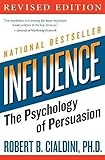
Editors Reads Verdict
The most practically useful psychology book ever written. Whether you want to understand why you say yes when you mean no, build more persuasive arguments, or defend yourself against manipulation, Influence gives you the tools. Cialdini's six principles have been cited in virtually every marketing and negotiation book written since 1984.
What We Loved
- The six principles are immediately recognisable — you'll see them everywhere within days of reading
- Cialdini spent years as a volunteer in sales and PR organisations collecting real-world examples
- Equally useful for persuaders and for those wanting to resist persuasion
- Short, readable chapters with memorable examples make the ideas stick
- The foundation for practically every modern book on negotiation, marketing, and sales
Minor Drawbacks
- Some examples are dated (1984 publication); the New and Expanded edition updates these
- The principles are descriptive, not always prescriptive — application requires judgement
Key Takeaways
- → Reciprocity: people feel obligated to return favours — even small, uninvited ones
- → Commitment and consistency: once people commit to something, they act to remain consistent with it
- → Social proof: in uncertainty, people look to what others are doing
- → Authority: credentials and symbols of authority trigger automatic deference
- → Scarcity: the less available something is, the more desirable it becomes
| Author | Robert Cialdini |
|---|---|
| Publisher | Harper Business |
| Pages | 336 |
| Published | January 1, 1984 |
| Language | English |
| Genre | Psychology, Business, Self-Help |
| Difficulty | Beginner |
| Best For | Anyone who negotiates, sells, manages people, or simply wants to understand why humans are so consistently predictable in their irrationality. Essential for marketers, managers, salespeople, and critical thinkers. |
How Influence Compares
Influence at a glance against 3 similar books readers weigh alongside it.
| Book | Author | Rating | Best for |
|---|---|---|---|
| Influence (this book) | Robert Cialdini | ★ 4.7 | Anyone who negotiates, sells, manages people, or simply wants to understand why |
| How to Win Friends and Influence People | Dale Carnegie | ★ 4.7 | Anyone who wants to build better professional relationships, be more |
| Never Split the Difference | Chris Voss | ★ 4.7 | Anyone who negotiates — which is everyone |
| Thinking, Fast and Slow | Daniel Kahneman | ★ 4.6 | Investors, doctors, lawyers, managers, policymakers, and any curious person who |
The Book Every Marketer Has Read
Robert Cialdini was a psychology professor at Arizona State University when he spent three years working undercover in sales offices, PR firms, fundraising organisations, and advertising agencies — studying the practitioners of influence in their natural habitat. Influence is the result.
Published in 1984, it has sold over five million copies and is cited in more marketing, negotiation, and business books than any other single work. Charlie Munger called it one of the most important books he’d read. Warren Buffett recommended it. Virtually every major book on negotiation, marketing, or persuasion published since 1984 builds on Cialdini’s framework.
The Six Principles
Reciprocity. Humans feel a deeply uncomfortable obligation to return favours. This instinct is so powerful that even small, uninvited gifts reliably increase compliance — Hare Krishna fundraisers discovered this with flowers; restaurants discovered it with mints. The obligation to repay runs deeper than the obligation to refuse.
Commitment and Consistency. Once people take a position, they work hard to behave consistently with it. This is why salespeople get small initial commitments before asking for larger ones — foot-in-the-door technique. It’s why hazing makes people value what they suffered for. Written commitments are more powerful than verbal ones; public commitments more powerful still.
Social Proof. In uncertain situations, people look at what others are doing and treat it as information about the correct course of action. This is why testimonials work, why TV shows use laugh tracks, why bars leave tip jars pre-seeded with money. Social proof is most powerful when the social proof comes from people similar to the observer.
Authority. Titles, uniforms, and trappings of expertise trigger automatic deference, even when that authority is fake or irrelevant. People follow the confident-sounding voice on the phone. Cialdini’s most disturbing example: a doctor’s written order for the wrong medication was filled by nurses who didn’t question it because he was a doctor.
Liking. We comply more readily with people we like, and we like people who are physically attractive, similar to us, familiar, and who give us compliments — even insincere ones, even when we know they’re insincere. The Tupperware party and the pyramid scheme both run on this principle.
Scarcity. Things become more desirable when they are less available. “Limited time offer,” “only 3 left,” “members only” — these all exploit the psychological principle that scarcity implies value. The principle is especially powerful when scarcity is created through competition: items fought over by multiple bidders become more desirable to each bidder.
Why It Holds Up
The New and Expanded edition (2021) updates examples and adds new research, including a seventh principle: Unity (the shared identity trigger — we are especially influenced by those we consider part of our in-group). But the original six principles are as accurate today as they were in 1984, because they are built into human psychology at a level that doesn’t change with culture or technology.
The most valuable use of this book is defensive. Once you know the six principles, you recognise compliance attempts in real time — and the recognition itself breaks the automatic response.
Our rating: 4.7/5 — The most important psychology book for understanding daily life. Everyone is being influenced, all the time; this book teaches you to see it.
The Science of Saying Yes
Robert Cialdini’s Influence is the foundational text on the psychology of persuasion, and its enormous, lasting impact rests on a simple, powerful structure. Drawing on years of research, Cialdini identifies the core principles by which people are led to comply — to say yes — and organises the book around them, so that the reader comes away with a clear map of the levers that move human decisions. The principles he names, including reciprocity, commitment and consistency, social proof, authority, liking, and scarcity, have become part of the basic vocabulary of marketing, sales, and behavioural science, and the book is widely regarded as a modern classic.
Defence as Much as Offence
What makes Influence genuinely valuable, rather than merely a manual for manipulation, is Cialdini’s framing of it as a guide to self-defence. He explains each principle not only to show how it is used to persuade but to help the reader recognise when these techniques are being deployed against them — by salespeople, advertisers, and others who profit from automatic compliance. The book teaches readers to notice the moments when they are being nudged toward a yes they might not have chosen, and to resist. This protective purpose gives it an ethical seriousness that has helped it endure.
Memorable Research and Examples
Cialdini illustrates his principles with vivid studies and real-world examples — the reciprocity triggered by a small gift, the conformity revealed by social proof, the obedience produced by symbols of authority — that make the psychology concrete and memorable. He also draws on his own undercover research into the tactics of compliance professionals, which gives the book a practical, field-tested authority. These examples are part of why the ideas stick.
Why It Endures
Decades after publication, Influence remains the standard reference on persuasion, cited and taught across psychology, business, and marketing, and continually relevant in a world saturated with attempts to shape our choices. It is clear, evidence-based, and genuinely useful, whether one’s interest is in persuading more effectively or, more importantly, in resisting being persuaded against one’s own interests. As the definitive popular account of how compliance works, it is essential reading for anyone who wants to understand the hidden forces shaping their everyday decisions.
Reading Guides
Frequently Asked Questions
What is "Influence" about?
The definitive book on the psychology of persuasion. Cialdini identifies six universal principles — reciprocity, commitment, social proof, authority, liking, and scarcity — that drive human compliance, and shows how they are exploited in sales, marketing, and everyday life.
Who should read "Influence"?
Anyone who negotiates, sells, manages people, or simply wants to understand why humans are so consistently predictable in their irrationality. Essential for marketers, managers, salespeople, and critical thinkers.
What are the key takeaways from "Influence"?
Reciprocity: people feel obligated to return favours — even small, uninvited ones Commitment and consistency: once people commit to something, they act to remain consistent with it Social proof: in uncertainty, people look to what others are doing Authority: credentials and symbols of authority trigger automatic deference Scarcity: the less available something is, the more desirable it becomes
Is "Influence" worth reading?
The most practically useful psychology book ever written. Whether you want to understand why you say yes when you mean no, build more persuasive arguments, or defend yourself against manipulation, Influence gives you the tools. Cialdini's six principles have been cited in virtually every marketing and negotiation book written since 1984.
Ready to Read Influence?
Check the current price on Amazon.
Check Price on Amazon (paid link)Prices and availability are subject to change. See Amazon for current price.
Review last updated: