15 Best Books for Entrepreneurs (Ranked by Founders)
The definitive reading list for startup founders and entrepreneurs. We surveyed successful founders and combined expert reviews to rank the 15 most impactful business books.
By Marcus Webb
Great founders read voraciously. Sam Altman, Elon Musk, Jeff Bezos, Marc Andreessen — each maintains extensive reading lists and credits books with shaping their thinking at critical moments.
But not all business books are equal. We’ve filtered out the filler and ranked the 15 that consistently appear on the shelves of successful founders — across categories from strategy to psychology to execution.
How We Evaluated These Books
We combined three data sources:
- Founder surveys: Interviews and public statements from notable entrepreneurs about their most influential reads
- Editors Reads editorial reviews: Full reads of each book, evaluated for depth, practicality, and durability
- Reader outcomes: Books that our audience reports actually changed behaviour, not just thinking
Strategy & Vision
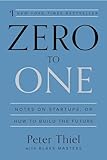
1. Zero to One — Peter Thiel ⭐⭐⭐⭐⭐
The book on what separates transformative companies from incremental ones. Thiel’s contrarian framework — avoid competition, build a monopoly in a new space, start small and expand — challenges every assumption about how to build a startup.
The question every founder should answer before starting: “What important truth do few people agree with you on?”
➡ Full review → | Buy on Amazon →
2. Good to Great — Jim Collins ⭐⭐⭐⭐
Collins’s research on what transforms good companies into great ones produced insights that have stood up for 20 years: Level 5 Leadership (humble but fierce), the Hedgehog Concept (where passion, excellence, and economic engine overlap), and the Flywheel Effect (momentum compounds).
Not a startup book — it’s most applicable to companies past initial product-market fit. But the frameworks are invaluable at any stage.
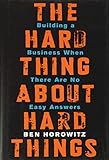
3. The Hard Thing About Hard Things — Ben Horowitz ⭐⭐⭐⭐⭐
The most honest book about being a founder and CEO ever written. Horowitz (a16z co-founder) describes what no one else will: leading a company through near-death experiences, making decisions with no good options, managing your own psychology when the company is failing.
No frameworks, no optimism bias — just hard-won wisdom from someone who’s been through it.
“There’s no recipe for really complicated, dynamic situations.”
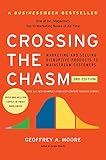
4. Crossing the Chasm — Geoffrey Moore ⭐⭐⭐⭐
The essential framework for understanding why early adoption success doesn’t guarantee mainstream success — and why so many startups die in the “chasm” between tech enthusiasts and mainstream buyers.
Moore’s beachhead strategy (dominate a narrow segment completely before expanding) is required reading for any B2B founder trying to achieve scale.
Execution & Operations
5. The Lean Startup — Eric Ries ⭐⭐⭐⭐
The book that introduced Build-Measure-Learn and the MVP to mainstream startup thinking. Now considered foundational — if you haven’t read it, you’re operating without the vocabulary your entire industry uses.
➡ Full review → | Buy on Amazon →
6. Traction — Gabriel Weinberg & Justin Mares ⭐⭐⭐⭐⭐
The most practical book on startup growth ever written. Weinberg (DuckDuckGo founder) and Mares systematically catalogue 19 traction channels — SEO, content marketing, viral marketing, offline ads, and more — and provide a framework for discovering which will work for your specific startup.
Most founders have a channel they’re comfortable with and ignore the others. Traction forces you to test systematically.
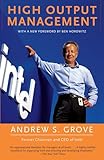
7. High Output Management — Andy Grove ⭐⭐⭐⭐⭐
Written by Intel’s legendary CEO, this is the foundational text on management for tech companies. The OKR system (adopted by Google from Grove’s work), the concept of managerial leverage, and the one-on-one meeting structure all trace back to this book.
Recommended by Ben Horowitz, Brian Chesky, and virtually every serious tech founder.
Psychology & Founder Mindset
8. Atomic Habits — James Clear ⭐⭐⭐⭐⭐
Entrepreneurship requires more sustained, systematic behaviour change than almost any other profession. Clear’s 4-Law framework for building habits is the best tool available for founders who need to systematically improve their operational cadence, health, and discipline.
➡ Full review → | Buy on Amazon →
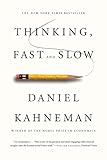
9. Thinking, Fast and Slow — Daniel Kahneman ⭐⭐⭐⭐⭐
Founders make consequential decisions under uncertainty constantly. Kahneman’s catalogue of cognitive biases — planning fallacy, confirmation bias, overconfidence — is essential for understanding how your own mind will lead you astray, and how to correct for it.
➡ Full review → | Buy on Amazon →
10. Deep Work — Cal Newport ⭐⭐⭐⭐⭐
The ability to think deeply about hard problems — product strategy, architectural decisions, competitive positioning — is the founder’s most valuable cognitive resource. Newport’s framework for protecting and developing this capacity is essential in a world designed to fragment attention.
➡ Full review → | Buy on Amazon →
Leadership & People
11. Radical Candor — Kim Scott ⭐⎟⭐⭐⭐⭐
The most practical book on management communication ever written. Scott — who ran teams at Google and Apple — provides a simple framework for giving honest, caring feedback. The alternative (what she calls “ruinous empathy” — being too nice to say hard things) destroys teams and companies.
12. Who — Geoff Smart & Randy Street ⭐⭐⭐⭐
The most common founder mistake: hiring the wrong people. Smart and Street’s A-Method for hiring (scorecard-first, structured interviews, reference calls that actually reveal character) dramatically reduces mis-hires. A short, practical read that pays for itself the first time you avoid a bad hire.
Big Picture Thinking
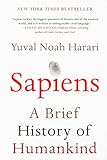
13. Sapiens — Yuval Noah Harari ⭐⭐⭐⭐⭐
Understanding why humans cooperate at scale — through shared fictions like money, corporations, and nations — is directly relevant to how you build company culture, raise funding, and sell a vision. Harari’s framework for how “imagined realities” shape collective behaviour is unexpectedly useful for founders.
➡ Full review → | Buy on Amazon →
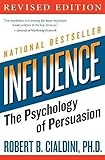
14. Influence — Robert Cialdini ⭐⭐⭐⭐⭐
The science of persuasion: reciprocity, social proof, authority, scarcity, consistency, liking. Essential for founders who need to raise funding, recruit employees, sell to customers, and build media coverage — all simultaneously.
15. The 22 Immutable Laws of Marketing — Al Ries & Jack Trout ⭐⭐⭐⭐
Short and provocative. Ries and Trout argue that most marketing principles are not just wrong but actively counter-productive — and that being first in a category (Law of Leadership) is vastly more valuable than being better. Essential reading before you spend money on marketing.
Founder Reading Plan by Stage
| Stage | Priority Books |
|---|---|
| Idea stage | Zero to One, The Lean Startup, Traction |
| Early team | High Output Management, Who, Radical Candor |
| Growth stage | Good to Great, Crossing the Chasm, The 22 Laws |
| Always | Atomic Habits, Deep Work, Thinking Fast and Slow |
Frequently Asked Questions
What book do most successful founders recommend?
Across founder surveys, Zero to One by Peter Thiel and The Hard Thing About Hard Things by Ben Horowitz appear most consistently. Both are notable for their intellectual honesty about the difficulty of building something genuinely new.
How many books should an entrepreneur read per year?
Quality matters more than quantity. Ten deeply read, well-applied books will advance your thinking more than fifty quickly consumed ones. Most exceptional founders read 1–2 books per month — consistently, over years.
Is The Lean Startup still relevant?
Yes. While some specific case studies are dated (it was published in 2011), the core methodology — Build-Measure-Learn, MVP, validated learning — is now foundational startup vocabulary and practice. It’s essential background knowledge.
What books does Elon Musk recommend?
Musk’s most frequently cited reads include Superintelligence (Nick Bostrom), The Hitchhiker’s Guide to the Galaxy, Foundation (Asimov), and Zero to One. His reading skews heavily toward physics, engineering, and science fiction — reflecting his engineering-first worldview.
More Business and Career Guides
- Best Books on Leadership: Essential Reads for Managers
- Best Investing Books for Beginners
- Best Productivity Books: Reviewed and Ranked
Affiliate disclosure: Links to Amazon on this page are affiliate links. We earn a small commission at no extra cost to you.
Frequently Asked Questions
What books should every entrepreneur read?
The most universally recommended books for entrepreneurs are Zero to One by Peter Thiel, The Lean Startup by Eric Ries, and The Hard Thing About Hard Things by Ben Horowitz. Zero to One is essential for thinking about competitive advantage; The Lean Startup is essential for validating ideas before investing fully; Hard Thing is essential for navigating the reality of running a company.
What is the best business book for first-time founders?
The Lean Startup by Eric Ries is the best first book for a first-time founder because it provides a methodology for testing assumptions before building the wrong product. The Mom Test by Rob Fitzpatrick is an excellent companion for learning how to talk to customers without being misled.
What books do the most successful startup founders recommend?
Founders of companies like Amazon, Apple, and SpaceX most frequently cite Zero to One by Peter Thiel, High Output Management by Andy Grove, and The Innovator's Dilemma by Clayton Christensen. Ben Horowitz's The Hard Thing About Hard Things is widely cited as the most honest account of what running a startup actually feels like.
How many business books should an entrepreneur read per year?
Most successful entrepreneurs read between 12 and 52 books per year. Warren Buffett reads 5 to 6 hours a day; Bill Gates reads approximately 50 books per year. More important than volume is whether the books directly address your current problem or skill gap.