Best Investing Books for Beginners: Start Here Before You Buy a Stock
Before you open a brokerage account, read these. The best investing books for beginners cover index funds, value investing, behavioural pitfalls, and how markets actually work.
By Marcus Webb
Most people who open a brokerage account lose money in their first year — not because the market is rigged against them, but because they’re playing a game they don’t yet understand. The good news is that the rules of successful long-term investing are not secrets. They have been written down, tested over decades, and explained clearly by some of the most successful investors in history.
The books on this list will give you a genuine education in how markets work, how to think about risk, and — perhaps most importantly — how your own psychology is your biggest opponent when investing. Read them before you buy your first stock.
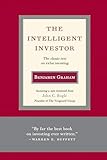
The Intelligent Investor by Benjamin Graham
The foundational text of value investing. Warren Buffett read it at 19, called it “the best book on investing ever written,” and enrolled at Columbia to study under its author. Everything Buffett has done in sixty years of investing traces back to the principles Graham laid out here: the difference between investment and speculation, the concept of “margin of safety,” and the character of “Mr. Market” — an allegorical figure who offers to buy or sell his shares every day at whatever price his current mood dictates.
The core insight: successful investing is not about predicting market movements. It’s about buying businesses at prices sufficiently below their intrinsic value that you’re protected even if things go wrong. This “margin of safety” is the concept that separates disciplined investors from speculators.
The book was last comprehensively revised in 1973, so some chapters require updating — the fourth edition’s commentary by Jason Zweig addresses this by adding contemporary context after each chapter. For beginners, the most important sections are the chapters on market fluctuations, the investor’s psychology, and the chapter on margin of safety.
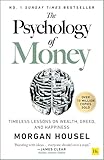
The Psychology of Money by Morgan Housel
The most accessible investing book written in the last decade, and for beginners, possibly the most important. Housel’s argument is simple but profound: successful investing is less about understanding finance than understanding yourself. How you think about money — about risk, about time, about what “enough” means — determines your outcomes more than any particular stock-picking strategy.
Written in 19 short essays, the book explains why brilliant people make terrible financial decisions (they confuse intelligence with wisdom), why long-term thinking is harder in practice than in theory (the future feels abstract while the present feels vivid), and why the psychological payoff of “having enough” is the most underrated metric in personal finance.
For beginners who don’t yet know what kind of investor they are, Housel’s book provides the self-diagnostic questions that determine everything else.
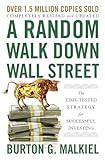
A Random Walk Down Wall Street by Burton Malkiel
First published in 1973 and updated every few years since, Malkiel’s book is the most comprehensive popular case for index investing. The central argument: stock prices incorporate all available information so quickly that trying to beat the market through stock selection or market timing is, for most investors, a losing game. The data, accumulated over decades, consistently supports this view.
Malkiel walks through the history of investment fads — from Dutch tulips to the 1990s dot-com bubble — to show how consistently investors repeat the same mistakes. His prescription is simple: buy a low-cost index fund tracking the total market, contribute regularly, and ignore the noise. This is not exciting advice, but the evidence behind it is overwhelming.
The Little Book of Common Sense Investing by John C. Bogle
Bogle founded Vanguard and created the first index mutual fund available to retail investors. The Little Book of Common Sense Investing is his distilled argument for why index funds beat actively managed funds over time: fees compound just as returns do, and the fees extracted by active fund managers are not offset by their performance.
The math is simple: if the average actively managed fund charges 1% per year more than an index fund, and the average fund returns 7% annually, you lose roughly 14% of your total return over 20 years to fees alone. Bogle presents this argument with missionary conviction and supports every claim with data. Recommended for anyone who is being sold on actively managed funds by a financial adviser.
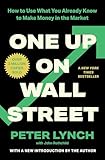
One Up on Wall Street by Peter Lynch
Lynch ran the Fidelity Magellan Fund from 1977 to 1990 and produced one of the best long-term track records in fund management history: 29.2% average annual returns. One Up on Wall Street is his guide to how individual investors can identify great stock opportunities in their daily lives — companies they encounter as consumers before Wall Street discovers them.
Lynch’s thesis is genuinely encouraging for beginners: individual investors have an information edge over professionals because they observe consumer behaviour in the real world. He identifies thirteen categories of companies and explains what makes each potentially investable. The book is accessible, anecdote-rich, and honest about what doesn’t work as well as what does.
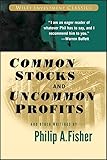
Common Stocks and Uncommon Profits by Philip Fisher
If Benjamin Graham is the grandfather of value investing, Philip Fisher is the grandfather of growth investing. Where Graham focused on buying undervalued companies, Fisher focused on buying excellent companies — businesses with durable competitive advantages, strong management, and long runways for growth — and holding them for very long periods.
Warren Buffett has described his own investment approach as “85% Graham and 15% Fisher” — the Fisher influence is most visible in Berkshire’s major positions in businesses like Coca-Cola and American Express, where Buffett paid fair prices for genuinely great businesses rather than discounted prices for mediocre ones. Fisher’s “scuttlebutt” method of researching companies by talking to competitors, suppliers, and customers remains a practical guide to qualitative research.
The Simple Path to Wealth by JL Collins
Originally written as a series of blog posts for Collins’s daughter, The Simple Path to Wealth is the clearest distillation of the index fund case available. Collins argues for a two-fund portfolio — a total US stock market index fund and a bond fund — and explains why complexity in investment portfolios typically makes things worse, not better.
The book covers financial independence, the mechanics of index fund investing, and how to think about wealth-building across a career. For young investors starting from zero, Collins’s framework is the clearest path from “I have no idea what I’m doing” to a sustainable, low-maintenance investment strategy.
Rich Dad Poor Dad by Robert Kiyosaki
A word of caution before recommending this book: Rich Dad Poor Dad is not a practical investment guide, and several of its specific claims about real estate and taxes have been disputed. Read it for the mindset shift it offers — the distinction between assets (things that put money in your pocket) and liabilities (things that take money out) — rather than as a how-to manual.
Kiyosaki’s central point — that financial education is systematically neglected in schools, and that the wealthy teach their children to think about money differently — resonates because it is substantially true. The book works best as an opening door, not a destination.
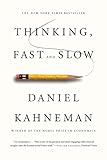
Thinking, Fast and Slow by Daniel Kahneman
Not strictly an investing book, but one of the most important books any investor can read. Kahneman — who won the Nobel Prize in Economics — spent his career documenting the systematic errors human brains make when assessing risk, probability, and value. Nearly every mistake individual investors make (overconfidence, loss aversion, recency bias, the availability heuristic) is documented and explained here.
Understanding why your brain will push you to buy high and sell low, panic during market downturns, and chase recent winners is the prerequisite for not doing those things. This is the self-defence manual for investor psychology.
The Big Short by Michael Lewis
Lewis’s account of the handful of investors who foresaw — and bet against — the 2008 mortgage crisis is the best narrative explanation of how that crisis happened that has been written for a general audience. Michael Burry, Steve Eisman, and the Cornwall Capital team are compelling characters, and Lewis uses their stories to explain credit default swaps, mortgage-backed securities, and the incentive failures in the financial industry that made the crisis inevitable.
For beginners, The Big Short provides context for what markets actually are, who the participants are, and how dramatically incentives can misalign. It is also a gripping read.
The Right Reading Order
If you’re starting from zero, read in this sequence:
- The Psychology of Money — understand yourself as an investor first
- The Little Book of Common Sense Investing — understand what passive investing is and why it works
- The Simple Path to Wealth — understand how to implement a simple strategy
- A Random Walk Down Wall Street — understand the academic case more deeply
- The Intelligent Investor — if you then want to understand active investing principles
The first three books will give most long-term investors everything they need to make excellent decisions. The later ones are for those who want to go deeper.
Frequently Asked Questions
What is the single best investing book for beginners?
The Psychology of Money by Morgan Housel is the most accessible and immediately applicable book for beginners, because it focuses on the behavioural aspects of investing rather than technical knowledge. Pair it with The Little Book of Common Sense Investing for a complete foundation.
Should beginners pick individual stocks or invest in index funds?
The evidence strongly favours index funds for most investors. The research consistently shows that the majority of actively managed funds — run by professional analysts with significant resources — underperform simple index funds over long periods after fees. For beginners especially, index funds provide diversification, low costs, and simplicity.
How much should I read before I start investing?
Read at minimum The Psychology of Money and The Little Book of Common Sense Investing before you make any investment decisions. The second book will take three hours. The first will take five. That eight hours of reading will almost certainly generate more value than any market research you’d do in the same time.
More Personal Finance Guides
- Best Books for Entrepreneurs: Ranked by Founders
- Rich Dad Poor Dad vs Think and Grow Rich: Which to Read First?
- Best Personal Finance Books for Beginners
Affiliate disclosure: Links on this site are affiliate links. We earn a small commission at no extra cost to you. This does not influence our editorial recommendations.
Frequently Asked Questions
What investing book should a complete beginner read first?
The Little Book of Common Sense Investing by John Bogle is the best first investing book for beginners. It makes a clear, evidence-based case for index fund investing in about 200 pages. The Psychology of Money by Morgan Housel is an excellent companion that addresses the behavioural side of investing.
What is the best book to learn about the stock market?
A Random Walk Down Wall Street by Burton Malkiel provides the most comprehensive and readable overview of how stock markets work and how to invest in them. The Intelligent Investor by Benjamin Graham is considered the definitive text for value investing, though it requires more patience to read.
What books did Warren Buffett recommend for investors?
Warren Buffett has most frequently recommended The Intelligent Investor by Benjamin Graham, which he calls the best book on investing ever written. He also recommends Common Stocks and Uncommon Profits by Philip Fisher and Business Adventures by John Brooks. Buffett has said he would recommend A Little Book of Common Sense Investing for most individuals.
Should I read investing books or just invest in index funds right away?
Read at least one investing book before you invest, specifically to understand why index funds outperform most active investing strategies. The Little Book of Common Sense Investing takes a few hours to read and will save you from the most common expensive mistakes. After reading that, investing in low-cost index funds is exactly what it recommends.