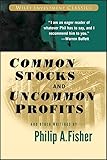
Editors Reads Verdict
Fisher's qualitative approach to stock analysis — focusing on management quality, research capability, and competitive advantage — is the intellectual foundation of growth investing and profoundly influenced Warren Buffett.
What We Loved
- The fifteen questions framework is comprehensive and enduringly useful
- The scuttlebutt method (talking to competitors, suppliers, and customers) is practically brilliant
- Warren Buffett credited Fisher as one of his two primary intellectual influences
- Focus on qualitative factors that quantitative analysts often miss
Minor Drawbacks
- Writing style is formal and occasionally slow-paced
- Some examples are dated (though principles remain current)
- Less accessible than more recent investment books
Key Takeaways
- → The best investments are exceptional businesses held for very long periods
- → Management quality is the single most important factor in long-term stock performance
- → The scuttlebutt method: research companies through their competitors, suppliers, and customers
- → When to sell: only when fundamental business quality deteriorates or a clearly better opportunity exists
- → A genuinely outstanding company is rarely available at a bargain price — and rarely should be sold
| Author | Philip A. Fisher |
|---|---|
| Publisher | Wiley |
| Pages | 320 |
| Published | January 1, 1958 |
| Language | English |
| Genre | Investing, Business, Finance |
| Difficulty | Advanced |
| Best For | Serious individual investors and students of fundamental analysis who want to understand the qualitative foundations of growth investing. |
How Common Stocks and Uncommon Profits Compares
Common Stocks and Uncommon Profits at a glance against 3 similar books readers weigh alongside it.
| Book | Author | Rating | Best for |
|---|---|---|---|
| Common Stocks and Uncommon Profits (this book) | Philip A. Fisher | ★ 4.5 | Serious individual investors and students of fundamental analysis who want to |
| A Random Walk Down Wall Street | Burton G. Malkiel | ★ 4.5 | Individual investors, particularly those considering whether to use index funds |
| One Up on Wall Street | Peter Lynch | ★ 4.5 | Individual investors interested in stock-picking who want practical frameworks |
| The Intelligent Investor | Benjamin Graham | ★ 4.7 | Anyone who wants to invest in equities with a long-term, principled framework |
The Father of Growth Investing
Philip Fisher was managing money in San Francisco for half a century before most modern investors were born. Common Stocks and Uncommon Profits, first published in 1958, established the intellectual framework for qualitative stock analysis and growth investing. Warren Buffett has said that he is 85% Ben Graham and 15% Phil Fisher — an acknowledgment that Fisher’s influence runs through the DNA of the most successful investor who has ever lived.
Where Benjamin Graham focused on quantitative analysis of assets and earnings at bargain prices, Fisher focused on qualitative assessment of business quality: management competence and integrity, research and development capability, competitive advantages, and the potential for long-term growth. His insight was that the best investments are in exceptional businesses that compound in value over decades — and that these investments are worth far more than any initial price analysis might suggest.
The Fifteen Questions
Fisher’s core contribution is a framework of fifteen questions for evaluating any company’s investment potential. They include: Does the company have products or services with sufficient market potential for significant growth? Is management committed to research and development? Does the company have an above-average sales organisation? Does it have outstanding management depth? Does it have good labour relations?
These questions require qualitative judgment rather than quantitative calculation, which made Fisher’s approach unusual among investment analysts of his era. But they capture exactly the factors that distinguish businesses capable of multi-decade compounding from those that merely look cheap on current metrics.
The Scuttlebutt Method
Fisher’s most distinctive research tool is what he called the scuttlebutt method: talking to people who have direct knowledge of a company — competitors, suppliers, customers, former employees — to gather intelligence about a business’s real competitive position, management quality, and culture. This was competitive intelligence before that phrase existed.
The method requires time and effort, but it surfaces information that no annual report or earnings call will reveal. Fisher argues convincingly that the most important facts about a business are precisely those that its management has the least incentive to disclose.
When to Sell (Almost Never)
Fisher’s advice on selling is counterintuitively restrictive: sell only when a company’s fundamental business quality has genuinely deteriorated, when you’ve identified a clearly superior alternative, or when you made an analytical error in buying. Market price declines are not a selling reason. Tax considerations may argue for holding indefinitely. In practice, Fisher often held companies for decades.
The Book That Shaped Warren Buffett
The clearest measure of Philip Fisher’s importance is his influence on Warren Buffett, who famously described himself as “85% Benjamin Graham and 15% Philip Fisher.” Graham, the father of value investing, taught Buffett to buy cheap assets with a margin of safety; Fisher taught him to identify exceptional businesses worth holding for the long term regardless of short-term price. The evolution of Buffett’s career — from buying statistically cheap “cigar-butt” stocks early on to acquiring high-quality compounders like Coca-Cola and See’s Candies — is essentially the story of Fisher’s ideas gaining ground on Graham’s in Buffett’s thinking. Fisher published Common Stocks and Uncommon Profits in 1958, and its emphasis on growth, management quality, and durable competitive advantage anticipated by decades the “quality investing” approach that now dominates serious long-term investing. Fisher himself practiced what he preached, reportedly holding some positions, such as Motorola, for over twenty years.
How It Pairs With Graham — and Who Should Read It
The ideal way to read Fisher is alongside Benjamin Graham’s The Intelligent Investor: together they form the two halves of a complete philosophy, the quantitative discipline of value and the qualitative judgment of growth. Graham protects you from overpaying and from your own emotions; Fisher pushes you to find the rare businesses capable of compounding for decades and to have the patience to hold them. Common Stocks and Uncommon Profits is denser and more demanding than a popular finance book, and it is aimed squarely at the serious individual investor willing to do real qualitative research — to practice the “scuttlebutt” legwork Fisher championed — rather than the casual reader seeking quick tips. For anyone committed to understanding businesses rather than merely trading tickers, it is one of the foundational texts, and its influence has compounded across every generation of investors since. (Fisher’s son, Ken Fisher, became a prominent money manager and author in his own right, extending the family’s mark on the field.)
Final Verdict
Common Stocks and Uncommon Profits is one of the foundational texts of modern investing. Its qualitative framework complements Graham’s quantitative approach and together they form the intellectual foundation of value and growth investing.
A final word on the reading experience: this is not a breezy popular finance title but a considered, sometimes dry argument that rewards careful study and rereading. Its lessons are timeless precisely because they are about business quality and investor temperament rather than the market fashions of any particular era. Read slowly, ideally in dialogue with Graham, it can reshape how you evaluate a company — shifting your attention from price and headlines toward the durable competitive advantages and management quality that actually drive long-term returns. For the patient long-term investor, few books offer a better foundation.
Our rating: 4.5/5 — Required reading for serious stock investors. Dense but rewarding — Fisher’s framework has compounded in influence as surely as the best businesses he described.
Reading Guides
Frequently Asked Questions
What is "Common Stocks and Uncommon Profits" about?
A classic of investment literature that established growth investing as a discipline, introducing the 'scuttlebutt' research method and fifteen key questions for evaluating any company.
Who should read "Common Stocks and Uncommon Profits"?
Serious individual investors and students of fundamental analysis who want to understand the qualitative foundations of growth investing.
What are the key takeaways from "Common Stocks and Uncommon Profits"?
The best investments are exceptional businesses held for very long periods Management quality is the single most important factor in long-term stock performance The scuttlebutt method: research companies through their competitors, suppliers, and customers When to sell: only when fundamental business quality deteriorates or a clearly better opportunity exists A genuinely outstanding company is rarely available at a bargain price — and rarely should be sold
Is "Common Stocks and Uncommon Profits" worth reading?
Fisher's qualitative approach to stock analysis — focusing on management quality, research capability, and competitive advantage — is the intellectual foundation of growth investing and profoundly influenced Warren Buffett.
Ready to Read Common Stocks and Uncommon Profits?
Check the current price on Amazon.
Check Price on Amazon (paid link)Prices and availability are subject to change. See Amazon for current price.
Review last updated: