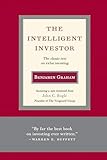
Editors Reads Verdict
The definitive investing book, period. Dense and demanding but extraordinarily rewarding. If you read only one book on investing, it must be this one. Warren Buffett attributes a significant portion of his success to this book — that alone should settle the question.
What We Loved
- The absolute authority on value investing — foundational to Buffett's career
- Jason Zweig's updated commentary makes Graham's 1949 wisdom directly applicable today
- Covers both strategy and the psychological discipline required to execute it
- Timeless — the principles have worked through every market cycle since 1949
Minor Drawbacks
- Dense and demanding — not a quick read
- Original chapters use dated examples that require Zweig's commentary to translate
- Explicitly not a guide to get-rich-quick strategies
Key Takeaways
- → Invest with a 'margin of safety' — buy below intrinsic value to protect against being wrong
- → Mr Market is your servant, not your master — use market volatility, don't react to it
- → Distinguish between investing (analysis, principal safety, adequate return) and speculation
- → The defensive investor should hold a 50/50 mix of high-grade stocks and bonds, rebalanced regularly
- → An investor's chief problem — and even his worst enemy — is likely to be himself
| Author | Benjamin Graham |
|---|---|
| Publisher | HarperBusiness |
| Pages | 640 |
| Published | January 1, 1949 |
| Language | English |
| Genre | Investing, Finance, Business |
| Difficulty | Advanced |
| Best For | Anyone who wants to invest in equities with a long-term, principled framework rather than reacting to market noise. Expect to read it slowly. |
How The Intelligent Investor Compares
The Intelligent Investor at a glance against 2 similar books readers weigh alongside it.
| Book | Author | Rating | Best for |
|---|---|---|---|
| The Intelligent Investor (this book) | Benjamin Graham | ★ 4.7 | Anyone who wants to invest in equities with a long-term, principled framework |
| Rich Dad Poor Dad | Robert T. Kiyosaki | ★ 4.4 | Anyone who grew up believing that a good job, a house, and a pension is the |
| The Psychology of Money | Morgan Housel | ★ 4.7 | Anyone who earns money and wonders why smart people make poor financial |
The Book Warren Buffett Calls His Bible
In 1950, a 20-year-old Warren Buffett read The Intelligent Investor and called it “by far the best book about investing ever written.” He enrolled at Columbia University to study under its author, Benjamin Graham. The rest is history.
If the man widely considered the greatest investor who ever lived credits a single book as the foundation of his approach, that book deserves serious attention.
Benjamin Graham: The Father of Value Investing
Graham was a Columbia professor and professional investor who survived the 1929 crash — an experience that shaped his lifelong obsession with investment safety and the margin of safety principle. He managed the Graham-Newman fund for decades with returns that consistently outperformed the market. His other famous student was Walter Schloss, another investing legend.
The Intelligent Investor (1949, revised 1973) is the accessible companion to his academic text Security Analysis. This edition adds chapter-by-chapter commentary by financial journalist Jason Zweig, which is essential for applying Graham’s ideas in modern markets.
The Central Distinction: Investor vs Speculator
Graham opens by drawing a line that modern finance has largely erased: the difference between investing and speculating.
Investing requires thorough analysis, promises safety of principal, and expects an adequate return. Anything that doesn’t meet these criteria is speculation.
By this definition, most of what happens on Wall Street — buying stocks because their price has gone up, chasing hot sectors, following predictions — is speculation. The intelligent investor ignores all of this and focuses on the fundamental economics of what they are buying.
Mr Market: The Most Important Metaphor in Finance
Graham personifies the stock market as “Mr Market” — an emotionally unstable business partner who each day offers to buy your shares or sell you his at a price that reflects his mood, not business fundamentals.
On good days Mr Market offers to sell at high prices; on bad days he offers at panicky discounts. The intelligent investor’s job is to take advantage of Mr Market, buying when he’s depressed and selling when he’s euphoric — never letting his mood influence your assessment of value.
This metaphor — which Buffett has called the most important idea in investing — reframes market volatility from a threat to an opportunity. Corrections aren’t risks; they’re sales.
The Margin of Safety
Graham’s most operational concept: never pay full price for an asset. Buy only when the price offers a sufficient discount to intrinsic value that even if your analysis is wrong, you won’t lose money.
This margin of safety — the gap between what you pay and what something is worth — is the investor’s insurance against errors in analysis, unexpected events, and market panic.
Defensive vs Enterprising Investor
Graham categorises investors into two types:
The Defensive Investor — someone who wants satisfactory returns without significant effort or risk. Strategy: a simple 50/50 portfolio of high-grade stocks and bonds, rebalanced regularly. Today this translates to index funds — Buffett himself recommends this strategy for most investors.
The Enterprising Investor — someone willing to invest significant time and skill to beat the market. This requires deep company analysis, patience, and emotional discipline. Most people who think they are this type are actually defensive investors who haven’t admitted it yet.
Why It’s Dense (and Why That’s the Point)
Graham deliberately wrote a challenging book because he believed the market’s greatest threat to an individual investor is not ignorance but undisciplined temperament — the tendency to buy in euphoria and sell in panic. A book that requires slow, careful reading builds exactly the deliberate, analytical mindset required to follow the strategy.
Our rating: 4.7/5 — The Intelligent Investor is not a book you read for entertainment. It is a book you study as the foundation of a lifetime investing framework. Required reading.
Why Buffett Calls It the Best Book on Investing
Graham’s enduring contribution is not a system for picking winners but a temperament for surviving markets, and that is why his most famous student, Warren Buffett, has called it the best book on investing ever written. Two ideas do most of the work. The first is the distinction between investing and speculating — the insistence on buying a business for its underlying value rather than betting on price movements. The second is the “margin of safety”: buying only when the price sits well below your estimate of worth, so that even your errors leave room not to lose. From these flows the book’s most memorable image, Mr. Market, the manic-depressive business partner who offers to buy or sell every day at wildly swinging prices, and whose moods you should exploit rather than catch.
Reading an Old Book in a New Market
The reader should know what they are getting: this is a dense, sometimes dated text, written in a mid-century idiom and full of examples from markets that no longer exist. The specific tactics matter far less now than the mindset, and most modern readers are best served by editions with updated commentary that translate Graham’s principles into the present. What does not date is the psychology — the argument that the investor’s chief enemy is usually himself, his impatience and fear and greed, and that discipline and emotional detachment matter more than cleverness. Read for that, rather than for stock tips, The Intelligent Investor remains the foundational text of value investing and a corrective to nearly everything that makes ordinary investors lose money.
Reading Guides
- Books Like The Intelligent Investor
- 15 Books Like The Psychology of Money to Read Next
- 15 Books Like Rich Dad Poor Dad: Best Personal Finance Reads (2026)
- Best Personal Finance Books for Beginners — Start Here
- Best Investing Books for Beginners: Start Here Before You Buy a Stock
- Best Books as Gifts — The Complete Gift Guide for Every Reader
- Best Business Books of All Time: 23 That Every Leader Should Read (2026)
Frequently Asked Questions
What is "The Intelligent Investor" about?
Warren Buffett calls it 'the best book about investing ever written.' First published in 1949, Graham's value investing principles have stood up to every market cycle since. The revised edition includes commentary by Jason Zweig placing Graham's timeless wisdom in modern context.
Who should read "The Intelligent Investor"?
Anyone who wants to invest in equities with a long-term, principled framework rather than reacting to market noise. Expect to read it slowly.
What are the key takeaways from "The Intelligent Investor"?
Invest with a 'margin of safety' — buy below intrinsic value to protect against being wrong Mr Market is your servant, not your master — use market volatility, don't react to it Distinguish between investing (analysis, principal safety, adequate return) and speculation The defensive investor should hold a 50/50 mix of high-grade stocks and bonds, rebalanced regularly An investor's chief problem — and even his worst enemy — is likely to be himself
Is "The Intelligent Investor" worth reading?
The definitive investing book, period. Dense and demanding but extraordinarily rewarding. If you read only one book on investing, it must be this one. Warren Buffett attributes a significant portion of his success to this book — that alone should settle the question.
Ready to Read The Intelligent Investor?
Check the current price on Amazon.
Check Price on Amazon (paid link)Prices and availability are subject to change. See Amazon for current price.
Review last updated: