Best Investing Books: Essential Reading List for Every Level
The best investing books — from The Intelligent Investor and The Psychology of Money to A Random Walk Down Wall Street and The Little Book of Common Sense Investing. Books for beginners to advanced investors.
By Marcus Webb
The best investing books share a counterintuitive quality: the most important ones are not about selecting stocks or timing the market but about understanding your own psychology — the biases, the emotional responses, and the narratives you tell yourself that make it difficult to invest simply and consistently over time.
The list below is organised by reader level, from foundational (what investing is and why most approaches fail) to more advanced (the frameworks used by genuinely exceptional investors). Most readers should start at the foundational level and stay there — the evidence suggests that simple, consistent index investing outperforms most sophisticated approaches over long time horizons.
Foundational: Start Here
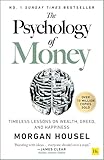
The Psychology of Money — Morgan Housel (2020)
The most accessible and most immediately useful investing book currently available. Housel, an investment columnist, examines the psychological dimensions of financial decision-making through twenty short essays. His central argument: financial decisions are not primarily about intelligence — they are about behaviour, and behaviour is shaped by personal history, cognitive biases, and the stories we tell ourselves about what money means.
The most important chapters: “Never Enough” (why wealthy people make bad decisions), “Man in the Car Paradox” (why we pursue status signals that don’t provide the respect we imagine), “Room for Error” (why the margin of safety principle applies to personal finance as much as to investing), and “Tails, You Win” (why most investment returns come from a small number of exceptional decisions and the rest are noise).
The Little Book of Common Sense Investing — John Bogle (2007)
The founder of Vanguard’s case for passive index investing in its most concentrated form. Bogle’s argument: the stock market returns roughly what the economy produces over time; costs (fund fees, trading costs, taxes) reduce that return; the only way to capture the market’s full return is to minimise costs by buying the market rather than trying to beat it. The evidence is overwhelming: after fees, the majority of actively managed funds underperform their benchmark index over any ten-year period.
Under 300 pages and the single most important book for any retail investor.
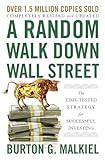
A Random Walk Down Wall Street — Burton Malkiel (1973, continuously updated)
The comprehensive case for the efficient market hypothesis — the argument that stock prices already incorporate all available information and cannot be consistently predicted. Malkiel covers both fundamental analysis and technical analysis, concludes that neither consistently outperforms the market, and advocates for index funds as the appropriate response. The most complete foundational investing text, updated every few years to address current market conditions.
The Bogleheads’ Guide to Investing — Taylor Larimore et al. (2006)
The most practical implementation guide for the Bogle/Malkiel passive investment philosophy. Three-fund portfolio (US stocks, international stocks, bonds), low-cost index funds, automatic rebalancing, and staying the course during downturns. The simplest effective approach to personal investing, explained step by step.
For Advanced Readers
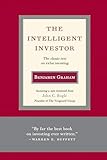
The Intelligent Investor — Benjamin Graham (1949, revised 2003)
The foundational text of value investing. Graham’s central concepts — the margin of safety (only buy when the price is significantly below intrinsic value), Mr. Market (treat the market as an irrational business partner offering you prices daily, not as a guide to intrinsic value), and the distinction between investment (buying value) and speculation (buying what might go up) — are the framework Warren Buffett absorbed and has applied for sixty years.
Read the 2003 revised edition with Jason Zweig’s updated commentary.
One Up on Wall Street — Peter Lynch (1989)
Lynch managed Fidelity’s Magellan Fund to extraordinary returns from 1977 to 1990. His argument: individual investors have an advantage over professionals because they observe real-world economic trends — what stores are crowded, what products their children demand — before analysts model them. The framework for categorising stocks (slow growers, stalwarts, fast growers, cyclicals, turnarounds, asset plays) and for the “two-minute drill” (can you describe why you own a stock in two minutes?) is the most applicable value investing methodology for individual investors.
The Triumph of Temperament Over Intelligence
Perhaps the most important and counterintuitive lesson that the best investing books teach, and a theme that runs through the finest writing on the subject, is that successful investing depends far more on temperament than on intelligence — that the qualities which separate good investors from bad are emotional and psychological rather than intellectual, and that the greatest enemy of the investor is usually not the market but themselves. The popular conception of investing imagines it as a contest of analytical brilliance, won by those clever enough to outsmart the market and predict its movements, but the wisest investing literature reveals this picture to be largely false. The intellectual demands of sound investing are, for most people, quite modest; what is genuinely difficult is the emotional discipline required to act rationally in the face of fear and greed, to remain calm when markets panic and skeptical when they soar, to resist the powerful psychological pulls that lead most investors to buy high and sell low. The best investors are distinguished not by superior intelligence or secret knowledge but by superior temperament — by patience, discipline, emotional stability, and the capacity to control the impulses that destroy the returns of the undisciplined. This insight is enormously liberating, because it means that successful investing is available to ordinary people of ordinary intelligence, requiring not genius but the cultivation of the right emotional habits and the avoidance of the predictable psychological errors. It also reframes the entire enterprise, directing the aspiring investor’s attention away from the futile search for cleverness and toward the achievable work of mastering their own psychology. The recognition that temperament trumps intelligence is among the most valuable lessons these books offer, and the investor who absorbs it has learned the most important thing.
The Power of Patience and Compounding
At the mathematical and philosophical heart of sound investing lies a force so powerful and so underappreciated that the best investing books return to it again and again: the extraordinary power of compounding over long periods of time, and the patience required to harness it. Compounding — the process by which returns generate further returns, which generate further returns still, in an accelerating cascade over time — is the engine of long-term wealth creation, and its effects, while modest over short periods, become staggering over the decades. The investor who grasps this truth understands that the most important variables in building wealth are not the clever selection of investments or the timing of the market but the simpler and more achievable factors of time and patience: starting early, staying invested, and allowing the relentless mathematics of compounding to work over the long horizon. This understanding stands in stark contrast to the impatience and short-term thinking that characterize most investing behavior, the constant trading, the chasing of quick gains, the inability to leave investments alone long enough for compounding to do its work. The best investing books preach the discipline of patience, the willingness to think in decades rather than days, and the recognition that the greatest returns flow to those who can resist the temptation to act and simply allow time and compounding to work in their favor. This is, again, less a matter of intelligence than of temperament and understanding, requiring not sophisticated analysis but the patience to do little and wait long. The investor who truly internalizes the power of compounding and cultivates the patience to harness it has grasped one of the deepest secrets of building wealth, a secret hidden in plain sight, available to anyone willing to think in the long term and let time do its work.
Cutting Through the Noise of the Financial Industry
A crucial service that the best investing books perform, and one that justifies their place on any reading list, is to cut through the noise, complexity, and self-interested advice of the financial industry, equipping ordinary investors to protect themselves from a system that often profits at their expense. The world of finance is awash in noise — the endless stream of market commentary, predictions, hot tips, and complex products that surrounds the ordinary investor and that serves, more often than not, to confuse rather than to enlighten. Much of this noise is generated by a financial industry whose interests are frequently opposed to those of the individual investor, an industry that profits from activity, complexity, and fees, and that has every incentive to convince ordinary people that investing is too complicated to manage themselves and that they require expensive products and constant trading. The best investing books expose this reality and arm the reader against it, revealing how much of the financial industry’s advice and how many of its products serve the industry rather than the client, and how the costs of unnecessary complexity, excessive trading, and high fees quietly devastate long-term returns. In place of this noise and self-interest, the best books offer clarity and simplicity, demonstrating that sound investing is far simpler than the industry would have one believe, that the most effective strategies are often the simplest and cheapest, and that the individual investor’s greatest advantages lie precisely in ignoring the noise, minimizing costs, and adhering to a few sound principles with discipline. This is genuinely empowering knowledge, because it frees the ordinary investor from dependence on an industry that frequently exploits them and shows that the path to investment success is open to anyone willing to learn a few fundamental truths and resist the constant pressure to do more. Cutting through the noise to reveal this underlying simplicity is among the most valuable things these books accomplish.
Reading Order
Complete beginner: The Psychology of Money → The Little Book of Common Sense Investing.
Want to understand the case: A Random Walk Down Wall Street → The Bogleheads’ Guide to Investing.
Interested in value investing: The Intelligent Investor → One Up on Wall Street → Poor Charlie’s Almanack.
The essential two books: The Psychology of Money (why behaviour matters more than technique) + The Little Book of Common Sense Investing (what to actually do). Everything else is supplementary.
Also Worth Reading
One more title belongs on every investor’s shelf: The Great Crash 1929 by John Kenneth Galbraith, a witty and cautionary history of speculative manias and their consequences.
Frequently Asked Questions
What is the best investing book for beginners?
The Little Book of Common Sense Investing by John Bogle is the most important investing book for beginners — it makes the case for low-cost index funds with overwhelming evidence and explains why most active fund management underperforms passive indexing over time. The Psychology of Money by Morgan Housel is the best book for understanding the psychological patterns that cause people to make bad investment decisions — worth reading before you start investing. A Random Walk Down Wall Street by Burton Malkiel is the comprehensive beginner text that has been continuously updated since 1973.
Is The Intelligent Investor still relevant?
Yes — Benjamin Graham's framework for value investing (the margin of safety, Mr. Market, the distinction between investment and speculation) is as applicable as ever. The specific stock examples are dated, but the principles are foundational. Warren Buffett has called it 'by far the best book about investing ever written.' The best edition for modern readers is the 2003 revised edition with Jason Zweig's updated commentary after each chapter, which translates Graham's examples into contemporary terms.
What is the difference between value investing and index investing?
Value investing (Graham, Buffett) involves identifying individual stocks that are trading below their intrinsic value and holding them until the market recognises that value. It requires extensive analysis and the willingness to be contrarian. Index investing (Bogle, Malkiel) involves buying the entire market through low-cost index funds, accepting the market's return rather than trying to beat it. The evidence overwhelmingly favours index investing for most investors: the majority of actively managed funds underperform their benchmark index over time, after fees. Value investing outperforms when done by genuinely exceptional analysts; most people cannot do it well enough to justify the effort.
What is The Psychology of Money about?
The Psychology of Money by Morgan Housel examines the role that psychology, personal history, and cognitive biases play in financial decisions. Its central insight: good financial decision-making is less about intelligence or information and more about behaviour — the ability to remain calm during market downturns, to save consistently rather than optimise for lifestyle, to define 'enough.' The book is organised as 20 short essays, each addressing a different aspect of money psychology, and is one of the most accessible and most applicable investing books available.