Books Like The Psychology of Money: 10 Finance Reads
If The Psychology of Money changed how you think about wealth, these personal finance and investing books go deeper — from Housel's own follow-up to Munger, Buffett, and Morgan Housel's intellectual peers.
By Marcus Webb

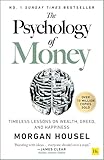
The Psychology of Money is the rare personal finance book that doesn’t teach you how to pick stocks. Morgan Housel’s argument is simpler and more durable: the way you behave with money matters more than what you know about it. The book is essentially a collection of essays about how human psychology — our biases, our short-term thinking, our inability to imagine outcomes we haven’t experienced — consistently undermines financial decisions that look rational on paper.
Finding books with the same intellectual quality — readable, evidence-grounded, focused on behaviour rather than tactics — is harder than it sounds. Most personal finance writing is either too mechanical (spreadsheets and optimisation) or too motivational (dream big, hustle harder). The books below are chosen for the same qualities that make Housel’s book work: clarity, intellectual seriousness, and genuine insight into why people make the financial decisions they do.
The Natural Follow-Up
#1 — Same as Ever — Morgan Housel
Housel’s 2023 follow-up applies the same framework — identify what never changes and build your decisions around that — to broader questions of human nature, risk, and history. Where The Psychology of Money focuses on financial behaviour, Same as Ever ranges wider: why stories are more persuasive than statistics, why optimists outperform pessimists in the long run, why the most dangerous risks are the ones no one is talking about. The same concise essay structure, the same quality of thinking. Read this immediately after The Psychology of Money.
The Behavioural Science Behind Housel’s Ideas
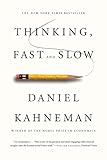
#2 — Thinking, Fast and Slow — Daniel Kahneman
The foundational text for everything Housel is drawing on. Kahneman’s Nobel-winning research distinguishes between System 1 thinking (fast, intuitive, error-prone) and System 2 thinking (slow, deliberate, effortful) and maps the specific cognitive biases that follow from how each system works: anchoring, availability bias, loss aversion, overconfidence. The Psychology of Money is the readable application; Thinking, Fast and Slow is the research behind it. Essential for readers who want to understand why the biases Housel identifies are so persistent.
The Foundational Investing Texts
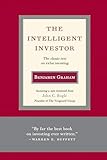
#3 — The Intelligent Investor — Benjamin Graham
Warren Buffett has called this the best investing book ever written, and it remains the clearest articulation of value investing: buy businesses at less than their intrinsic worth and hold them. Graham’s most important concept — Mr. Market, the irrational auction mechanism you should exploit rather than follow — is the practical corollary to Housel’s psychological arguments. The 1949 original is dense; Jason Zweig’s annotated edition (2003) is the version to read, with contemporary commentary that bridges Graham’s era and the current market.
For the Behavioural / Habit Side
#4 — Atomic Habits — James Clear
The connection between habit formation and wealth-building is not often made explicit, but Housel does make it: financial success is primarily a function of consistent behaviour compounded over time, not intelligence or information. Clear’s book is the most practically actionable guide to building the consistent behaviours that compound — applied to finance, it explains why automatic savings contributions outperform willpower every time. The first third (the framework) is the essential part.
On Spending, Not Just Saving
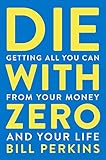
#5 — Die with Zero — Bill Perkins
The counterargument to conventional financial planning — and a necessary corrective to the hoarding instinct that The Psychology of Money can inadvertently reinforce. Perkins’s argument: optimising for maximum wealth at death is irrational; experiences generate memories that compound over a lifetime, and waiting to “have enough” before spending is a guaranteed way to spend on experiences when you’re too old to enjoy them. The book is most useful as a framework for when to spend, not just how to save.
On Deep Work and Value Creation
#6 — Deep Work — Cal Newport
A different angle on the same question: how do you build something worth having in a distracted economy? Newport’s argument is that the ability to concentrate deeply — to produce genuinely valuable work, not just activity — is both increasingly rare and increasingly rewarded. The financial parallel is explicit: in a knowledge economy, depth is the mechanism by which human capital compounds. Less directly about money than the other books here, but the underlying logic is the same as Housel’s.
On the Actual Behaviour of Wealthy People
#7 — The Millionaire Next Door — Thomas J. Stanley & William D. Danko
The empirical study that validates Housel’s central thesis. Stanley and Danko surveyed American millionaires in the 1990s and found that most of them looked nothing like the cultural image of wealth: they drove used cars, lived in modest houses, and built wealth through frugal, consistent saving rather than high income or investment genius. The book’s concept of “prodigious accumulators of wealth” versus “under accumulators” is a practical framework for diagnosing your own financial behaviour. Dated in some specifics but the core findings have held up.
The Investment Memoirs
#8 — The Intelligent Asset Allocator — William Bernstein
For readers who want to move from Housel’s behavioural insights to practical portfolio construction. Bernstein’s book explains modern portfolio theory — asset allocation, diversification, rebalancing — without jargon and with a clear understanding of why investor behaviour undermines even correct strategies. The chapters on the history of financial markets provide the long-run empirical context for why Housel’s “stay the course” argument is grounded in evidence rather than optimism.
The books above don’t agree with each other on every point — Graham and Perkins, in particular, would disagree about the right relationship between saving and spending. But they share the quality that makes The Psychology of Money worth reading: they treat financial decision-making as a problem of human nature, not a puzzle with a mathematically correct solution.
Frequently Asked Questions
What should I read after The Psychology of Money?
Morgan Housel's follow-up, Same as Ever (2023), applies the same timeless-patterns framework to broader questions about human nature and history — the natural next read. For the behavioural economics underpinning Housel's ideas, Thinking Fast and Slow (Kahneman) is the deeper academic source. For practical long-term investing, The Intelligent Investor (Graham) remains the foundational text.
Is The Psychology of Money worth reading for non-investors?
Yes. The book is not about investing mechanics — it's about the relationship between money and human psychology: why we make irrational decisions, how wealth is built through behaviour rather than intelligence, and why 'enough' is a more powerful concept than 'more'. These questions are relevant whether you're managing a portfolio or just trying to stop impulsive spending.
What is the difference between The Psychology of Money and Rich Dad Poor Dad?
The Psychology of Money is evidence-based and intellectually serious; Rich Dad Poor Dad is motivational and anecdote-driven. Housel focuses on documented behavioural patterns and long-term thinking; Kiyosaki's book is primarily a mindset reframe around assets and liabilities. Most people who have read both find Housel more reliable and less prone to oversimplification.