Editors Reads Verdict
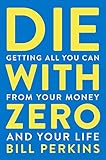
Bill Perkins's counterintuitive personal finance book makes a compelling case that dying with a large estate is evidence of a life optimization failure, and that money should be converted to experiences at the times in life when those experiences are most valuable.
What We Loved
- The central argument genuinely challenges conventional financial planning assumptions
- The concept of peak experience windows — times in life when specific experiences are most valuable — is practically useful
- Perkins is entertaining and direct — the book reads quickly
- The memory dividend concept (experiences compound into lifelong enjoyment) is original
Minor Drawbacks
- The book assumes levels of financial security that make its advice inapplicable to many readers
- The framework underweights the value of security and the costs of medical late-life care
- Some readers find the lifestyle-rich author perspective insufficiently universal
- The emphasis on spending can feel at odds with legitimate anxiety about financial stability
Key Takeaways
- → Money unspent at death is life energy that was not converted into experience — a partial waste
- → Experiences have peak windows — some things are best done at 30, others at 50, very few at 85
- → The memory dividend means experiences pay returns for decades after the event
- → Give money to your children when they are young and can use it, not after you die
- → Optimize for net fulfillment, not net worth
| Author | Bill Perkins |
|---|---|
| Publisher | Houghton Mifflin Harcourt |
| Pages | 243 |
| Published | July 28, 2020 |
| Language | English |
| Genre | Personal Finance, Self-Help, Philosophy |
| Difficulty | Beginner |
| Best For | Financially secure readers who are over-saving relative to their remaining life expectancy, or anyone who wants to reconsider the purpose of money accumulation. |
How Die with Zero Compares
Die with Zero at a glance against 3 similar books readers weigh alongside it.
| Book | Author | Rating | Best for |
|---|---|---|---|
| Die with Zero (this book) | Bill Perkins | ★ 4.1 | Financially secure readers who are over-saving relative to their remaining life |
| Four Thousand Weeks | Oliver Burkeman | ★ 4.4 | Readers who have tried productivity systems and found them insufficient, and |
| Same as Ever | Morgan Housel | ★ 4.4 | Readers of The Psychology of Money who want more of Housel's synthesis of |
| The Psychology of Money | Morgan Housel | ★ 4.7 | Anyone who earns money and wonders why smart people make poor financial |
The Wrong Optimization
Bill Perkins is a hedge fund manager and professional poker player whose observation of wealthy people dying with massive estates they never used prompted the core question of Die with Zero: what was the point of accumulating all that money? The book is an extended argument that conventional financial planning — maximize savings, minimize spending, live frugally until death — is optimizing for the wrong thing.
The alternative framework Perkins proposes is not irresponsibility but deliberate conversion: money should be converted into experience at the times in life when those experiences are most valuable. The value of climbing a mountain is highest in your thirties, not your eighties. The value of a beach vacation with young children is highest when your children are young. The money that funds these experiences is not wasted — it is converted into memories that Perkins calls the “memory dividend,” returning value for decades.
The Experience Windows Concept
The most practically useful concept in the book is what Perkins calls peak experience windows — the specific periods in life when particular experiences are most accessible and most valuable. This framework cuts against the assumption that deferred gratification is always virtuous. Some gratification cannot be deferred because the window for maximum value is finite.
This is not a justification for spending recklessly; it is an argument for spending intentionally at the right times rather than accumulating capital that will never be deployed in ways that improve life quality.
The Inheritance Reframe
Perkins makes an interesting argument about inheritance: the conventional practice of leaving money to children when you die is a poor optimization because the money arrives when the children are typically in their fifties or sixties — past the peak window for many of the experiences that money could fund. Better, he argues, to give money to children in their twenties and thirties when it has maximum utility for their life expansion.
The Limitation
The book’s most significant limitation is its assumption of financial security. The framework makes excellent sense for someone who has more money than they are likely to spend on necessities. It is less applicable to the majority of people for whom saving is not optional over-accumulation but necessary preparation for genuine uncertainty. Perkins acknowledges this but does not adequately address it.
The Memory Dividend
The most resonant concept Perkins offers is what he calls the “memory dividend” — the idea that an experience pays returns long after the moment itself, in the form of the memories it generates and the pleasure of revisiting them over a lifetime. Money spent on a meaningful experience is not consumed and gone, in his framing, but converted into an asset that continues to yield emotional returns for decades, recalled, retold, and savored. This reframing directly challenges the saver’s instinct to defer enjoyment indefinitely, because it reveals that the earlier an experience is had, the longer its dividend compounds: a trip taken at thirty pays out across the remaining decades of life, while the same trip taken at seventy-five yields its memories for only a few years. The concept gives Perkins a quantitative-sounding rationale for what might otherwise read as mere hedonism, and it is the book’s most genuinely useful idea, encouraging readers to think of experiences not as money lost but as investments in a lifetime of recollection.
Timing Over Frugality
Perkins’s central practical argument is that the timing of spending matters far more than personal finance conventionally allows, and that some experiences have a finite window in which they can be had at all. The book’s notion of “experience windows” captures this: certain activities — physically demanding adventures, travel with young children, the energy and freedom of one’s twenties and thirties — are most valuable, or only possible, at particular ages, and money saved to fund them in retirement may arrive after the window has closed. The thirty-year-old who defers the backpacking trip until sixty-five may find that the body, the companions, or the appetite are no longer there. This is a genuine corrective to the reflexive worship of deferred gratification, which treats saving as always virtuous regardless of when the money will actually be deployed. Perkins is not arguing against saving but against the failure to synchronize spending with the seasons of life in which particular experiences yield their maximum value, a synchronization that conventional retirement planning entirely ignores.
The Inheritance Problem
One of the book’s more provocative arguments concerns inheritance, which Perkins contends is almost always badly timed under the conventional approach of leaving money to children at death. Because parents typically die when their children are themselves in their fifties or sixties, the inheritance arrives long after the years in which it could have done the most good — funding a first home, an education, a business, or the experiences of young adulthood. Perkins argues for giving money to children intentionally, while the giver is alive and the recipient is young enough for it to be transformative, rather than as a default bequest dictated by the timing of death. The same logic applies to charitable giving: money given now, when it can be directed and witnessed, accomplishes more than a posthumous transfer. This reframing of inheritance as a deliberate, well-timed gift rather than an accidental residue is one of the book’s sharper contributions, even if it assumes a degree of financial security that complicates its application.
A Reframe for the Over-Saver
It is essential to recognize who Die with Zero is and is not for, and Perkins’s framework rests on an assumption of financial comfort that he acknowledges only glancingly. The book’s argument makes excellent sense for the diligent saver who has accumulated more than they are ever likely to spend on necessities and who, out of habit or anxiety, continues to hoard rather than live; for this reader, Perkins offers a genuinely liberating challenge to examine what all that accumulation is actually for. But the framework is far less applicable to the majority of people for whom saving is not over-accumulation but a necessary hedge against real uncertainty — job loss, medical catastrophe, the genuine possibility of outliving one’s money. Perkins nods to these limits without seriously addressing them, and readers without a substantial financial cushion should take his provocations as a corrective to one particular failure mode rather than as universal advice. Within its intended audience, though, the book is a valuable and bracing reframe, prompting over-savers to weigh the real cost of a life perpetually deferred.
Our rating: 4.1/5 — A genuinely provocative reframe of personal finance that challenges over-savers to examine what they are actually optimizing for and at what cost to their present lives.
Reading Guides
Frequently Asked Questions
What is "Die with Zero" about?
A provocative argument that optimizing for maximum wealth accumulation is the wrong goal — that the aim should be to use your money to create maximum life experiences before you die.
Who should read "Die with Zero"?
Financially secure readers who are over-saving relative to their remaining life expectancy, or anyone who wants to reconsider the purpose of money accumulation.
What are the key takeaways from "Die with Zero"?
Money unspent at death is life energy that was not converted into experience — a partial waste Experiences have peak windows — some things are best done at 30, others at 50, very few at 85 The memory dividend means experiences pay returns for decades after the event Give money to your children when they are young and can use it, not after you die Optimize for net fulfillment, not net worth
Is "Die with Zero" worth reading?
Bill Perkins's counterintuitive personal finance book makes a compelling case that dying with a large estate is evidence of a life optimization failure, and that money should be converted to experiences at the times in life when those experiences are most valuable.
Ready to Read Die with Zero?
Check the current price on Amazon.
Check Price on Amazon (paid link)Prices and availability are subject to change. See Amazon for current price.
Review last updated: