15 Books Like Rich Dad Poor Dad: Top Money Reads (2026)
Finished Rich Dad Poor Dad and want more? These 15 books cover personal finance, money mindset, investing, and financial independence with the same eye-opening energy.
By Marcus Webb

Best next reads after Rich Dad Poor Dad: The Psychology of Money (more nuanced, evidence-based, essential), I Will Teach You to Be Rich (what to actually do on Monday morning), The Millionaire Next Door (how real millionaires actually build wealth). All three cover similar ground with more rigour and more specific advice.
Robert Kiyosaki’s Rich Dad Poor Dad has sold over 32 million copies for one reason: it tells people something they feel instinctively is true but rarely hear stated plainly. The school system teaches you to work for money. Rich people teach their children to make money work for them. Whether or not you accept every detail of Kiyosaki’s framework, that reframe is genuinely valuable.
But Rich Dad Poor Dad is a mindset book, not a how-to manual. It diagnoses the problem better than it prescribes the solution. These 15 books pick up where Kiyosaki leaves off — some with more rigour, some with more practical tools, some with a broader view of what money is actually for.
All 15 Books at a Glance
| # | Book | Author | Best For |
|---|---|---|---|
| 1 | The Psychology of Money | Morgan Housel | Money mindset, behaviour |
| 2 | Think and Grow Rich | Napoleon Hill | Wealth mindset, motivation |
| 3 | The Millionaire Fastlane | MJ DeMarco | Business building, speed |
| 4 | The Richest Man in Babylon | George S. Clason | Foundational principles |
| 5 | I Will Teach You to Be Rich | Ramit Sethi | Practical first steps |
| 6 | The Total Money Makeover | Dave Ramsey | Getting out of debt |
| 7 | Your Money or Your Life | Vicki Robin | FIRE, life-energy concept |
| 8 | The Millionaire Next Door | Thomas Stanley | Research-based wealth habits |
| 9 | A Random Walk Down Wall Street | Burton Malkiel | Index investing, long-term |
| 10 | The Simple Path to Wealth | JL Collins | Index fund simplicity |
| 11 | Die with Zero | Bill Perkins | Spending vs saving balance |
| 12 | The Intelligent Investor | Benjamin Graham | Value investing foundation |
| 13 | The Compound Effect | Darren Hardy | Habit compounding |
| 14 | The Little Book of Common Sense Investing | John C. Bogle | Low-cost index funds |
| 15 | The Psychology of Money | Morgan Housel | (see #1 — worth revisiting) |
The Psychology of Money and Wealth
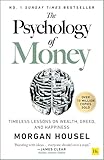
#1 — The Psychology of Money by Morgan Housel
This is the most important personal finance book published since Rich Dad Poor Dad. Housel’s argument is that financial success is less about what you know and more about how you behave — and that behaviour is shaped by your relationship with money, which is shaped by your history and psychology in ways you rarely notice. The chapters on tail events, the trap of lifestyle inflation, and why “enough” is the hardest concept in personal finance are worth the price of the book alone. Less preachy than Kiyosaki and more empirically grounded.
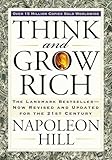
#2 — Think and Grow Rich by Napoleon Hill
Published in 1937 and never out of print, Think and Grow Rich is the grandfather of the wealth mindset genre that Rich Dad Poor Dad belongs to. Hill interviewed hundreds of successful people — including Andrew Carnegie, Henry Ford, and Thomas Edison — and distilled their thinking into a framework built around desire, faith, and persistence. Some of it hasn’t aged well; the core ideas about directed thinking and burning desire remain as relevant as ever.
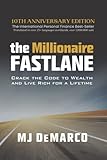
#3 — The Millionaire Fastlane by MJ DeMarco
DeMarco is blunter than Kiyosaki about what he’s against: the “slowlane” model (get a job, save 10%, wait 40 years) that most financial advice promotes. His argument for building businesses with the attributes of scalability and speed — rather than trading time for money — directly extends Kiyosaki’s assets-versus-liabilities framework into something more actionable. Not subtle, but direct and genuinely thought-provoking.
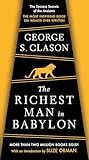
#4 — The Richest Man in Babylon by George S. Clason
Written as a series of parables set in ancient Babylon, this slim book makes the foundational rules of personal finance — pay yourself first, control your expenditures, make your gold multiply — feel like timeless wisdom rather than modern advice. It was published in 1926 and the principles have not changed. If Rich Dad Poor Dad sparked your interest in financial thinking, The Richest Man in Babylon reinforces the foundation.
Getting the Practical Basics Right
#5 — I Will Teach You to Be Rich by Ramit Sethi
Sethi is the antidote to vague wealth mindset advice. He gives you a six-week programme: open the right accounts, automate savings, invest in low-cost index funds, negotiate your salary. The tone is conversational and slightly irreverent — he has no patience for frugality dogma and actively encourages spending on things you love while cutting ruthlessly on things you don’t. If Rich Dad Poor Dad inspired you but left you wondering what to actually do on Monday morning, start here.
#6 — The Total Money Makeover by Dave Ramsey
Ramsey is Sethi’s ideological opposite in some ways — deeply conservative, intensely focused on debt elimination, suspicious of credit. His seven-baby-steps programme has helped millions of people get out of debt and build emergency funds. If you finished Rich Dad Poor Dad carrying significant consumer debt, Ramsey’s framework is probably the right next step before thinking about assets and investing. It is blunt, prescriptive, and it works.
#7 — Your Money or Your Life by Vicki Robin
First published in 1992 and updated in 2008, Your Money or Your Life introduced the FIRE movement (Financial Independence, Retire Early) before it had a name. Robin’s framework asks you to calculate your “real hourly wage” — accounting for all the money and time you spend on your job — and then measure every purchase in life energy rather than dollars. It reframes the relationship between money and time in a way that permanently changes how you make financial decisions.
Investing for the Long Term
#8 — The Millionaire Next Door by Thomas Stanley
Stanley and Danko’s research study of American millionaires produced a surprising finding: most of them live modestly, drive ordinary cars, live in ordinary neighbourhoods, and built their wealth slowly through frugality and disciplined investment rather than high incomes or entrepreneurial windfalls. The Millionaire Next Door is the empirical counterpart to Kiyosaki’s story-based approach — here are the actual numbers from actual millionaires.
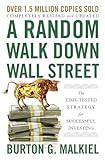
#9 — A Random Walk Down Wall Street by Burton Malkiel
Malkiel’s case for index investing has been made in edition after edition since 1973. His argument is that markets are efficient enough that picking individual stocks consistently underperforms simply owning the whole market at low cost. If Rich Dad Poor Dad made you interested in investing, this book will shape how you think about where to actually put your money. It is thorough, evidence-based, and persuasive.
#10 — The Simple Path to Wealth by JL Collins
Collins is the most readable advocate for index fund investing. His argument is elegant in its simplicity: invest in a single total market index fund, don’t panic during downturns, and let compounding do its work over decades. The book grew out of a series of letters he wrote to his daughter. For someone who has absorbed the mindset lessons of Rich Dad Poor Dad and wants to understand what assets to actually buy, this is the clearest guide available.
Rethinking What Money Is For
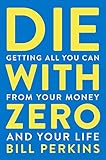
#11 — Die with Zero by Bill Perkins
Perkins makes a provocative argument: the goal of personal finance should not be to maximise the money you die with but to maximise the experiences and memories you can generate with money while you are alive and healthy enough to enjoy them. He uses actuarial data to show that most people save too much for too long and spend their peak experience years working rather than living. This is the right book to read after you have the financial fundamentals in place and are asking “what’s the money for?”
#12 — The Psychology of Money (revisited)
Worth noting again: Housel’s final chapters on defining what “enough” means and why contentment is a competitive advantage deserve their own reading. Many people who finish Rich Dad Poor Dad immediately pivot to acquisition mode — more assets, more passive income, more. Housel’s question — “and then what?” — is the one worth sitting with.
The Foundations of Investing
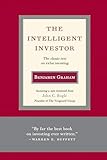
#13 — The Intelligent Investor by Benjamin Graham
First published in 1949, Benjamin Graham’s The Intelligent Investor is the foundational text of value investing — the philosophy that you should buy stocks based on their underlying business value, not market sentiment. Warren Buffett has described it as the best book on investing ever written, and that endorsement is reflected in its enduring influence. Where Kiyosaki talks about assets in abstract terms, Graham gives you the intellectual framework for what a genuine investment actually looks like: something with a margin of safety, purchased below its intrinsic value and held patiently. Dense but invaluable.
#14 — The Compound Effect by Darren Hardy
Hardy’s core argument is disarmingly simple: small, consistent actions compound over time into results that appear disproportionate to the effort. Applied to money, this means automating savings, avoiding lifestyle inflation, and staying consistent through downturns rather than reacting emotionally. What separates The Compound Effect from generic self-help is Hardy’s specificity — he gives you frameworks for tracking your actions and measuring progress, not just motivation to get started. For readers who loved Rich Dad Poor Dad’s emphasis on financial habits, this is the operational companion.
#15 — The Little Book of Common Sense Investing by John C. Bogle
Bogle founded Vanguard and invented the index fund. His argument, made over 200 concise pages, is that the most reliable way to build long-term wealth is to own a diversified portfolio of low-cost index funds and leave them alone. Markets are brutally efficient at transferring money from active traders to passive holders, and the compounding of low fees over decades produces returns that almost no actively managed fund can match. Kiyosaki points you toward assets; Bogle tells you exactly which asset class most investors should be building — and why.
A Reading Path
If you’re in debt: Start with The Total Money Makeover, then I Will Teach You to Be Rich.
If you’re debt-free but not investing: The Simple Path to Wealth, then A Random Walk Down Wall Street.
If you’re already investing and thinking bigger: The Millionaire Fastlane or Your Money or Your Life.
If you want the philosophical grounding: The Psychology of Money, then Die with Zero.
Frequently Asked Questions
Is Rich Dad Poor Dad worth reading?
Yes, as a mindset primer. The book’s core ideas — the difference between assets and liabilities, the value of financial education, the way the wealthy think differently about money — are genuinely valuable. Its weaknesses are imprecision (Kiyosaki is vague about specifics) and some factual disputes about the “Rich Dad” character. Read it for the framework; use the books above for the practical tools.
What is the best book for someone just starting to think about money?
The Psychology of Money by Morgan Housel is the book we recommend most consistently to people starting their financial education. It’s accessible, evidence-based, and focused on the behaviours that actually determine financial outcomes rather than technical knowledge.
Is The Millionaire Next Door better than Rich Dad Poor Dad?
For factual accuracy and practical insight, yes. The Millionaire Next Door is based on actual survey research of American millionaires, not on stories. Its findings — that most wealthy people live modestly, drive ordinary cars, and built their wealth through frugality and disciplined investment rather than entrepreneurial windfalls — directly contradict the more glamorous wealth narratives in popular finance culture. Kiyosaki’s book is better for its initial mindset shift; Stanley’s is better for understanding how wealth is actually built.
What books about passive income are most similar to Rich Dad Poor Dad?
Your Money or Your Life (Vicki Robin) and The Simple Path to Wealth (JL Collins) both address the concept of income that doesn’t require trading time for money. Robin introduces the FIRE (Financial Independence, Retire Early) framework through the concept of “life energy”; Collins argues that a single total-market index fund invested consistently creates a stream of passive returns over time. Both are more specific than Kiyosaki about what passive income actually looks like for a non-real-estate investor.
Are there personal finance books written specifically for women?
Smart Women Finish Rich by David Bach is directly addressed to women and covers goal-setting, investing, and financial protection. Clever Girl Finance by Bola Sokunbi is aimed at women building wealth from scratch. Get Good With Money by Tiffany Aliche (the “Budgetnista”) is practical, warm, and well-reviewed. All three share Rich Dad Poor Dad’s emphasis on mindset shift alongside more practical tools.
For the Full Business Reading List
For the definitive guide to business books across strategy, management, investing, and entrepreneurship, see our Best Business Books of All Time list.
The Psychology of Money vs Rich Dad Poor Dad
For a direct comparison of Morgan Housel’s The Psychology of Money and Robert Kiyosaki’s Rich Dad Poor Dad — what each argues, what each gets right, and which to read first — see our Psychology of Money vs Rich Dad Poor Dad guide.
Affiliate disclosure: Links to Amazon on this page are affiliate links. We earn a small commission at no extra cost to you. This does not influence our editorial recommendations.
Frequently Asked Questions
What books are most similar to Rich Dad Poor Dad?
The books most similar to Rich Dad Poor Dad are The Millionaire Next Door by Thomas Stanley, The Richest Man in Babylon by George Clason, and Think and Grow Rich by Napoleon Hill. All share the mindset-shift approach to money and the emphasis on building assets over earning a salary.
What should I read after Rich Dad Poor Dad?
After Rich Dad Poor Dad, the most recommended next reads are I Will Teach You to Be Rich by Ramit Sethi for practical next steps, The Millionaire Next Door by Thomas Stanley for a research-based portrait of how real wealth is built, and The Intelligent Investor by Benjamin Graham for a rigorous introduction to investing.
Is Rich Dad Poor Dad accurate financial advice?
Rich Dad Poor Dad is valuable for its mindset shift around assets and liabilities, but its specific investment advice has been widely criticised as oversimplified or misleading. Robert Kiyosaki's own financial history has also attracted scrutiny. Read it for the philosophy but verify any specific investment strategies against more rigorous sources.
What personal finance books are considered better than Rich Dad Poor Dad?
The personal finance books most consistently recommended over Rich Dad Poor Dad are The Psychology of Money by Morgan Housel (more nuanced and evidence-based), The Millionaire Next Door by Thomas Stanley (grounded in actual research), and I Will Teach You to Be Rich by Ramit Sethi (more actionable and practical). All three share the core message but deliver it more accurately.