Best Business Books of All Time: 25 That Every Leader Should Read (2026)
The 25 best business books ever written — covering leadership, strategy, management, culture, and competitive advantage. Essential reading for executives, managers, and ambitious professionals.
By Marcus Webb

The best business books are not about business in the narrow sense. They are about human nature — why people follow some leaders and resist others, why some organisations thrive and others calcify, why strategies that look identical on paper produce wildly different results in practice. The best executives read widely precisely because the problems they face are ultimately human problems.
This list is organised by function: strategy and competitive advantage, leadership and culture, management and execution, negotiation and persuasion, finance and investing, and one category we call “the founders” — the books written by or about people who built things from nothing.
Quick Reference: All 23 Books at a Glance
| # | Book | Author | Best For | Our Rating |
|---|---|---|---|---|
| 1 | Good to Great | Jim Collins | Strategy, Research | ★★★★★ |
| 2 | The Innovator’s Dilemma | Clayton Christensen | Strategy, Disruption | ★★★★★ |
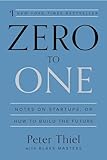
| 3 | Zero to One | Peter Thiel | Startups, Strategy | ★★★★★ |
| 4 | Built to Last | Jim Collins & Jerry Porras | Long-term Vision | ★★★★☆ |
| 5 | Crossing the Chasm | Geoffrey Moore | Tech Sales & Growth | ★★★★☆ |
| 6 | No Rules Rules | Reed Hastings & Erin Meyer | Culture | ★★★★☆ |
| 7 | Radical Candor | Kim Scott | Feedback, Management | ★★★★★ |
| 8 | Start With Why | Simon Sinek | Leadership, Purpose | ★★★★☆ |
| 9 | High Output Management | Andy Grove | Management, Execution | ★★★★★ |
| 10 | The Five Dysfunctions of a Team | Patrick Lencioni | Team Building | ★★★★☆ |
| 11 | The Lean Startup | Eric Ries | Innovation, Execution | ★★★★☆ |
| 12 | Principles | Ray Dalio | Decision-Making | ★★★★☆ |
| 13 | Never Split the Difference | Chris Voss | Negotiation | ★★★★★ |
| 14 | Influence | Robert Cialdini | Persuasion, Sales | ★★★★★ |
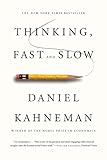
| 15 | Thinking, Fast and Slow | Daniel Kahneman | Decision-Making | ★★★★★ |
| 16 | The 7 Habits | Stephen Covey | Personal Effectiveness | ★★★★☆ |
| 17 | The Intelligent Investor | Benjamin Graham | Investing | ★★★★★ |
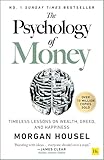
| 18 | The Psychology of Money | Morgan Housel | Finance, Mindset | ★★★★★ |
| 19 | Poor Charlie’s Almanack | Charlie Munger | Mental Models, Investing | ★★★★★ |
| 20 | The Hard Thing About Hard Things | Ben Horowitz | Startups, Leadership | ★★★★★ |
| 21 | Shoe Dog | Phil Knight | Founder Story | ★★★★★ |
| 22 | The Outsiders | William Thorndike | Capital Allocation, CEOs | ★★★★★ |
| 23 | Inspired | Marty Cagan | Product Management | ★★★★★ |
| 24 | Leaders Eat Last | Simon Sinek | Leadership, Culture | ★★★★☆ |
| 25 | The E-Myth Revisited | Michael Gerber | Small Business, Systems | ★★★★☆ |
Strategy and Competitive Advantage
#1 — Good to Great by Jim Collins
Collins and his research team studied 28 companies to identify what distinguished those that made the leap from good to great performance from those that didn’t. The findings — disciplined people, disciplined thought, disciplined action; the hedgehog concept; the flywheel — have become so embedded in business vocabulary that many managers apply them without knowing where they came from. The research is unusually rigorous for a business book.
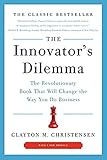
#2 — The Innovator’s Dilemma by Clayton Christensen
Christensen’s theory of disruptive innovation is the most influential business idea of the past 30 years. His core observation — that well-managed companies consistently fail when confronted with technologically simple but strategically disruptive new entrants — explains an enormous amount of business history. Every manager who says the word “disruption” should have read this book first.
#3 — Zero to One by Peter Thiel
Thiel’s argument is that competition is overrated and monopoly is underrated. Building something genuinely new — going from zero to one — is both harder and more valuable than competing to do something slightly better than existing alternatives. The chapters on what a startup must believe to justify its existence, and on the dangers of overly competitive thinking, are some of the most provocative and useful business writing published in the last decade.
#4 — Built to Last by Jim Collins and Jerry Porras
The predecessor to Good to Great and in some ways the more important book: Collins and Porras studied “visionary companies” — those that had sustained exceptional performance for decades — and found that their defining characteristic was not strategy or products but ideology. A set of core values and a sense of purpose that remained stable while everything else adapted. The “BHAG” (Big Hairy Audacious Goal) concept originated here.
#5 — Crossing the Chasm by Geoffrey Moore
Moore’s technology adoption lifecycle — the gap between early adopters and the mainstream market — remains the clearest framework for understanding why most technology companies fail at scale. The “chasm” between the enthusiast early market and the pragmatist mainstream majority is where most technology companies die. Moore’s strategies for crossing it — focusing on a beachhead segment, dominating it completely, then expanding — are as relevant now as they were when first published in 1991.
Leadership and Culture
#6 — No Rules Rules by Reed Hastings and Erin Meyer
Hastings’s account of how Netflix built a culture of freedom and responsibility — unlimited vacation, no approval processes, radical transparency on compensation — is partly a manifesto and partly a case study. Whether you agree with his methods or not, the questions he asks about what organisational culture actually accomplishes are the right questions.
#7 — Radical Candor by Kim Scott
Scott, who managed teams at Apple and Google, developed the Radical Candor framework: care personally, challenge directly. The failure modes — ruinous empathy (caring without challenging), obnoxious aggression (challenging without caring), and manipulative insincerity (doing neither) — are instantly recognisable. This is the management book most often recommended by managers who have changed how they give feedback.
#8 — Start With Why by Simon Sinek
The concept of the Golden Circle — why, how, what — and Sinek’s argument that great leaders and organisations start from purpose rather than product has become a standard framework in business communication. The Apple example is slightly overused at this point, but the underlying idea — that people don’t buy what you do, they buy why you do it — remains genuinely useful.
Management and Execution
#9 — High Output Management by Andy Grove
Grove’s management philosophy, developed while running Intel, is the most rigorous and systematic approach to management in this list. His central concept — that a manager’s output is the output of their team — reframes the job of management entirely. The chapters on meetings (why they exist, what types there are, how to run them) and on performance reviews are still the best writing on these subjects available.
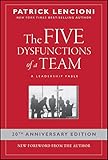
#10 — The Five Dysfunctions of a Team by Patrick Lencioni
Lencioni uses a business fable to describe five layered failures that undermine teams: absence of trust, fear of conflict, lack of commitment, avoidance of accountability, and inattention to results. The model is simple enough to be immediately useful and specific enough to be diagnostic. Most leaders who read it recognise at least one or two dysfunctions operating in their current team.
#11 — The Lean Startup by Eric Ries
Ries’s framework — build, measure, learn — introduced validated learning as the core discipline of new venture management. The minimum viable product, the pivot, and the innovation accounting concepts have entered standard startup vocabulary. For managers running innovation projects within larger organisations, the framework is equally applicable.
#12 — Principles by Ray Dalio
Dalio’s 600-page account of the management principles he developed at Bridgewater Associates is either the most useful or most demanding management book on this list, depending on your tolerance for systematic thinking. His radical transparency culture — where every meeting is recorded, every decision is debated, and every mistake is documented — is extreme. The underlying principles about meritocracy of ideas and the value of radical honesty are broadly applicable.
#13 — Inspired by Marty Cagan
Cagan spent years as a product manager at Hewlett-Packard, eBay, and Netscape before founding the Silicon Valley Product Group. Inspired is the distillation of what he observed about how the best product teams work — and what distinguishes them from the vast majority that produce mediocre products despite adequate resources. His central distinction between “feature factories” (teams that build what stakeholders request) and genuine product teams (who discover problems worth solving) is the most useful framework in product management. If you manage product teams, or are part of one, this is required reading.
Negotiation and Influence
#14 — Never Split the Difference by Chris Voss
Voss’s hostage negotiation techniques — tactical empathy, mirroring, calibrated questions, the “late-night FM DJ voice” — translate more directly into business situations than you might expect. Salary negotiations, contract discussions, customer conversations: the insight that emotion drives decisions more than logic do, and that making the other person feel heard is the first step to any agreement, is universally applicable.
#15 — Influence by Robert Cialdini
Cialdini’s six principles of persuasion — reciprocity, commitment and consistency, social proof, authority, liking, and scarcity — are the scientific foundation under most marketing, sales, and negotiation training. Every manager should understand them both to use them ethically and to recognise when they are being used against them.
Thinking Tools for Leaders
#16 — Thinking, Fast and Slow by Daniel Kahneman
Leadership is largely a discipline of making good decisions under uncertainty. Kahneman’s account of how systematic cognitive biases distort those decisions — and what you can do about it — is essential reading for anyone responsible for consequential choices. The chapters on overconfidence and the planning fallacy are particularly relevant for leaders running projects and strategies.
#17 — The 7 Habits of Highly Effective People by Stephen Covey
Covey’s framework — from dependence to independence to interdependence, built on seven specific habits — remains one of the most comprehensive accounts of personal and interpersonal effectiveness available. Begin with the end in mind. Put first things first. Seek first to understand. The habits are simple; building them is the work of a career.
Finance and Investing
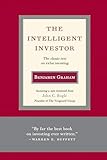
#18 — The Intelligent Investor by Benjamin Graham
Warren Buffett read this book at age 20 and called it “by far the best book about investing ever written.” He then enrolled at Columbia University to study under its author. Graham’s core principle — buying securities at a significant discount to their intrinsic value, thereby providing a “margin of safety” — remains the foundation of value investing seventy years later. The chapters on Mr. Market and the distinction between investment and speculation are essential reading for anyone who owns stocks.
#19 — The Psychology of Money by Morgan Housel
Housel’s argument is that financial success is less about knowing formulas and more about understanding how your own behaviour around money creates or destroys wealth. Twenty short essays on topics including compounding, humility, and the difference between being rich and being wealthy. This is the most readable personal finance book written in the last decade — and the most honest about what actually drives outcomes.
#20 — Poor Charlie’s Almanack by Charlie Munger
The collected speeches and essays of Charlie Munger — Warren Buffett’s longtime partner at Berkshire Hathaway — assembled into an idiosyncratic 500-page volume. Munger’s concept of “mental models” — developing a broad latticework of frameworks from multiple disciplines to make better decisions — has become one of the most influential ideas in serious investing and business thinking. There is no other book quite like it.
The Founders
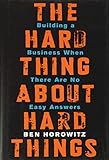
#21 — The Hard Thing About Hard Things by Ben Horowitz
Horowitz writes about the realities of leading a company through genuine difficulty — the moments when there is no good option, when you have to lay people off and don’t know how to do it, when you have no idea if you will make payroll. It is the honest counterpart to the many startup books that focus on success. Every executive who has been through a genuinely hard period recognises themselves on almost every page.
#22 — Shoe Dog by Phil Knight
Knight’s memoir of building Nike — from importing Japanese running shoes from his father’s Dairymount to creating one of the most valuable brands in history — is one of the most compelling business narratives ever written. His account of the near-death experiences, the cash crises, the manufacturing disasters, and the relationships that held the company together is riveting. The business lessons are embedded rather than stated, which makes them more durable.
#23 — The Outsiders by William Thorndike
Thorndike profiles eight CEOs who generated exceptional shareholder returns through disciplined, unconventional capital allocation — including Henry Singleton of Teledyne, Tom Murphy of Capital Cities, and Katherine Graham of the Washington Post. The common thread is not charismatic leadership or visionary product thinking but a relentless focus on what to do with cash. This book changed how many investors think about what great CEO performance actually looks like.
Also Worth Your Shelf
The Design of Everyday Things by Don Norman — The foundational text on human-centered design. Norman introduced the vocabulary — affordances, signifiers, feedback loops — that product teams now use to discuss usability. Its core argument (user errors are almost always design failures, not user failures) permanently changes how you build anything.
Algorithms to Live By by Brian Christian and Tom Griffiths — Computer science has solved many of the problems humans face daily: when to stop searching, how to sort, how to balance exploration with exploitation. This book applies those solutions — rigorously and readably — to hiring decisions, scheduling, and the basic architecture of a productive life.
Hatching Twitter by Nick Bilton — The best Silicon Valley founding story that isn’t a mythology. Bilton’s account of how Jack Dorsey, Ev Williams, Biz Stone, and Noah Glass created Twitter and then fought for credit over it is a masterclass in how founding narratives are constructed — and how power actually shifts in early-stage companies.
Life 3.0 by Max Tegmark — The most rigorous accessible introduction to what artificial general intelligence would mean for the economy, governance, and work. Tegmark is a physicist at MIT, and the book’s value is that it forces the reader to think seriously about AI scenarios — both near-term and long-term — before they arrive. Required reading for any business leader making technology strategy decisions in the next decade.
Two More Essential Reads
#24 — Leaders Eat Last by Simon Sinek
Where Start With Why focuses on purpose, Leaders Eat Last focuses on safety — the biological and psychological conditions under which people give their best work. Sinek’s central argument is that great leaders create an environment where people feel protected from external threats, which allows them to direct their energy toward the work rather than self-protection. His analysis of why the “circle of safety” is consistently violated in short-term-focused organisations explains a great deal about why so many capable teams underperform. A useful companion to Radical Candor and The Five Dysfunctions.
#25 — The E-Myth Revisited by Michael Gerber
The most important book for small business owners that is rarely included in “best business books” lists dominated by big-company thinking. Gerber’s central insight is that most businesses are started by technicians (experts at their craft) who then discover they needed to be entrepreneurs and managers simultaneously — three distinct roles they were never trained for. His “franchise prototype” model — building your business as if it were a franchise, with systems and processes documented and repeatable — is the framework most small businesses need before they can scale. Essential reading for any founder of a services or product business below 50 employees.
Frequently Asked Questions
What is the #1 business book of all time?
Good to Great by Jim Collins is the most frequently cited answer — it has the most rigorous research base, the most enduring frameworks (the Hedgehog Concept, the flywheel), and the widest adoption across executive education. The Intelligent Investor by Benjamin Graham is the most impactful in financial terms — Warren Buffett credits it directly with how he made his fortune.
What business books do the best CEOs read?
The business books most consistently cited by top CEOs are High Output Management (Andy Grove), Good to Great (Jim Collins), The Hard Thing About Hard Things (Ben Horowitz), and Shoe Dog (Phil Knight). Grove’s book in particular has been adopted as required reading by founders at companies including Ben Horowitz’s own portfolio companies at a16z.
What business books can I read in a weekend?
The shortest high-impact books on this list are Zero to One (about 3 hours), The Lean Startup (4–5 hours), Start With Why (4 hours), and Never Split the Difference (5 hours). All four deliver their core ideas efficiently — they are among the few business books where the condensed version is genuinely worth reading in full.
What is the best business book for managers?
High Output Management by Andy Grove is the single best book for managers at any level — it is systematic, rigorous, and honest about what management actually requires. For first-time managers specifically, Radical Candor by Kim Scott is the most immediately actionable.
How to Approach This List
You do not need to read all 25. The most effective approach: start with the book that maps to your current specific challenge. Managing a dysfunctional team? The Five Dysfunctions. Building a product? The Innovator’s Dilemma or Inspired. Having a hard time giving honest feedback? Radical Candor. Thinking about money? The Psychology of Money before anything else. Use the specific problem as the entry point, then expand from there.
Affiliate disclosure: Links to Amazon on this page are affiliate links. We earn a small commission at no extra cost to you. This does not influence our editorial recommendations.
Frequently Asked Questions
What is the best business book of all time?
Good to Great by Jim Collins and The Intelligent Investor by Benjamin Graham are the most frequently cited business books of all time. Good to Great is the most researched study of what separates exceptional companies from average ones. The Intelligent Investor is the definitive guide to value investing and has made more fortunes than any other book.
What is the best first business book to read?
The best first business book is Zero to One by Peter Thiel for anyone thinking about building a company, or The Psychology of Money by Morgan Housel for anyone focused on personal wealth. Both are short, original, and contain ideas you will not find elsewhere.
What business books do CEOs and executives recommend most?
The business books most recommended by CEOs and executives are High Output Management by Andy Grove, Good to Great by Jim Collins, and The Hard Thing About Hard Things by Ben Horowitz. Shoe Dog by Phil Knight is also widely recommended as the most honest and compelling founder memoir.
Are business books actually useful?
The most useful business books are those that either change how you think about a specific problem you are currently facing or give you frameworks you apply repeatedly. The majority of business books could be condensed significantly, so prioritising the most consistently recommended titles saves considerable time.
What business books should I read first?
Start with Zero to One by Peter Thiel if you're building a company, The Hard Thing About Hard Things by Ben Horowitz if you're leading through difficulty, Radical Candor by Kim Scott if you're managing people for the first time, and The Psychology of Money by Morgan Housel if you're focused on personal financial decisions. These four cover the ground that matters most early in a career.
What is the best business book for entrepreneurs?
The best business books for entrepreneurs are Zero to One by Peter Thiel (contrarian framework for building new things), The Hard Thing About Hard Things by Ben Horowitz (the reality of leadership in crisis), Shoe Dog by Phil Knight (the most honest founder memoir), and The Lean Startup by Eric Ries (a practical framework for building and testing products quickly).