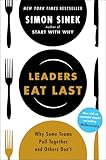
Editors Reads Verdict
Sinek's most substantive book. The biological framework connecting oxytocin, cortisol, and serotonin to workplace behaviour is genuinely illuminating, and the Circle of Safety concept offers a compelling model for building trust.
What We Loved
- The neurochemistry framework (cortisol, oxytocin, serotonin, dopamine) is accessible and insightful
- The Circle of Safety model explains team cohesion better than most management frameworks
- Marine Corps examples give the leadership principles visceral weight
- The critique of short-termism and the costs of the abstraction of people is important
Minor Drawbacks
- More repetitive than Start With Why in places
- The biology is occasionally oversimplified for accessibility
- The prescriptions are less specific than the diagnosis
Key Takeaways
- → Leaders who protect their people — who eat last — create the trust that enables high performance
- → The Circle of Safety: when people feel safe inside the group, they face external threats together
- → Cortisol (stress) and oxytocin (trust) are biologically incompatible — safety enables performance
- → Short-term financial thinking abstracts people into numbers, destroying the human bonds that create results
- → The best leaders prioritise the well-being of their people over their own advancement
| Author | Simon Sinek |
|---|---|
| Publisher | Portfolio |
| Pages | 368 |
| Published | January 7, 2014 |
| Language | English |
| Genre | Business, Leadership, Management |
| Difficulty | Beginner |
| Best For | Leaders at all levels who want to understand the biological foundations of trust, safety, and high-performance teams. |
How Leaders Eat Last Compares
Leaders Eat Last at a glance against 3 similar books readers weigh alongside it.
| Book | Author | Rating | Best for |
|---|---|---|---|
| Leaders Eat Last (this book) | Simon Sinek | ★ 4.4 | Leaders at all levels who want to understand the biological foundations of |
| Radical Candor | Kim Scott | ★ 4.4 | Managers at all levels who want to give honest, caring feedback and build |
| Start With Why | Simon Sinek | ★ 4.5 | Leaders, entrepreneurs, marketers, and anyone who wants to inspire action |
| The Hard Thing About Hard Things | Ben Horowitz | ★ 4.5 | Startup founders, CEOs, and senior managers navigating the unglamorous |
Leadership as Biological Responsibility
Simon Sinek opens Leaders Eat Last with a Marine Corps tradition: officers eat after their enlisted ranks. It’s a small, concrete act that symbolises something profound about leadership: those in authority exist to serve those they lead, not the other way around. This simple inversion — service over status — is the moral core of everything that follows.
The book extends Sinek’s framework from Start With Why into the biology of leadership, exploring how neurochemistry creates or destroys the conditions for high-performance teams.
The Circle of Safety
Sinek’s central concept is the Circle of Safety: the boundary drawn by leaders around their people, inside which everyone feels protected from external threats — from competitors, from market forces, from the outside world. When people feel safe inside this circle, their cortisol levels drop, their oxytocin (the trust hormone) rises, and they stop spending energy managing internal threats — politics, backstabbing, self-preservation — and start directing all their energy outward, toward the actual challenges the organisation faces.
Most organisations get this backwards: internal competition and fear are treated as motivators. Sinek argues they are actually enormous tax on performance — and that leaders who eliminate them by creating genuine safety unlock disproportionate discretionary effort.
The Neurochemistry of Leadership
Sinek’s biological framework connects four neurochemicals to organisational behaviour. Endorphins mask physical pain and enable sustained effort. Dopamine rewards the achievement of goals. Serotonin provides the pride of status and recognition. Oxytocin is released in acts of trust and generosity and is the foundation of social bonds.
Short-term metrics and management by fear are cortisol machines — they keep people in threat-response mode, which is exhausting, unhealthy, and antithetical to the kind of creative, collaborative work that produces exceptional results.
The Cost of Abstraction
One of the book’s most important chapters concerns what happens when leaders stop seeing their people as people — when employees become “headcount,” customers become “users,” and quarterly earnings become the only relevant metric. Sinek argues this abstraction is not merely morally problematic but strategically catastrophic: it severs the trust relationships that create durable performance.
Leadership as Service, Not Status
The book’s moral foundation, captured in its title and its opening image of Marine officers eating only after their subordinates, is a deliberate inversion of the conventional relationship between authority and privilege. Sinek argues that genuine leadership is not a reward to be enjoyed but a responsibility to be borne — that those granted authority over others incur an obligation to protect and serve them, much as a parent does a child, rather than a license to extract status and comfort for themselves. This service-first conception runs against the grain of much corporate culture, in which the higher one rises the more one is insulated from risk and rewarded with perks, and Sinek’s argument is that this gets the deal exactly backward. The leader who eats last, who sacrifices for the people in their charge and absorbs risk on their behalf, earns in return the trust, loyalty, and discretionary effort that no amount of authority can command. It is an old-fashioned, even sentimental vision of leadership as stewardship, but Sinek grounds it in concrete examples and makes a persuasive case that it is also the more effective one.
The Biology of Trust
The distinctive contribution that separates Leaders Eat Last from the broader leadership genre is its grounding of organizational behavior in human biology, specifically in the four chemicals Sinek argues govern our social and motivational lives. Endorphins and dopamine, the “selfish” chemicals, drive individual achievement and the pursuit of goals; serotonin and oxytocin, the “selfless” chemicals, govern pride, status, trust, and the bonds of belonging that hold groups together. Sinek’s argument is that healthy organizations are those that balance these systems, and in particular that they cultivate the oxytocin-driven trust and the serotonin-driven sense of recognition that make people feel safe and valued. Set against these is cortisol, the stress hormone released by environments of fear, politics, and insecurity, which keeps people in a defensive, self-protective crouch incompatible with creative, collaborative work. While the neuroscience is necessarily simplified and some experts find it loose, the framework is accessible and intuitive, and it gives Sinek’s ethical argument an empirical-sounding foundation: trust and safety are not soft luxuries but biological preconditions for high performance.
The Danger of Abstraction
One of the book’s sharpest and most morally serious sections concerns what happens when leaders and organizations stop seeing the people affected by their decisions as actual human beings, and instead relate to them only as abstractions — headcount, users, numbers on a spreadsheet, quarterly metrics. Sinek argues that this abstraction is not merely an ethical failing but a strategic catastrophe, because it severs the relationships of trust and mutual obligation on which durable performance depends and makes possible decisions that are individually rational and collectively destructive. The leader who lays off thousands to hit a quarterly target, never having to face the people behind the number, has been insulated by abstraction from the human consequences of the choice. Sinek connects this to the broader pathologies of a short-term, metrics-obsessed corporate culture that prioritizes the next earnings report over the long-term health of the institution and its people. His insistence that leadership requires keeping the humanity of those affected continually in view — resisting the distancing that scale and hierarchy encourage — is among the book’s most resonant and applicable arguments.
Final Verdict
Leaders Eat Last is Sinek’s most intellectually substantive book. The biological framing is accessible without being reductive, and the Circle of Safety model provides a compelling and practical framework for building the conditions where great work becomes possible.
Our rating: 4.4/5 — A generous, human-centred vision of leadership backed by biology. One of the better books on what it means to actually lead people.
Reading Guides
Frequently Asked Questions
What is "Leaders Eat Last" about?
Why some teams pull together and others don't — an investigation into the biology and anthropology of leadership and organisational safety.
Who should read "Leaders Eat Last"?
Leaders at all levels who want to understand the biological foundations of trust, safety, and high-performance teams.
What are the key takeaways from "Leaders Eat Last"?
Leaders who protect their people — who eat last — create the trust that enables high performance The Circle of Safety: when people feel safe inside the group, they face external threats together Cortisol (stress) and oxytocin (trust) are biologically incompatible — safety enables performance Short-term financial thinking abstracts people into numbers, destroying the human bonds that create results The best leaders prioritise the well-being of their people over their own advancement
Is "Leaders Eat Last" worth reading?
Sinek's most substantive book. The biological framework connecting oxytocin, cortisol, and serotonin to workplace behaviour is genuinely illuminating, and the Circle of Safety concept offers a compelling model for building trust.
Ready to Read Leaders Eat Last?
Check the current price on Amazon.
Check Price on Amazon (paid link)Prices and availability are subject to change. See Amazon for current price.
Review last updated: