Best Books on Leadership: 15 Essential Reads for Managers and Leaders (2026)
Whether you're a new manager or a senior executive, these 15 leadership books cover the philosophy, psychology, and practical skills that separate good leaders from great ones.
By Marcus Webb

Leadership books are among the most widely purchased and least actually read books in print. They pile up on managers’ desks as aspirational signals, their spines uncracked. This list is different in purpose: these are the books that working leaders — founders, executives, team leads, coaches — actually return to and cite in their decisions.
The books here span three domains: leadership philosophy (how to think about your role), management practice (how to execute), and contextual case studies (what great leadership looks like in the real world). A complete leadership education requires all three.
15 Best Leadership Books at a Glance
| # | Book | Best For | Level |
|---|---|---|---|
| 1 | Good to Great | Understanding what separates great organisations | Intermediate–Advanced |
| 2 | Extreme Ownership | Accountability and command culture | All levels |
| 3 | Radical Candor | Feedback and performance conversations | New managers |
| 4 | Leaders Eat Last | Building trust and team loyalty | All levels |
| 5 | Start with Why | Communicating vision and purpose | All levels |
| 6 | The Five Dysfunctions of a Team | Diagnosing and fixing team problems | New managers |
| 7 | High Output Management | Operational management fundamentals | Intermediate |
| 8 | The 7 Habits of Highly Effective People | Personal and interpersonal effectiveness | All levels |
| 9 | Dare to Lead | Vulnerability, courage, and trust | Intermediate |
| 10 | Team of Rivals | Political leadership and cabinet-building | Senior leaders |
| 11 | No Rules Rules | High-talent-density culture | Senior / Exec |
| 12 | Built to Last | Long-term organisational culture | Senior / Exec |
| 13 | Never Split the Difference | Negotiation and high-stakes conversations | All levels |
| 14 | Deep Work | Focus, productivity, and team norms | All levels |
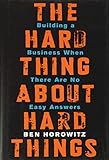
| 15 | The Hard Thing About Hard Things | Crisis leadership and founder decisions | Senior / Exec |
1. Good to Great by Jim Collins
Collins and his research team spent five years identifying companies that made the transition from average to exceptional sustained performance — and what specifically caused it. The findings challenge comfortable assumptions: the most effective leaders, Collins found, were not the charismatic visionaries celebrated in business media, but quiet, determined individuals who combined professional will with personal humility.
The “Hedgehog Concept,” the “Flywheel,” and the discipline of “first who, then what” (get the right people on the bus before deciding direction) have become standard vocabulary in leadership discussions for good reason. The research is rigorous, the writing is clear, and the conclusions are counterintuitive enough to be genuinely useful.
2. Extreme Ownership by Jocko Willink and Leif Babin
Two Navy SEAL officers — veterans of the Battle of Ramadi in Iraq — apply combat leadership principles to business. The central argument: leaders must own everything in their world. When things go wrong, the question a leader asks is not “who failed?” but “how did I fail to set them up for success?”
Extreme Ownership is the most useful book on accountability in leadership. The business case studies that follow each military story can feel contrived, but the core principle — that leadership is the decisive variable, and that accepting responsibility is the foundation of authority — is both uncomfortable and genuinely true.
3. Radical Candor by Kim Scott
Former Apple and Google executive Kim Scott argues that most managers fall into one of two failure modes: being too kind (avoiding difficult feedback, producing “ruinous empathy”) or too harsh (giving criticism without genuine care, producing “obnoxious aggression”). The sweet spot — “radical candor” — involves caring personally about people while challenging them directly.
The book provides a practical framework for how to have the difficult performance conversations that most managers avoid until too late. The two-by-two matrix of care vs. challenge is memorable enough to actually use in practice. For new managers particularly, this is one of the most immediately actionable books on the list.
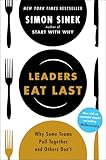
4. Leaders Eat Last by Simon Sinek
Sinek’s second major book (after Start with Why) explores the biology of trust and cooperation — why some organizations inspire loyalty while others produce mercenary behaviour. The central metaphor comes from the Marine Corps: officers eat last, after their people. Leadership, Sinek argues, is not a rank but a choice to take responsibility for the people in your care.
The book covers the neurochemical underpinnings of trust (oxytocin, serotonin, cortisol, endorphins) with enough depth to be interesting without becoming a biology lecture. The case studies — from the Marine Corps to a manufacturing company — illustrate the concrete differences between cultures of trust and cultures of fear.
5. Start with Why by Simon Sinek
Sinek’s first book introduces the “Golden Circle”: Why → How → What. Great leaders and organisations, he argues, communicate from the inside out — starting with purpose (Why), then process (How), then product (What). Most organisations work in reverse.
The Apple example is overused in leadership circles, but Sinek’s framework remains useful for any leader trying to articulate purpose to a team. Understanding why your team’s work matters — and being able to communicate it authentically — is the prerequisite for the kind of motivation that survives difficult conditions.
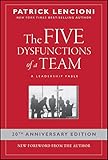
6. The Five Dysfunctions of a Team by Patrick Lencioni
Written as a business fable, Lencioni’s book identifies the five most common ways teams fail: absence of trust, fear of conflict, lack of commitment, avoidance of accountability, and inattention to results. Each dysfunction enables the next in a pyramid structure, and the interventions for each are specific and practical.
The fable format makes it fast to read — a competent reader finishes in two to three hours — but the model is dense enough to apply across many team contexts. For leaders inheriting dysfunctional teams, the diagnostic value is high.
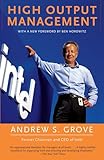
7. High Output Management by Andrew Grove
Grove was the CEO of Intel and one of the most admired managers of the late twentieth century. High Output Management was published in 1983 and has quietly influenced more Silicon Valley leaders than any other management book — Ben Horowitz has said it is the best book about management ever written.
Grove’s approach is engineering-like: management is a production system, and the manager’s job is to maximise the output of that system. The book covers one-on-ones (a chapter that single-handedly changed how tech companies run meetings), performance reviews, decision-making, and the concept of “task-relevant maturity” that determines how much autonomy to give a particular employee on a particular task. Every chapter is dense with practical technique.
8. The 7 Habits of Highly Effective People by Stephen Covey
Covey’s 1989 book remains one of the best-selling non-fiction books ever written, and unlike many bestsellers, it has aged well. The seven habits progress from personal effectiveness (being proactive, beginning with the end in mind, putting first things first) to interpersonal effectiveness (thinking win-win, seeking first to understand, synergising) to renewal (sharpening the saw).
The concept of the “Abundance Mentality” versus the “Scarcity Mentality” is particularly useful for leaders: whether you believe there is enough success, recognition, and opportunity to go around, or whether every colleague’s win is your loss, shapes every leadership decision you make.
9. Dare to Lead by Brené Brown
Brown’s research on vulnerability and shame has influenced a generation of leaders uncomfortable with showing uncertainty. Dare to Lead translates that research into leadership practice: the most effective leaders, Brown argues, are willing to be seen struggling, to admit what they don’t know, and to have difficult conversations rather than avoiding them.
For leaders who were trained in cultures where confidence (or its performance) was paramount, Brown’s reframe of vulnerability as courage rather than weakness provides useful alternative architecture. The book is particularly strong on what she calls “armoured leadership” — the defensive behaviours that look like strength but undermine trust.
10. Team of Rivals by Doris Kearns Goodwin
A historical case study in leadership under pressure: Abraham Lincoln’s decision to include his most formidable rivals in his cabinet. Goodwin’s account of how Lincoln managed Seward, Chase, and Bates — men who believed they should have been president instead — is the most detailed study available of political leadership in extremis.
For leaders building senior teams, the parallels are immediate: Lincoln hired people smarter than he was in specific domains, managed their egos with extraordinary skill, and used their competition to arrive at better decisions. The portrait of Lincoln as a leader is more practical than hagiographic.
11. No Rules Rules by Reed Hastings and Erin Meyer
Netflix co-founder Reed Hastings describes the management philosophy that allowed Netflix to scale from a DVD rental company to a global entertainment platform: a high-talent density culture where conventional management controls (approval processes, expense policies, performance improvement plans) are systematically removed in favour of trust and context.
The “Netflix culture” — summarised in their famous Culture Deck — is one of the most influential management documents of the tech era. The book explains both the specific practices and the sequence in which they should be introduced, with Meyer adding cross-cultural analysis that prevents the advice from becoming Silicon Valley parochialism.
12. Built to Last by Jim Collins and Jerry Porras
Collins and Porras’s earlier book identified eighteen “visionary companies” — organisations that had outperformed the market over decades — and what distinguished them from their nearest competitors. The finding: visionary companies are guided by a “core ideology” (values and purpose) that they preserve while everything else adapts.
The concept of the “BHAG” (Big Hairy Audacious Goal) — a long-term, ambitious, specific goal that galvanises an organisation — comes from this book. For leaders thinking about organisational culture and long-term identity, Built to Last provides the most rigorous research base available.
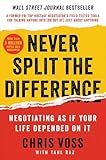
13. Never Split the Difference by Chris Voss
Former FBI hostage negotiator Chris Voss translates his negotiation experience into a practical guide to high-stakes conversations. The core techniques — tactical empathy, mirroring, labelling emotions, calibrated questions — are immediately applicable in management contexts: performance reviews, salary discussions, conflict resolution, and any conversation where two parties have different interests.
For leaders whose training emphasised assertiveness and positional bargaining, Voss’s counter-intuitive argument — that the best negotiators are the best listeners — provides useful reorientation.
14. Deep Work by Cal Newport
Newport’s argument is that the ability to perform cognitively demanding work without distraction is becoming simultaneously rarer and more valuable. Leaders who can create environments where deep work is possible — and who model it themselves — gain a compounding advantage over those managing by interruption.
The book is as much a diagnosis of the modern office’s failure to support meaningful work as it is a prescription for individual practice. For leaders designing team norms around communication and focus, Newport provides the theoretical foundation and the practical toolkit.
15. The Hard Thing About Hard Things by Ben Horowitz
Horowitz, co-founder of Andreessen Horowitz, writes about the decisions that no management book covers: how to fire a friend, how to lead through a company crisis, when to replace a loyal employee with a more qualified one, and how to maintain your own psychological stability when everything is falling apart.
The book is deliberately uncomfortable — Horowitz acknowledges that most leadership books give advice for good times rather than bad ones. The Hard Thing About Hard Things covers the bad times with unusual honesty, which is why it is recommended by founders and executives rather than the management theorists who tend to dominate the genre.
Building Your Leadership Reading Foundation
For new managers, start with Radical Candor (how to have difficult conversations), The Five Dysfunctions of a Team (how teams fail), and High Output Management (how to structure your management work). These three cover the practical mechanics of management more directly than the philosophy-heavy alternatives.
For experienced leaders, Good to Great, Team of Rivals, and No Rules Rules offer the most rigorous thinking about organisational performance and culture at scale.
For the Full Business Reading List
For the definitive guide to business books across strategy, management, investing, and entrepreneurship, see our Best Business Books of All Time list.
More Career and Personal Development Guides
- 15 Best Books for Entrepreneurs
- Best Productivity Books: Reviewed and Ranked
- Books Like Outliers: Success, Culture, and Talent
Also Recommended
Affiliate disclosure: Links on this site are affiliate links. We earn a small commission at no extra cost to you. This does not influence our editorial recommendations.
Frequently Asked Questions
What is the best leadership book of all time?
High Output Management by Andy Grove is most consistently cited by executives and founders as the most practically useful leadership book ever written. Leaders Eat Last by Simon Sinek is the most widely read modern leadership book. Good to Great by Jim Collins is the most researched.
What leadership books do you recommend for new managers?
New managers should start with Radical Candor by Kim Scott, which addresses how to give honest feedback without being unkind, and The Five Dysfunctions of a Team by Patrick Lencioni, which identifies the most common ways teams fail. High Output Management by Andy Grove provides the operational framework once those foundations are in place.
What books do CEOs and executives recommend on leadership?
The leadership books most recommended by CEOs are High Output Management by Andy Grove, Extreme Ownership by Jocko Willink and Leif Babin, and No Rules Rules by Reed Hastings and Erin Meyer. Leaders at Amazon frequently cite Working Backwards by Colin Bryar. Netflix and Amazon leadership frameworks are both documented in detail in those respective books.
What is the difference between leadership books and management books?
Leadership books address how to inspire, motivate, and align people around a vision. Management books address how to organise, plan, and execute work efficiently. The best books combine both. High Output Management by Andy Grove is primarily a management book; Leaders Eat Last by Simon Sinek is primarily a leadership book. Radical Candor by Kim Scott covers both effectively.