Where to Start with Clayton M. Christensen: A Reading Guide
Where to start with Clayton M. Christensen — how to approach The Innovator's Dilemma, his essential book on disruptive innovation. A complete reading guide.
By Marcus Webb
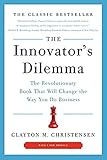
Clayton M. Christensen (1952–2020) was a Harvard Business School professor whose research into the dynamics of industry disruption produced The Innovator’s Dilemma (1997) — one of the most influential business strategy books of the late twentieth century. The book introduced the concept of “disruptive innovation” to mainstream business and technology discourse, and this phrase has since become one of the most widely used (and widely misused) concepts in Silicon Valley and beyond. Christensen spent his career extending and defending the framework against criticism and applying it to healthcare, education, and other sectors.
Where to Start: The Innovator’s Dilemma (1997)
The essential Christensen — and one of the most counterintuitive insights in business strategy. The central puzzle: why do great companies, run by intelligent managers who understand their industries and listen carefully to their customers, consistently fail to respond to disruptive new technologies until it is too late? Christensen’s answer is that this failure is not the result of poor management — it is the direct result of good management applied in the wrong context.
The mechanism works like this: established companies serve their most profitable customers by continuously improving their existing products — sustaining innovations. New entrants, by contrast, enter at the low end of the market or create a new market entirely, with products that are initially worse on the attributes the established company’s customers care about but better on dimensions that a different set of customers value: price, simplicity, convenience, or accessibility. The established company’s best customers don’t want the disruptive product; their managers are right to ignore it for now.
But disruptive technologies improve. They travel up-market along a performance trajectory that eventually reaches the established company’s customer base — at which point the entrant competes on both the new dimensions it introduced and on the traditional quality metrics. By then, the disruptive innovator has cost advantages, distribution scale, and product development experience that the established company cannot replicate. The established company has been consistently making good short-term decisions that aggregated into long-term strategic disaster.
Christensen’s primary case studies are drawn from the disk drive industry — a sector that underwent complete generational turnover in less than a decade, with every successive generation of incumbent companies failing to lead the transition to the next form factor. The pattern repeated identically across multiple generations despite the fact that managers could see it happening. This is the dilemma: the rational management decision at each decision point contributed to the irrational long-term outcome.
The framework applies most clearly to technology industries with well-defined performance metrics and clear entry-from-below dynamics. Its application to other industries has been more contested.
Why The Innovator’s Dilemma Is the Ideal First Book
For a reader new to Clayton M. Christensen, The Innovator’s Dilemma is the ideal first book because it is his landmark work, one of the most influential business books ever written, and the fullest expression of his groundbreaking theory of disruptive innovation. The Innovator’s Dilemma presents Christensen’s influential explanation of why successful, well-managed companies can fail when confronted with disruptive innovation, and why the very practices that make companies successful can leave them vulnerable to disruption. As an entry point, it is ideal because it lays out his influential theory directly and rigorously, offering a powerful framework for understanding innovation, disruption, and why great companies fail. It welcomes the newcomer with its influential theory, its rigorous analysis, and its profound implications for business, drawing the reader into a landmark work of business thinking. It is his best-known book and the one that best represents his thinking, so that the new reader encounters Christensen’s central theory from the first. For the newcomer interested in innovation and business, then, The Innovator’s Dilemma is the natural and ideal starting point.
What to Expect as a New Reader
As a new reader, you can expect The Innovator’s Dilemma to be a rigorous, influential, and illuminating work of business thinking, presenting the theory of disruptive innovation. You can expect Christensen’s central theory, his explanation of why successful, well-managed companies can fail when confronted with disruptive innovation, and why the very practices that make companies successful can leave them vulnerable. You can expect a rigorous analysis, for Christensen grounds his theory in careful study of how industries are disrupted, lending it authority and depth. You can expect profound implications, for the theory illuminates why great companies fail, how disruption works, and what businesses must do to survive it. You can expect a serious and substantial book that rewards careful engagement, though its central ideas are clear and compelling. You can expect a framework that has shaped how business leaders and analysts think about innovation. Expect, in short, a rigorous, influential, and illuminating presentation of the theory of disruptive innovation, an essential introduction to Christensen’s thinking.
Going Deeper After Your First Book
Once The Innovator’s Dilemma has introduced you to Christensen’s theory of disruption, the reader who wishes to go deeper can explore his other work, which extends his thinking on innovation and applies his analytical rigor to other questions, including the question of how to live a meaningful life. His other business work extends and applies his theory of disruption, while his celebrated reflection on life applies his analytical approach to the deepest personal questions of work, relationships, and integrity. Reading these after The Innovator’s Dilemma deepens your engagement with Christensen’s distinctive thinking, the rigorous analysis, the powerful frameworks, and the application of clear theory to important questions, in business and in life. His characteristic approach runs through his work, and the reader who has engaged with The Innovator’s Dilemma will find the same rigor in his other books. Building your reading journey through Christensen’s work is a matter of following his thinking from disruptive innovation into his further business work and his reflection on life. The reader who begins with The Innovator’s Dilemma and continues through his work will find a rigorous and influential thinker on innovation, business, and life.
Reading Clayton M. Christensen
Begin with The Innovator’s Dilemma — it is his essential and most influential work. The Innovator’s Solution (2003) is the logical follow-on for readers who want to understand how to respond to disruption rather than just why it happens. Both standalone.
For the full Clayton M. Christensen bibliography, reviews, and biography, visit the Clayton M. Christensen author page on Editors Reads.
Affiliate disclosure: Links to Amazon on this page are affiliate links. We earn a small commission at no extra cost to you.
Frequently Asked Questions
Where should I start with Clayton M. Christensen?
The Innovator's Dilemma (1997) is Christensen's most essential and influential book — a Harvard Business School professor's research-based argument for why great, well-managed companies can do everything right and still lose market leadership to disruptive new entrants. One of the most cited business strategy texts of the past thirty years.
What is The Innovator's Dilemma about?
The Innovator's Dilemma explains why market leaders fail to respond to disruptive technologies despite having the resources, intelligence, and management quality to do so. Christensen's core finding: good management — listening to customers, investing in sustaining innovations that improve existing products, and focusing on profitable markets — is precisely what makes established companies vulnerable to disruptors who enter from below with products that are initially worse but cheaper and simpler.
How valid is the disruptive innovation framework today?
The Innovator's Dilemma is among the most cited and most debated business books of the past three decades. The disruptive innovation concept became so widely applied that it was arguably diluted by overuse. Harvard Business Review published a 2015 critique by Jill Lepore arguing that the historical cases Christensen used were selectively presented and the theory does not predict outcomes reliably. Christensen responded; the debate is ongoing. The core insight — that established companies are structurally impeded from responding to disruptive new entrants — remains widely applicable and has proven its analytical value across multiple industries.
What should I read after The Innovator's Dilemma?
After The Innovator's Dilemma, Christensen's The Innovator's Solution (2003, with Michael Raynor) is his follow-on offering guidance on how companies can create disruptive innovations rather than just understand why they fail. For broader strategy context, Ben Horowitz's The Hard Thing About Hard Things covers the startup side of disruption from a practitioner perspective. W. Chan Kim's Blue Ocean Strategy addresses adjacent questions about competitive strategy and value innovation.