Where to Start with Andrew Grove: A Reading Guide
Where to start with Andrew Grove — whether to begin with High Output Management or Only the Paranoid Survive. A complete reading guide to the Intel CEO and business author.
By Marcus Webb
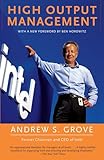
Andrew Grove (1936–2016) was the Hungarian-born American business executive who fled Soviet Hungary as a refugee, earned a PhD in chemical engineering from the University of California at Berkeley, and went on to become CEO and chairman of Intel Corporation — steering the company through its transition from memory chips to microprocessors, making it one of the most successful companies in history. Grove was named Time Magazine’s Man of the Year in 1997. His two major books — High Output Management (1983) and Only the Paranoid Survive (1996) — are among the most widely read and respected business books in the technology industry.
Where to Start: High Output Management (1983)
The essential Grove — and one of the foundational management texts for the technology industry. Grove’s starting premise is that management is a craft that can be learned and optimised: the output of a manager is not what the manager personally produces but what their team produces, and the question is what practices maximise that output.
The book is built around concrete, practical advice. The one-on-one meeting — thirty to sixty minutes with each direct report every week or two, focused on the issues the employee brings rather than the manager’s agenda — is Grove’s most influential contribution to management practice. He argues that this meeting is the manager’s primary tool for maintaining information flow upward and providing coaching downward; that skipping one-on-ones is the most common managerial mistake.
Other chapters examine the different types of meetings (informational, decision-making, problem-solving) and how to run each; the mechanics of performance reviews and their purpose; how to think about delegation and the relationship between task complexity and individual experience; what motivates individual employees and how motivation differs across career stages.
Grove writes as a practitioner, not a theorist. The advice is specific, testable, and grounded in his experience running one of the world’s most demanding technology companies. High Output Management is one of the books most likely to change how a manager actually operates.
Only the Paranoid Survive (1996)
Grove’s strategic analysis — how to recognise and navigate the inflection points that threaten or transform entire industries. Essential for business leaders in fast-changing sectors; a different focus from the day-to-day management of High Output Management.
Why High Output Management Is the Ideal First Book
For a reader new to Andrew Grove, High Output Management is the ideal first book because it is his classic work on management and the fullest expression of his distinctive contribution, the rigorous, practical, and influential approach to managing for results. Drawing on his experience leading one of the world’s most important technology companies, Grove offers in High Output Management a clear and rigorous framework for the work of management, focused on maximizing the output of a manager and their team. As an entry point, it is ideal because it lays out his influential management philosophy directly and rigorously, offering a practical and systematic approach to the real work of managing that has guided generations of leaders. It welcomes the newcomer with its rigorous framework, its practical orientation, and its hard-won authority, offering a serious and systematic guide to effective management. It is his best-known and most influential book and the one that best represents his thinking, so that the new reader encounters Grove’s management philosophy from the first. For the newcomer interested in management, then, High Output Management is the natural and ideal starting point, the classic that has guided generations of leaders.
What to Expect as a New Reader
As a new reader, you can expect High Output Management to be a rigorous, practical, and influential guide to the work of management, focused on managing for results. You can expect a rigorous framework, for Grove brings an engineer’s clarity and rigor to the work of management, offering a systematic approach grounded in clear principles. You can expect a focus on output and results, for Grove’s central concern is maximizing the productive output of a manager and their team, and he treats management as the work of achieving results through others. You can expect practical, actionable guidance on the real tasks of management, from running effective meetings to making decisions, conducting reviews, and motivating people. You can expect hard-won authority, for Grove drew on his experience leading one of the world’s most important technology companies. You can expect a serious and substantial book that rewards careful study. Expect, in short, a rigorous, practical, and influential guide to managing for results, the classic introduction to Grove’s management philosophy.
Going Deeper After Your First Book
Once High Output Management has introduced you to Grove’s management philosophy, the reader who wishes to go deeper can explore his other work, which extends his rigorous, practical thinking to the strategic challenges of leadership in a fast-changing world. His other book addresses the challenge of navigating moments of profound strategic change, the inflection points at which industries and companies are transformed, drawing on his experience to offer guidance for recognizing and responding to such moments. Reading this after High Output Management deepens your engagement with Grove’s thinking, extending it from the practical work of management to the strategic challenges of leadership and change. His characteristic rigor, clarity, and practical wisdom run through his work, and the reader who has valued High Output Management will find the same qualities in his other writing. Building your reading journey through Grove’s work is a matter of following his thinking from the practical work of management to the strategic challenges of leadership. The reader who begins with High Output Management and continues through his work will find a consistently rigorous and valuable guide to management and leadership.
Reading Andrew Grove
Begin with High Output Management for the management fundamentals; read Only the Paranoid Survive after for his strategic thinking about industry disruption. Both books are standalone.
For the full Andrew Grove bibliography, reviews, and biography, visit the Andrew Grove author page on Editors Reads.
Affiliate disclosure: Links to Amazon on this page are affiliate links. We earn a small commission at no extra cost to you.
Frequently Asked Questions
Where should I start with Andrew Grove?
High Output Management (1983) is the essential starting point — Grove's practical guide to management, written during his time as CEO of Intel, that has become one of the most widely referenced management books in Silicon Valley. More practically focused on the mechanics of management than Only the Paranoid Survive; the right starting point for readers interested in Grove's management philosophy. Both books are standalone.
What is High Output Management about?
High Output Management is organised around a single insight: the output of a manager is the output of their team. Grove examines the mechanics of getting work done through other people — meetings (one-on-ones, staff meetings, problem-solving meetings), performance reviews, delegation, decision-making, and the management of individual motivation. The book is notable for introducing the concept of the 'one-on-one' meeting as the primary tool for manager-employee communication, and for its honest, unsentimental analysis of what managing people actually requires.
What is Only the Paranoid Survive about?
Only the Paranoid Survive (1996) is Grove's analysis of strategic inflection points — the moments when the fundamental forces governing a business shift so dramatically that the old rules no longer apply. Grove uses Intel's near-death experience during the transition from memory chips to microprocessors (when Japanese manufacturers undercut Intel on price) as the central case study. The book examines how to recognise a strategic inflection point, why organisations resist acknowledging them, and how to navigate the transition. Essential reading for business leaders in technology industries.
How influential is High Output Management?
High Output Management is one of the most influential management books among tech company founders and leaders — figures including Mark Zuckerberg, Jeff Bezos, and numerous Silicon Valley executives have cited it as a primary influence. It was out of print for years before being reissued after Ben Horowitz credited it as foundational to his management thinking. Its influence on how Silicon Valley companies approach management — particularly the emphasis on one-on-ones and measurable output — has been extensive.