Where to Start with Jocko Willink: A Reading Guide
Where to start with Jocko Willink — whether to begin with Extreme Ownership or Discipline Equals Freedom. A complete reading guide to the Navy SEAL and leadership author.
By Marcus Webb

Jocko Willink (born 1971) is the American retired Navy SEAL officer, podcaster, and author who commanded SEAL Team Three’s Task Unit Bruiser during the 2006 Battle of Ramadi — one of the bloodiest engagements of the Iraq War — and subsequently co-founded Echelon Front, a leadership consulting firm, with fellow SEAL Leif Babin. Extreme Ownership (2015), co-written with Babin, became a business bestseller through its direct, uncompromising framework for leadership accountability derived from combat experience.
Where to Start: Extreme Ownership (2015)
The essential Willink — and among the most influential leadership books of the past decade. The title states the central principle: leaders own everything in their world. Not just their own actions and decisions, but the results of their team’s actions, the communication failures between departments, the misaligned priorities that create friction — everything. There are no excuses and no blame directed at subordinates, peers, or superiors.
The book’s structure alternates between two registers: Willink and Babin’s first-person accounts of combat operations in Ramadi — described with the precision and urgency of soldiers who were there — and their application of combat leadership principles to business consulting engagements. The contrast is striking and effective: the business examples are made more urgent by the proximity of the combat accounts, and the combat principles are made more universal by their translation into corporate settings.
The twelve leadership principles — cover and move, simple, prioritise and execute, decentralised command, and others — emerge from specific tactical situations and are translated into practical business frameworks. The core argument: good leadership is the same regardless of context, because it rests on human psychology, clear communication, and disciplined execution.
For managers, executives, or anyone leading a team, Extreme Ownership is one of the most practically direct leadership books available.
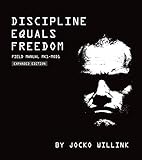
Discipline Equals Freedom (2017)
Willink’s personal discipline manifesto — waking early, physical training, managing anxiety, building sustainable habits. More focused on individual practice than on leadership; a complement to Extreme Ownership. Can be read independently.
Why Extreme Ownership Is the Right First Book
For a reader new to Jocko Willink, Extreme Ownership is the right first book because it is his most influential and foundational work, the book that established his reputation and that sets out the core principle on which all his subsequent work builds. Drawing on his experience as a Navy SEAL leader, Extreme Ownership presents the central idea that runs through Willink’s teaching, the principle that leaders must take complete responsibility for everything in their world, owning every outcome and every failure rather than making excuses or assigning blame. As an entry point, it is ideal because it lays out this foundational principle, illustrated with vivid combat examples and translated into lessons for leadership in business and life, and it establishes the framework that his later books develop. It welcomes the newcomer with its clear, forceful principle, its compelling combat-derived illustrations, and its direct, no-nonsense style, making the lessons immediate and memorable. It is his most famous and influential book, the one that best represents his core teaching, so that the new reader encounters Willink’s central message from the first. For the newcomer, then, Extreme Ownership is the natural and ideal starting point, the foundational book that sets out the principle of complete responsibility on which all his work rests.
What to Expect as a New Reader
As a new reader, you can expect Extreme Ownership to be a forceful, practical book on leadership and responsibility, built around a single powerful principle and illustrated with vivid examples drawn from combat and translated into lessons for business and life. You can expect the central principle of extreme ownership, the idea that leaders must take complete responsibility for everything in their world, owning every outcome and failure rather than making excuses, and you can expect this principle to be presented with force and clarity. You can expect vivid illustrations, for Willink draws on his experience as a Navy SEAL leader to illustrate his lessons with compelling combat examples, and you can expect these examples to be translated into practical lessons for leadership in business and everyday life. You can expect a direct, forceful, no-nonsense style, for Willink’s tone is disciplined, demanding, and uncompromising, and you can expect the book to challenge you to take greater responsibility in your own life and work. Expect, in short, a forceful and practical book on leadership and responsibility, built around the powerful principle of extreme ownership and illustrated with vivid combat-derived examples, a compelling and challenging introduction to Willink’s teaching.
Going Deeper After Your First Book
Once Extreme Ownership has introduced you to Willink’s core principle, the reader who wishes to go deeper can turn to his other books, which develop and extend his teaching on discipline, leadership, and self-mastery. Discipline Equals Freedom, for instance, distills his philosophy of discipline into a direct and forceful field manual for self-mastery, presenting the idea that discipline is the path to freedom and offering practical guidance for cultivating it, while his further work continues to develop his principles of leadership and responsibility. Reading these after Extreme Ownership deepens your engagement with Willink’s teaching, building on the foundational principle of complete responsibility and extending it into the disciplines of leadership and self-mastery. His core message, the demand for responsibility, discipline, and uncompromising self-mastery, runs through all his work, and the reader who has been challenged by Extreme Ownership will find it developed in his other books. Building your reading journey through Willink’s work is a matter of moving from the foundational principle of extreme ownership into his further teaching on discipline and leadership. The reader who begins with Extreme Ownership and continues through his work will encounter a consistent and demanding philosophy of responsibility, discipline, and self-mastery.
Reading Jocko Willink
Begin with Extreme Ownership for the leadership framework; read Discipline Equals Freedom after for Willink’s personal habits and daily discipline practice. Both books are standalone.
For the full Jocko Willink bibliography, reviews, and biography, visit the Jocko Willink author page on Editors Reads.
Affiliate disclosure: Links to Amazon on this page are affiliate links. We earn a small commission at no extra cost to you.
Frequently Asked Questions
Where should I start with Jocko Willink?
Extreme Ownership (2015), co-written with Leif Babin, is the essential starting point — a leadership framework derived from Willink's experience commanding SEAL Team Three's Task Unit Bruiser in Ramadi, Iraq, one of the most decorated special operations units of the Iraq War. The book's central principle — that leaders must take complete ownership of everything in their domain, including failures they did not directly cause — is among the most discussed leadership ideas of the past decade.
What is Extreme Ownership about?
Extreme Ownership alternates between accounts of Willink and Babin's combat experiences in Ramadi and their application of those experiences to business leadership principles. Each chapter presents a combat situation, extracts a leadership lesson, and then shows how Babin or Willink applied that lesson in corporate consulting work. The core principle — that leaders own everything that happens under their command, with no excuses and no blame-shifting — is supported by twelve leadership laws covering decentralised command, cover and move, prioritise and execute, and others.
What is Discipline Equals Freedom about?
Discipline Equals Freedom (2017) is Willink's personal manifesto on discipline as the foundation of freedom — the argument that daily discipline in sleep, exercise, diet, and work habits is not a constraint on freedom but its precondition. The book is structured as short, direct chapters on specific habits and practices: waking early, physical training, managing stress and anxiety, diet, and the mental framework for sustaining difficult habits over time. More personal and less business-focused than Extreme Ownership.
What is Jocko Willink's leadership philosophy in brief?
Willink's leadership philosophy centres on radical personal accountability (Extreme Ownership), decentralised command (empowering junior leaders to make decisions within the commander's intent), disciplined execution (following through on what is decided), and daily physical and mental discipline as the foundation for everything else. His podcast, Jocko Podcast, expands on these themes through interviews with military veterans, athletes, and business leaders. His approach is direct, demanding, and practically oriented rather than theoretical.