Where to Start with Benjamin Graham: A Reading Guide
Where to start with Benjamin Graham — how to approach The Intelligent Investor, his essential book on value investing. A complete reading guide to the father of value investing.
By Marcus Webb
Benjamin Graham (1894–1976) was the British-born American economist, investor, and professor at Columbia University who is regarded as the father of value investing — the discipline of purchasing securities when their market price is substantially below their intrinsic value. Graham’s students include Warren Buffett, who studied under him at Columbia in the early 1950s and has consistently described Graham as the most important influence on his investment thinking. The Intelligent Investor (1949, revised 1973) is Graham’s most accessible work; Security Analysis (co-authored with David Dodd, 1934) is the technical foundation of the discipline.
Where to Start: The Intelligent Investor (1949)
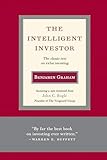
The essential Graham — and one of the most important books ever written about investing. Warren Buffett encountered it at age nineteen, described it immediately as the best book about investing ever written, and has maintained that position for over seventy years.
Graham’s framework rests on a handful of fundamental insights. The first is Mr. Market: the imaginary business partner who every day offers to buy your share of the business or sell you more at a quoted price. Mr. Market’s moods swing wildly — some days optimistic and offering inflated prices, some days despairing and offering bargains. The intelligent investor ignores Mr. Market’s moods and uses his irrational offers when they are advantageous. The market is not a mechanism for price discovery; it is a voting machine in the short term and a weighing machine in the long term.
The second is the margin of safety: never pay full price for a business, because you will inevitably be wrong about some of your assumptions. Purchase only when the price is substantially below your conservative estimate of intrinsic value, so that even significant errors in your analysis leave you with an acceptable outcome.
The third is the distinction between investment (analysis that assures safety of principal and an adequate return) and speculation (purchasing on the hope that the price will rise, regardless of underlying value). Most of what Wall Street calls investing is speculation; most of what it calls speculation is gambling.
Read the 2003 revised edition, with Jason Zweig’s commentary and Warren Buffett’s preface.
Why The Intelligent Investor Is the Ideal First Book
For a reader new to Benjamin Graham, The Intelligent Investor is the ideal and essential first book because it is his masterwork for the general investor and the foundational classic of value investing, the book that has guided generations of investors including the most famous of all. Often called the bible of value investing, The Intelligent Investor presents Graham’s enduring principles for sound, disciplined, long-term investing, the approach that treats investing as a rational, businesslike discipline grounded in the analysis of value rather than the speculation on price. As an entry point, it is the essential and natural place to begin, for it is Graham’s definitive work for the general investor and the foundational text of the value-investing philosophy. It welcomes the newcomer with its timeless principles, its disciplined wisdom, and its foundational importance, offering the enduring fundamentals of sound investing. It is his most important book for general readers and the one that best represents his philosophy, so that the new reader encounters Graham’s core principles directly. For the newcomer interested in sound investing, then, The Intelligent Investor is the natural and ideal starting point, the foundational classic of value investing.
What to Expect as a New Reader
As a new reader, you can expect The Intelligent Investor to be the foundational classic of value investing, presenting timeless principles for sound, disciplined, long-term investing. You can expect Graham’s core philosophy, the approach that treats investing as a rational, businesslike discipline grounded in the analysis of value rather than the speculation on price, and that emphasizes discipline, patience, and the avoidance of the emotional errors that destroy most investors. You can expect enduring principles, including the famous concepts associated with Graham, the distinction between investment and speculation, the importance of a margin of safety, and the parable of the irrational market that offers opportunities to the disciplined investor. You can expect timeless wisdom rather than specific tips, for Graham’s principles are enduring fundamentals rather than passing strategies. You should expect a serious and substantial book that rewards careful reading. Expect, in short, the foundational classic of value investing, presenting timeless principles for sound, disciplined investing, the essential introduction to Graham’s enduring philosophy.
Going Deeper After Your First Book
Once The Intelligent Investor has given you Graham’s enduring principles, the reader who wishes to go deeper can explore his more technical and comprehensive work and the wider tradition of value investing that he founded, reading further in the light of the foundational principles that The Intelligent Investor provides. Graham’s more comprehensive and technical work offers a deeper and more rigorous treatment of the analysis of securities for the serious student, while the writings of the investors he influenced, including his most famous disciple, extend and apply his value-investing philosophy. Reading further deepens your engagement with value investing, but The Intelligent Investor provides the essential foundation, the timeless principles on which the whole tradition rests. Graham’s core philosophy, the disciplined, value-based, businesslike approach to investing, underlies the entire value-investing tradition, and the reader who has grasped it in The Intelligent Investor possesses the key. Building your reading journey from The Intelligent Investor is a matter of carrying its foundational principles into Graham’s more technical work and the wider tradition of value investing. The reader who begins with The Intelligent Investor will have the foundational classic of sound, disciplined investing.
Reading Benjamin Graham
The Intelligent Investor is Graham’s essential work and the right starting point. For more technical depth, his Security Analysis (co-authored with David Dodd) provides the full analytical framework. Warren Buffett’s Berkshire Hathaway annual letters show the principles in practice.
For the full Benjamin Graham bibliography, reviews, and biography, visit the Benjamin Graham author page on Editors Reads.
Affiliate disclosure: Links to Amazon on this page are affiliate links. We earn a small commission at no extra cost to you.
Frequently Asked Questions
Where should I start with Benjamin Graham?
The Intelligent Investor (1949, revised 1973) is the essential starting point — Graham's accessible guide to value investing that Warren Buffett has called 'the best book about investing ever written.' The book distils the principles Graham developed over a career on Wall Street and at Columbia University, presenting them in a form accessible to non-specialist investors. Security Analysis, his more technical co-authored textbook, is for serious students; The Intelligent Investor is for everyone.
What is The Intelligent Investor about?
The Intelligent Investor presents Graham's value investing framework: the idea that stocks should be purchased only when their price is substantially below their intrinsic value, creating a 'margin of safety.' Key concepts include Mr. Market (the allegorical figure whose irrational daily price quotes offer opportunities rather than guidance), the distinction between investment and speculation, the defensive versus enterprising investor, and the importance of emotional discipline over analytical brilliance. Warren Buffett's preface and Jason Zweig's updated commentary in the 2003 revised edition are essential companions to Graham's text.
How difficult is The Intelligent Investor to read?
The Intelligent Investor is written for an intelligent general reader rather than a specialist audience — Graham was a gifted teacher and writer, and the core principles are explained with clarity and wit. The specific financial examples are dated (the 1973 revision is itself fifty years old), but Jason Zweig's chapter-by-chapter commentary in the 2003 edition updates the examples and adds contemporary context. The conceptual framework remains fully applicable; readers who find the specific examples dated should focus on the principles and read Zweig's commentary for contemporary illustration.
What should I read after The Intelligent Investor?
After The Intelligent Investor, the natural progression is Warren Buffett's annual letters to Berkshire Hathaway shareholders (free online), which show Graham's principles applied in practice over decades. Peter Lynch's One Up on Wall Street is a more practical and anecdote-driven application of value investing principles. For more technical depth, Graham's Security Analysis (co-written with David Dodd) is the detailed practitioner's text that Graham considered more complete than The Intelligent Investor.