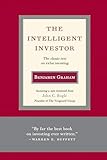
Benjamin Graham was a British-American economist and investor whose book The Intelligent Investor is widely considered the definitive text on value investing and sound financial thinking.
Benjamin Graham taught at Columbia Business School for decades, managed money through the Great Depression, and mentored Warren Buffett, who has called The Intelligent Investor the best book on investing ever written. That endorsement is among the most-cited in popular finance, and it is not merely promotional: Graham’s framework — the margin of safety, Mr. Market, the distinction between investment and speculation — has proven more durable than almost any other approach to equity markets.
The Intelligent Investor was first published in 1949 and has been revised several times. The most useful current edition includes Jason Zweig’s chapter-by-chapter commentary, which updates Graham’s examples and wrestles honestly with which elements of his framework need adjustment for modern markets. The core argument — that the stock market is a mechanism for transferring wealth from the impatient to the patient, that genuine investors focus on business value rather than price movements, and that temperament matters more than intellect — remains as relevant as when Graham first made it.
The book is not easy reading. Graham’s prose is precise but dense, and some sections dealing with financial analysis are technical enough to require patience. Readers looking for a quick motivational read should look elsewhere. But for anyone who wants to understand how to think about equity markets as an owner of businesses rather than a trader of prices, The Intelligent Investor provides a foundation that no subsequent book has superseded.
The Father of Value Investing
Graham’s claim to be called the father of value investing rests not only on The Intelligent Investor but on the heavier, more technical work that preceded it: Security Analysis, co-authored with David Dodd and first published in 1934, in the shadow of the Wall Street Crash and the Depression that followed. That book, written when the case for disciplined, fundamentals-based investing had rarely seemed more urgent, established the intellectual scaffolding for an entire profession. Graham argued that a security’s price and its underlying value are distinct things, that markets routinely misprice businesses through waves of optimism and panic, and that the careful analyst can profit by buying when price falls well below a conservatively estimated value. The discipline he founded — appraising a company by its earnings, assets, and financial strength rather than by the mood of the crowd — became the bedrock of fundamental analysis. His own painful experience of heavy losses in the 1929 crash sharpened rather than dimmed his convictions, teaching him the supreme importance of caution, of preparing for adverse outcomes, and of never confusing a rising market with sound judgement.
The Core Concepts: Mr. Market and the Margin of Safety
Two ideas from Graham have outlived every passing fashion in finance. The first is the allegory of Mr. Market, his imaginary business partner who appears each day offering to buy or sell at a different price, sometimes euphoric and overpaying, sometimes despondent and selling cheap. The intelligent investor, Graham counselled, should treat Mr. Market as a servant rather than a guide — free to transact with him when his prices are foolish, but never to be swept up in his moods. The second, which Graham called the central concept of sound investment, is the margin of safety: the practice of buying only when the price is comfortably below one’s estimate of value, so that errors of judgement, bad luck, or unforeseen trouble are cushioned rather than ruinous. Together these ideas amount to a psychology as much as a method, a framework for keeping a level head amid the emotional turbulence of markets. Their power lies in their simplicity and their durability; they describe the behaviour of markets and the discipline of investors as accurately today as when Graham first articulated them nearly a century ago.
A Teacher’s Enduring Influence
Graham was, by temperament and vocation, a teacher, and his influence flows as much through his students as through his books. For years he taught at Columbia Business School, and his most famous pupil, Warren Buffett, has described studying under Graham as a formative experience and named a son in his honour. Buffett’s later refinement of Graham’s approach — placing greater emphasis on the quality and durability of a business rather than mere statistical cheapness — built directly on the foundation his teacher laid, and the extraordinary records of Buffett and a cohort of other Graham disciples did much to vindicate the master’s principles in practice. Beyond his pupils, Graham reshaped the very idea of what it means to invest, drawing a sharp and lasting line between investment, which he defined as an operation promising safety of principal and an adequate return after thorough analysis, and speculation, which is everything else. In an industry perennially seduced by novelty, leverage, and the promise of quick riches, Graham’s insistence on patience, discipline, humility, and the protection of capital remains a steadying counterweight, and his reputation as the intellectual founder of rational investing is secure.
Which Graham Book to Read First
For the general reader, the answer is unambiguous: begin with The Intelligent Investor, and specifically the revised edition that includes Jason Zweig’s chapter-by-chapter commentary, which updates Graham’s dated examples and translates his principles into the language of modern markets. Graham himself called it the book he most wanted ordinary investors to read, and its emphasis on temperament, the margin of safety, and the parable of Mr. Market provides a complete philosophical foundation without requiring advanced financial training. Only those prepared for a far more technical and demanding treatment should proceed to Security Analysis, the heavier scholarly work he wrote with David Dodd, which remains a touchstone for professional analysts but is forbidding for newcomers. Readers will gain still more by pairing Graham with the annual letters and writings of his most famous student, Warren Buffett, which show the master’s principles applied, refined, and brought to life over decades. Start with The Intelligent Investor; everything else in value investing is, in a sense, a commentary on it.
Reading Guides