Where to Start with Peter Lynch: A Reading Guide
Where to start with Peter Lynch — whether to begin with One Up on Wall Street or Beating the Street. A complete reading guide to the legendary Fidelity fund manager.
By Marcus Webb
Peter Lynch (born 1944) is the American investor and former manager of Fidelity’s Magellan Fund, which he managed from 1977 to 1990, producing an annualised return of 29.2% — the best twenty-year record of any mutual fund in history. Lynch’s investment philosophy — finding great companies through everyday observation and applying disciplined fundamental analysis — was codified in his books One Up on Wall Street (1989) and Beating the Street (1993), which remain among the most practically useful books on equity investing ever written.
Where to Start: One Up on Wall Street (1989)
The essential Lynch — and one of the most enduringly useful books on stock investing for individual investors. Lynch’s central insight is that ordinary investors have an informational advantage over professional fund managers that they consistently fail to exploit: they know, from daily life, which restaurants are always full, which products they can’t live without, which local businesses are expanding. These observations come before institutional analysts notice the same companies.
The book’s practical framework divides stocks into six categories — slow growers (mature companies; avoid unless the dividend is reliable), stalwarts (large but still growing companies; buy on dips), fast growers (small aggressive companies; the best returns, highest risk), cyclicals (companies whose fortunes track economic cycles; timing matters), turnarounds (potential recovery stories; requires research), and asset plays (companies with undervalued assets on the balance sheet) — and explains how to evaluate each type differently.
Lynch then walks through the fundamental analysis that matters: how to read a balance sheet without accounting training, what makes a P/E ratio meaningful or misleading, what to look for in a company’s annual report, how to evaluate competitive position. The analysis is rigorous but the writing is accessible; Lynch has a gift for explaining financial concepts in plain language.
Written at the end of the 1980s bull market, the book’s market observations are dated but the principles are not. Still the best starting point for readers who want to do their own research rather than rely entirely on passive investing.
Beating the Street (1993)
The follow-up — Lynch’s actual Magellan Fund stock picks and the reasoning behind them, sector by sector. More technical than the first book and assumes familiarity with his framework; essential for readers who want to see the method applied in detail.
Why One Up on Wall Street Is the Ideal First Book
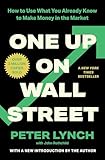
For a reader new to Peter Lynch, One Up on Wall Street is the ideal first book because it is his most famous and influential work and the fullest expression of his distinctive investing philosophy, the idea that ordinary individual investors can succeed by investing in what they know. One of the most successful fund managers in history, Lynch argues in One Up on Wall Street that individual investors have real advantages over the professionals, and that by paying attention to the products, companies, and trends they encounter in everyday life, they can find excellent investments before Wall Street does. As an entry point, it offers the fullest expression of Lynch’s accessible and encouraging philosophy, the emphasis on common sense, everyday observation, and the advantages of the individual investor. It welcomes the newcomer with its accessible wisdom, its encouraging message, and its practical guidance, demystifying investing for the ordinary person. It is his best-known book and the one that best represents his approach, so that the new reader encounters Lynch’s central philosophy from the first. For the newcomer interested in investing, then, One Up on Wall Street is the natural and ideal starting point.
What to Expect as a New Reader
As a new reader, you can expect One Up on Wall Street to be an accessible, encouraging, and practical guide to investing, built on the idea that ordinary investors can succeed by investing in what they know. You can expect Lynch’s central philosophy, that individual investors have real advantages over the professionals, and that by paying attention to the products, companies, and trends they encounter in everyday life, they can identify excellent investments. You can expect accessible wisdom, for Lynch demystifies investing and explains his approach in clear, common-sense terms that the ordinary reader can understand and apply. You can expect an encouraging message, for Lynch insists that ordinary investors need not defer to the professionals but can succeed through observation, research, and common sense. You can expect practical guidance on how to find, evaluate, and invest in good companies. You can expect the hard-won wisdom of one of the most successful investors in history. Expect, in short, an accessible, encouraging, and practical guide to investing in what you know, a demystifying introduction to Lynch’s philosophy.
Going Deeper After Your First Book
Once One Up on Wall Street has introduced you to Lynch’s investing philosophy, the reader who wishes to go deeper can explore his other work, which builds on his accessible, common-sense approach and offers further guidance and examples for the individual investor. His other book continues his teaching, offering further insight into his methods and drawing on his own experience to illustrate his approach to finding and evaluating investments. Reading this after One Up on Wall Street deepens your engagement with Lynch’s distinctive philosophy, the emphasis on investing in what you know, the advantages of the individual investor, and the role of common sense and research. His characteristic approach, accessible, encouraging, and grounded in everyday observation, runs through his work, and the reader who has found One Up on Wall Street valuable will find the same wisdom in his other book. Building your reading journey through Lynch’s work is a matter of following his accessible investing philosophy from his most famous book into his further guidance. The reader who begins with One Up on Wall Street and continues through his work will find a consistently accessible and encouraging guide to investing for the individual.
Reading Peter Lynch
Begin with One Up on Wall Street — it is the foundational text and the right starting point. Read Beating the Street after for a detailed look at how his principles apply across different industries and market conditions.
For the full Peter Lynch bibliography, reviews, and biography, visit the Peter Lynch author page on Editors Reads.
Affiliate disclosure: Links to Amazon on this page are affiliate links. We earn a small commission at no extra cost to you.
Frequently Asked Questions
Where should I start with Peter Lynch?
One Up on Wall Street (1989) is the essential starting point — Lynch's argument that ordinary investors have an advantage over professional fund managers because they can observe companies and products in their daily lives before Wall Street analysts do. Written during his tenure running Fidelity's Magellan Fund (the world's best-performing mutual fund during his management), it remains one of the most useful and practically specific books on stock picking ever written.
What is One Up on Wall Street about?
One Up on Wall Street argues that amateur investors can outperform professionals by investing in businesses they understand from personal experience — the local retailer, the restaurant chain, the product they use every day — before institutional analysts discover them. Lynch presents his stock categorisation framework (slow growers, stalwarts, fast growers, cyclicals, turnarounds, asset plays), explains how to evaluate each type, and shows how to apply fundamental analysis without advanced financial training. Written in Lynch's characteristic voice: practical, humorous, and accessible.
What is Beating the Street about?
Beating the Street (1993) is Lynch's follow-up — focused on the stock-picking methods he actually used to run the Magellan Fund, with detailed analysis of specific stocks and sectors from his portfolio. More technical and specific than One Up on Wall Street; takes the framework from the first book and shows it applied in detail. A natural follow-on for readers who want to understand how Lynch's principles work in practice across different market conditions and industries.
How does Peter Lynch compare to other investing authors?
Lynch's books occupy a distinct space in the investing canon. Benjamin Graham's The Intelligent Investor is the foundational value-investing text; Warren Buffett's letters are the authoritative primary source on long-term equity investing; Burton Malkiel's A Random Walk Down Wall Street argues for passive index investing. Lynch occupies the active stock-picking end of the spectrum and writes more practically than most: he gives specific criteria, not general principles. His books are most useful for readers who want to do their own stock research rather than simply buy index funds.