Best Personal Finance Books for Beginners — Start Here
If you're new to personal finance, these 8 books will give you everything you need to know — from budgeting and debt to investing and building wealth. Ranked by our experts.
By Marcus Webb
You don’t need an economics degree to manage money well. You need a handful of ideas internalised so deeply that they become automatic. These books will give you those ideas — clearly, without jargon, starting from zero.
We ranked these with a strict criterion: would a financially literate friend recommend this to a complete beginner? No textbooks. No get-rich-quick schemes. Just the books that actually build lasting financial understanding.
How We Chose These Books
Our editorial team evaluated over 40 personal finance books against three criteria:
- Clarity — Does it explain concepts clearly without assuming prior knowledge?
- Accuracy — Is the advice financially sound and not dangerously oversimplified?
- Motivation — Does it make you want to act, not just understand?
The 8 Best Personal Finance Books for Beginners
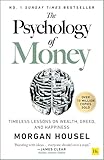
1. The Psychology of Money — Morgan Housel ⭐⭐⭐⭐⭐
Best for: Understanding why you make money decisions the way you do
The best first book on money you can read. Housel doesn’t tell you which index fund to buy — he shows you why your relationship with money is shaped by your personal history, and how to build the mental models that underpin every good financial decision.
Short (256 pages), beautifully written, and genuinely perspective-changing. Read this before anything else.
Key insight: Wealth is what you don’t spend. The Porsche driver may be far less wealthy than the neighbour in a 10-year-old Honda.
➡ Full review → | Buy on Amazon →
2. Rich Dad Poor Dad — Robert Kiyosaki ⭐⭐⭐⭐
Best for: Reframing the relationship between work, assets, and wealth
No personal finance book has sold more copies. Despite its critics, the core framework — distinguish between assets (income-generating) and liabilities (income-consuming), and spend your life acquiring the former — is genuinely transformative.
Read it for the mindset shift, not as a literal investment guide. Follow up with The Intelligent Investor for the mechanics.
Key insight: Your house is not an asset if it doesn’t generate income. The rich buy assets; the middle class buy things they think are assets.
➡ Full review → | Buy on Amazon →
3. I Will Teach You to Be Rich — Ramit Sethi ⭐⭐⭐⭐⭐
Best for: 20-35 year olds who want a complete, automated money system
Written specifically for young adults, Sethi’s book covers everything: credit cards (use them strategically), high-interest savings accounts, 401(k)s, Roth IRAs, and how to automate your financial life so you spend without guilt on what you love.
His “conscious spending plan” is the best alternative to traditional budgeting we’ve seen — brutally practical, with specific scripts for negotiating bank fees and salary.
Key insight: Automate savings before you see the money and you’ll never miss it — and you’ll never fail to save.
4. The Millionaire Next Door — Thomas Stanley & William Danko ⭐⭐⭐⭐
Best for: Challenging your assumptions about what wealthy people look like
Based on decades of research into actual millionaires, Stanley and Danko found that most of them live quietly in ordinary houses, drive used cars, and don’t look anything like what popular culture tells you wealthy people look like.
Their formula — live below your means, invest the difference, repeat for 30 years — is undramatic and completely reliable. This book takes the glamour out of wealth and replaces it with something better: a workable system.
Key insight: Most millionaires are first-generation wealthy. They built it through consistent frugality and investing, not inheritance or high income.
5. The Automatic Millionaire — David Bach ⭐⭐⭐⭐
Best for: People who struggle to save consistently
Bach’s “Latte Factor” — the idea that small daily expenses compound into significant wealth over time — is controversial among finance experts but the book’s core message is sound: automate every financial decision you can, and use the power of compound interest.
Extremely accessible and motivating for true beginners. Not deep enough for intermediate readers.
Key insight: Pay yourself first. Automate transfers to investment accounts on payday before you see the money.
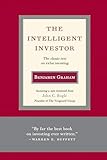
6. The Intelligent Investor — Benjamin Graham ⭐⭐⭐⭐⭐
Best for: Anyone ready to move beyond saving and into serious long-term investing
The most advanced book on this list — Graham’s language is dense and his examples dated. But Jason Zweig’s updated commentary bridges the gap, and the principles (margin of safety, Mr Market, defensive vs enterprising investor) are the foundation of every successful long-term investing strategy.
Warren Buffett calls it the best investing book ever written. That endorsement alone is worth the modest difficulty of reading it carefully.
Key insight: Buy below intrinsic value. Use Mr Market’s emotionality to your advantage, never as your guide.
➡ Full review → | Buy on Amazon →
7. A Simple Path to Wealth — JL Collins ⭐⭐⭐⭐⭐
Best for: Index fund investing explained simply and completely
Originally written as a series of blog posts for Collins’s daughter, this is the clearest, most complete guide to passive index investing ever written for a general audience. Collins argues (compellingly) that a single total stock market index fund, held for decades, will outperform the vast majority of active investors — including professionals.
No financial background required. A single afternoon’s reading.
Key insight: The stock market is the greatest wealth-creating machine ever invented. Own it through low-cost index funds and get out of its way.
8. Broke Millennial — Erin Lowry ⭐⭐⭐⭐
Best for: 20-somethings dealing with student debt, entry-level income, and financial anxiety
Lowry addresses the specific anxieties of millennials navigating student loans, rent, low starting salaries, and the overwhelming complexity of financial services. Written in an accessible, non-judgmental tone that makes it feel like advice from a knowledgeable friend rather than a lecture.
Key insight: You don’t need to earn more to build wealth — you need to align your spending with your values and your future.
The 30-Day Reading Plan
If you want to go from zero to financially literate in a month:
| Week | Book | Goal |
|---|---|---|
| Week 1 | The Psychology of Money | Build the right mindset |
| Week 2 | Rich Dad Poor Dad | Understand assets vs liabilities |
| Week 3 | I Will Teach You to Be Rich | Set up your automated system |
| Week 4 | A Simple Path to Wealth | Start investing in index funds |
After these four, you’ll know more about money than 90% of adults.
Frequently Asked Questions
What is the best personal finance book for beginners?
The Psychology of Money by Morgan Housel is the best first personal finance book for most beginners. It builds the mental foundations — patience, delayed gratification, the relationship between wealth and behaviour — that make every subsequent financial decision better.
Should I read Rich Dad Poor Dad?
Yes, with two caveats: (1) treat it as a framework, not a specific investment guide, and (2) follow it up with The Intelligent Investor or A Simple Path to Wealth for the practical mechanics. The mindset shift Rich Dad Poor Dad creates is genuinely valuable even if some of its specific advice is controversial.
How long does it take to become financially literate?
Four to six carefully read books will give you a stronger financial foundation than most adults ever develop. The knowledge itself takes weeks; building the habits it recommends takes months. Start with The Psychology of Money and build from there.
Is investing in stocks too risky for beginners?
Low-cost index funds (like total market ETFs from Vanguard, Fidelity, or Schwab) are appropriate for most beginners who have a time horizon of 10+ years. The risk of not investing — of keeping long-term savings in cash — is often greater than the risk of broad market exposure.
More Financial Reading Guides
Affiliate disclosure: Book links on this page are Amazon affiliate links. We earn a small commission at no extra cost to you. Our editorial recommendations are independent of affiliate relationships.
Also Worth Reading
Two more accessible introductions are worth seeking out: Playing with FIRE by Scott Rieckens, a personal account of the financial-independence movement, and The Index Card by Helaine Olen and Harold Pollack, which distills sound money advice into a handful of simple rules.
Frequently Asked Questions
What personal finance book should I read first?
I Will Teach You to Be Rich by Ramit Sethi is the best first personal finance book for most people. It is written for young adults, covers automation, credit cards, investing, and negotiating salary in a direct and entertaining way. The Psychology of Money by Morgan Housel is an excellent second book.
What is the best book for learning to budget?
I Will Teach You to Be Rich by Ramit Sethi covers budgeting within a broader system. For dedicated budgeting focus, Your Money or Your Life by Vicki Robin is the most thoughtful and comprehensive approach to aligning spending with values. The Total Money Makeover by Dave Ramsey works best for people dealing with debt.
What personal finance books are recommended for people in their 20s?
The best personal finance books for people in their 20s are I Will Teach You to Be Rich by Ramit Sethi, The Psychology of Money by Morgan Housel, and The Millionaire Next Door by Thomas Stanley. Sethi addresses the tactical steps; Housel addresses the mindset; Stanley documents the actual behaviours of people who build wealth over a lifetime.
Is Rich Dad Poor Dad worth reading?
Rich Dad Poor Dad by Robert Kiyosaki is worth reading for its core mindset shift, the distinction between assets and liabilities, and the importance of building income-generating assets. However, its specific investment advice is often criticised as oversimplified or impractical. Read it for the philosophy and supplement it with The Intelligent Investor or The Little Book of Common Sense Investing for actionable guidance.