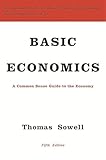
Basic Economics
by Thomas Sowell
4.7
Thomas Sowell delivers a comprehensive, jargon-free introduction to economic thinking that trains readers to see beyond immediate effects to the full consequences of policies and actions.
Personal finance is not complicated — but it requires clarity about a handful of principles that most people never fully internalise. These books provide that clarity, whether you are starting from scratch or refining an existing approach.
See our full guide to the best personal finance books →
95 expert-reviewed books — page 1 of 4
by Thomas Sowell
Thomas Sowell delivers a comprehensive, jargon-free introduction to economic thinking that trains readers to see beyond immediate effects to the full consequences of policies and actions.
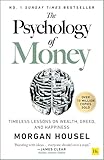
by Morgan Housel
Doing well with money isn't necessarily about what you know. It's about how you behave. And behaviour is hard to teach, even to really smart people.

by Hans Rosling
Epidemiologist and data storyteller Hans Rosling identifies ten deep-rooted instincts — from the Gap Instinct to the Fear Instinct — that systematically distort our understanding of the world, and offers a fact-based framework for seeing global progress clearly. Drawing on decades of public health data, Rosling shows that the world is, on almost every measurable dimension, far better than most people believe.

by Ramit Sethi
Ramit Sethi's blunt, practical, six-week programme for getting your financial life in order — automating savings, paying off debt, investing in low-cost index funds, and negotiating better deals on everything from bank fees to salary. Written for people in their 20s and 30s who find most personal finance books boring.
Check Price on Amazon (paid link)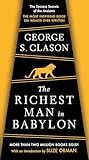
by George S. Clason
A collection of parables set in ancient Babylon that deliver timeless financial wisdom through the story of a man who rises from slavery to become the city's wealthiest citizen.
Check Price on Amazon (paid link)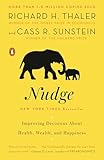
by Richard Thaler & Cass Sunstein
Richard Thaler and Cass Sunstein show how small changes to the way choices are presented can steer people toward better decisions without restricting freedom.
Check Price on Amazon (paid link)
by Taylor Larimore
The investment guide inspired by Jack Bogle's philosophy — written by three of the most active members of the Bogleheads online forum. Covers the full arc from starting to invest through retirement, emphasising low-cost index funds, broad diversification, tax efficiency, and ignoring market noise.
Check Price on Amazon (paid link)
by Warren Buffett
Lawrence Cunningham's compilation of Warren Buffett's annual letters to Berkshire Hathaway shareholders, organised by theme rather than chronology. Covers corporate governance, finance, investments, mergers and acquisitions, accounting, and the valuation framework that made Buffett the world's greatest investor.
Check Price on Amazon (paid link)
by Thomas J. Stanley
A groundbreaking research study revealing how America's wealthy actually live — not in luxury, but with discipline, frugality, and long-term thinking.
Check Price on Amazon (paid link)
by Alice Schroeder
The authorised biography of Warren Buffett — written by analyst Alice Schroeder with Buffett's full cooperation. Covers his childhood in Omaha, the development of his investment philosophy under Benjamin Graham, the building of Berkshire Hathaway, and the personal life that shaped and constrained the world's greatest investor.
Check Price on Amazon (paid link)
by Jack Schwager
Schwager interviews seventeen of the most successful traders of the 1970s and 1980s — Michael Marcus, Bruce Kovner, Richard Dennis, Paul Tudor Jones, Ed Seykota, and others. Each interview reveals a different trading philosophy and approach, while a consistent set of principles emerges across all of them.
Check Price on Amazon (paid link)
by Edwin Lefèvre
Written as fiction but widely understood as the autobiography of Jesse Livermore — the greatest stock speculator of the early twentieth century — this 1923 classic follows the narrator's career from bucket shops to Wall Street, through multiple fortunes made and lost, and distils lessons about markets, timing, and human nature that remain current.
Check Price on Amazon (paid link)
by Andrew Ross Sorkin
The minute-by-minute account of the 2008 financial crisis — from the collapse of Bear Stearns through the Lehman Brothers bankruptcy, the AIG bailout, and TARP. Sorkin had access to every major participant and reconstructed the crisis in novelistic detail.
Check Price on Amazon (paid link)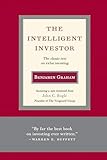
by Benjamin Graham
Warren Buffett calls it 'the best book about investing ever written.' First published in 1949, Graham's value investing principles have stood up to every market cycle since. The revised edition includes commentary by Jason Zweig placing Graham's timeless wisdom in modern context.
Check Price on Amazon (paid link)
by Charlie Munger
A curated collection of Charlie Munger's speeches, talks, and aphorisms covering his mental models framework, investment philosophy, and worldview — edited by Peter Kaufman and long considered one of the most important books in serious investor and intellectual circles.
Check Price on Amazon (paid link)
by John C. Bogle
The founder of the index fund and Vanguard makes the definitive case for buying and holding low-cost index funds as the optimal investment strategy for most people.
Check Price on Amazon (paid link)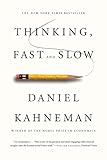
by Daniel Kahneman
Nobel laureate Daniel Kahneman explains the two systems that drive the way we think — and reveals how our intuitive System 1 thinking leads us astray in predictable, correctable ways.
Check Price on Amazon (paid link)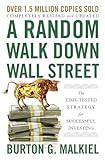
by Burton G. Malkiel
The classic argument for efficient markets and passive investing — now in its thirteenth edition — explaining why index funds outperform most actively managed portfolios.
Check Price on Amazon (paid link)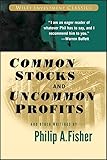
by Philip A. Fisher
A classic of investment literature that established growth investing as a discipline, introducing the 'scuttlebutt' research method and fifteen key questions for evaluating any company.
Check Price on Amazon (paid link)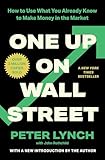
by Peter Lynch
Peter Lynch, the manager of the legendary Magellan Fund, explains how ordinary investors can use their everyday experiences to find exceptional stock market opportunities.
Check Price on Amazon (paid link)
by Benjamin Graham and David Dodd
First published in 1934 in the aftermath of the Great Crash, Benjamin Graham and David Dodd's foundational text establishes the principles of value investing — rigorous financial analysis, margin of safety, and the distinction between investment and speculation — that remain the intellectual bedrock of serious equity analysis.
Check Price on Amazon (paid link)
by Vicki Robin
A transformative programme for achieving financial independence by fundamentally rethinking your relationship with money and the time you trade for it.
Check Price on Amazon (paid link)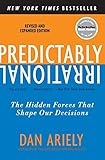
by Dan Ariely
A behavioural economist reveals the hidden forces that shape our decisions — and why we repeatedly make the same irrational choices despite knowing better.
Check Price on Amazon (paid link)
by Shoshana Zuboff
Harvard Business School professor Shoshana Zuboff's landmark analysis of how Google, Facebook, and the surveillance economy extract human behavioural data as a raw material, process it into prediction products, and sell certainty about future behaviour to advertisers and others.
Check Price on Amazon (paid link)Disclosure: Amazon links on this page are affiliate links. If you purchase through them we earn a small commission at no extra cost to you.