Best Founder and Startup Memoirs: Essential Business Books
The best founder and startup memoirs — from Shoe Dog and Steve Jobs to Zero to One and The Hard Thing About Hard Things. Essential business reading.
By Marcus Webb

Founder memoirs occupy a peculiar position in the business literature — they are simultaneously inspiration and caution, accounts of extraordinary individual achievement and of the enormous amount of luck, failure, and near-disaster that precedes success. The best founder memoirs are honest about failure because failure is the dominant experience of building a company, and because the books that sanitise the experience are neither true nor useful.
The books listed here are the most substantive and honest accounts of building businesses from nothing — from the philosophical (Thiel, Horowitz) to the narrative (Knight, Isaacson) to the analytical (the Lean Startup).
The Essential List
Shoe Dog — Phil Knight (2016)
The best founder memoir ever written. Knight’s account of building Nike from a 1962 idea to a global brand is told with unusual candour about failure — the near-bankruptcies, the desperate financing, the manufacturing disasters, the legal battles with Onitsuka — and without the retrospective inevitability that mars most founder memoirs. Knight admits dumb luck, admits his own failures as a husband and father, and admits the degree to which the company’s success depended on people who were not him. The most human of the business memoirs.
Steve Jobs — Walter Isaacson (2011)
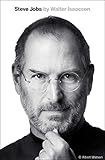
Isaacson’s authorised biography of Apple’s co-founder is the most comprehensive account of one of the most consequential entrepreneurs of the twentieth century. Jobs’s story — the founding and ouster from Apple, the decade at NeXT and Pixar, the triumphant return and the iPhone — is well known; what Isaacson adds is the texture of working with Jobs, the specific character of his vision, and the human costs of his personality. The most detailed portrait of a founder’s psychology available.
Zero to One — Peter Thiel (2014)
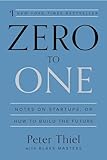
The most original business philosophy book of the past decade. Thiel’s contrarian argument — that the most valuable companies are monopolies that have created something genuinely new, and that competition destroys value — is presented as a series of challenges to conventional wisdom about innovation, markets, and the future. Not all of it is right, but all of it is worth arguing with. The most intellectually demanding of the books listed here.
The Hard Thing About Hard Things — Ben Horowitz (2014)
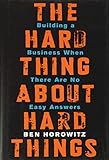
The most honest account of the CEO’s emotional reality. Horowitz’s central insight — that the hardest decisions in business are the ones that management theory doesn’t cover, the ones with no good answer, where every option causes harm — is presented through his own experience navigating Opsware through the dot-com bust. The book is structured around specific questions (how do you lay off half the company while keeping the other half motivated?) and Horowitz’s answers are often counter-intuitive but always experience-based.
Elon Musk — Walter Isaacson (2023)
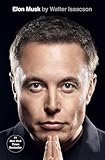
Isaacson’s biography of Musk — written over two years, with extensive access — is the most thorough account of the most consequential entrepreneur of the early twenty-first century. The portrait is neither hagiography nor hatchet job: Musk’s extraordinary ambition and capability are documented alongside his erratic management style, his personal volatility, and the human costs of working for him. The book raises genuine questions about whether the character that produces transformative companies is compatible with ordinary human functioning.
Hatching Twitter — Nick Bilton (2013)
Bilton’s account of the founding of Twitter — and the relationships between its four co-founders (Jack Dorsey, Biz Stone, Evan Williams, Noah Glass) — is a portrait of how a billion-dollar company can emerge from a series of betrayals, disputes, and mutual incomprehension. Unlike the other books listed here, it is written by a journalist rather than by a participant; the result is more balanced and more willing to acknowledge how messy and contingent the founding of a company actually is. Essential for understanding the realities of co-founder relationships.
The Lean Startup — Eric Ries (2011)
Ries’s account of the ‘lean startup’ methodology — build, measure, learn; minimum viable product; validated learning — is the most practically influential startup book of the past fifteen years. The methodology has been adopted across industries and has shaped how companies think about product development, customer discovery, and the management of uncertainty. Less narrative than the other books listed here but more immediately applicable.
The Allure of the Founder’s Story
There is a powerful and enduring fascination with the founder’s story — the tale of the individual who, starting with little more than an idea and a determination, builds a company from nothing into something significant — and understanding the source of this allure illuminates both the appeal and the potential pitfalls of the founder memoir. The story of the founder taps into deep and compelling narratives: the myth of the self-made individual who succeeds through their own vision and effort, the romance of the underdog who defies the odds and the doubters, the drama of creation and the thrill of building something new, and the aspirational fantasy of the ordinary person who achieves extraordinary success. These narratives exert a powerful pull, especially in cultures that celebrate entrepreneurship and individual achievement, and the founder memoir offers the irresistible combination of an inspiring success story, an intimate glimpse behind the scenes of a famous company, and the promise of lessons that the reader might apply to their own ambitions. The allure is genuine and the appeal understandable, for the founder’s journey can be a genuinely dramatic and inspiring story, full of struggle, risk, ingenuity, and eventual triumph, and the memoir offers the reader a vicarious experience of this journey along with the hope of extracting wisdom from it. Yet the very power of these narratives carries a danger, for the compelling story of the heroic founder can distort as much as it illuminates, seducing the reader into a simplified and romanticized understanding of how success actually happens. The allure of the founder’s story is real, and the founder memoir can be genuinely valuable, but the wise reader approaches these books aware of the powerful narratives at work in them, alert to the way the compelling story of individual triumph can obscure the more complex reality of how companies are actually built.
Behind the Mythology
The founder memoir, for all its appeal, must be read with a critical awareness of its inherent limitations and distortions — the ways in which the genre, by its very nature, tends toward mythology, presenting a version of events shaped by the founder’s perspective, ego, and interest in a particular narrative, and obscuring as much as it reveals about how success was actually achieved. The founder memoir is, almost inevitably, an exercise in self-presentation, written by the protagonist of the story and shaped by their interest in presenting themselves and their achievement in a particular light, and this fundamental fact colors everything in it. The founder naturally tends to emphasize their own vision and effort while minimizing the contributions of others, to construct a coherent and heroic narrative out of what was actually a messy and contingent process, to attribute their success to their admirable qualities and decisions rather than to luck or circumstance, and to obscure the failures, compromises, and less flattering realities that complicate the heroic story. The result is a version of events that is mythology as much as history, a narrative shaped by ego and interest that presents a simplified and self-serving account of a far more complex reality. The critical reader learns to see behind this mythology, to recognize the self-presentation at work, to question the heroic narrative, and to remember the realities the memoir obscures: the contributions of co-founders and employees, the role of luck and timing, the failures and compromises, and the gap between the constructed story and the messy truth. This is not to dismiss the founder memoir, which can contain genuine insight and value, but to read it wisely, aware of its inherent tendency toward mythology and alert to the distortions that the genre’s nature produces. To read behind the mythology is to extract what is genuine and valuable from the founder memoir while resisting its self-serving distortions, and to arrive at a more accurate understanding than the heroic narrative alone provides.
Reading for Wisdom, Not Worship
The right way to approach the founder memoir, and the attitude that allows the reader to derive genuine value from the genre while avoiding its pitfalls, is to read for wisdom rather than worship — to mine these books for the real insights and lessons they contain while resisting the temptation to idolize their authors or to treat their stories as blueprints for guaranteed success. The founder memoir invites a kind of hero worship, presenting its author as a visionary genius whose example is to be admired and emulated, and the reader who succumbs to this invitation, treating the founder as an idol and their story as a formula, misreads the genre and misuses it. The wiser approach is to read for wisdom, treating the founder memoir as a source of potential insight, a particular and partial account from which the discerning reader might extract genuine lessons, rather than as the gospel of a hero to be worshipped or the blueprint of a success to be copied. This means approaching these books critically and selectively, drawing from them the real insights they offer about building companies, leading people, navigating challenges, and pursuing ambitions, while remembering that each is a single and partial story, shaped by particular circumstances that may not generalize, and that no memoir provides a formula for guaranteed success. It means admiring what is genuinely admirable in the founder’s achievement without idolizing the founder, learning from their experience without treating it as prescriptive, and extracting wisdom without surrendering critical judgment. Read in this spirit, for wisdom rather than worship, the founder memoir becomes a genuinely valuable source of insight, offering the reflections and experiences of those who have built companies and the lessons that thoughtful reflection on their stories can yield. The key is to remain the critical master of one’s reading rather than the worshipful disciple of the founder, to mine these books for genuine wisdom while resisting the hero worship they invite, and to derive from the founder memoir the real value it can offer without falling into the distortions and delusions that uncritical reading produces.
What These Books Share
The best founder memoirs and business books share a commitment to honesty about failure — the recognition that the path to any significant achievement is paved with mistakes, near-disasters, and decisions made under conditions of radical uncertainty. They are useful not because they provide templates for success (there are none) but because they demonstrate that the experience of building something is defined by uncertainty and failure, and that the people who succeed are not those who avoid failure but those who learn from it without being destroyed by it.
Frequently Asked Questions
What is the best founder memoir to start with?
Shoe Dog (2016) by Phil Knight is the best starting point — Knight's account of building Nike from a Stanford business school idea into one of the world's most recognisable brands, told with unusual candour about failure, debt, and near-bankruptcy. The book is a genuine memoir rather than a business book: Knight is honest about his own failings and the dumb luck that kept Nike alive. Zero to One (2014) by Peter Thiel is the best business philosophy starting point — Thiel's argument that the most important thing a business can do is create something genuinely new rather than copying what already exists.
What is Shoe Dog about?
Shoe Dog (2016) is Phil Knight's account of building Nike — from his 1962 round-the-world trip to Japan, where he first encountered Onitsuka Tiger shoes, through the decades of near-bankruptcy, legal disputes, and manufacturing crises that nearly destroyed the company before it became dominant. Knight's memoir is unusually candid about failure and self-doubt; the book is less a celebration of entrepreneurial success than an honest account of how close the company came, repeatedly, to failure. The most readable of the founder memoirs listed here.
What is Zero to One about?
Zero to One (2014) by Peter Thiel (with Blake Masters) is based on Thiel's Stanford course on startups and presents his contrarian philosophy of innovation. The central argument — that the most valuable companies create something genuinely new ('going from zero to one') rather than copying what already exists ('going from one to n') — is presented through a series of provocations about monopoly, competition, secrets, and the future. Thiel's perspective is controversial (he argues against competition as a business strategy and in favour of monopoly) but the book is the most original business philosophy available.
What is The Hard Thing About Hard Things about?
The Hard Thing About Hard Things (2014) by Ben Horowitz is the most honest of the books listed here about the emotional reality of leading a company under pressure. Horowitz, co-founder of the venture capital firm Andreessen Horowitz, draws on his experience as CEO of Opsware — which he navigated through the dot-com bust from near-worthless to a $1.65 billion acquisition by HP — to identify the decisions that cannot be answered by management theory. The book is structured around the questions Horowitz wished someone had answered for him: how do you fire a friend? How do you manage people smarter than you? How do you lead when you're terrified?