Editors Reads Verdict
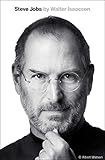
Isaacson's biography is comprehensive, candid, and occasionally uncomfortable — Jobs wanted no approval rights, and the portrait is correspondingly honest about his cruelty and genius in equal measure.
What We Loved
- Unprecedented access — Jobs cooperated with full candour knowing it would be unflattering in places
- The product development chapters are invaluable for understanding Apple's creative process
- Honest about Jobs's behaviour in ways that a sanitised authorised biography would not be
- Published weeks after Jobs's death — a rare portrait of genius at the end of its life
Minor Drawbacks
- At 650 pages, some chapters are more repetitive than illuminating
- Isaacson's analytical framework occasionally oversimplifies Jobs's psychology
- Some sources are more sympathetic to Jobs than others — the portrait is contested by some colleagues
Key Takeaways
- → Jobs's reality distortion field — his ability to make people believe the impossible was possible — was both a management tool and a genuine cognitive pattern
- → Intersection of technology and the liberal arts was Jobs's defining intellectual commitment
- → Focus through subtraction: Jobs's greatest skill was deciding what Apple would not do
- → Simplicity in design requires tremendous discipline and courage to maintain against commercial pressure
- → Cruelty and brilliance coexisted in Jobs in ways that defy easy moral resolution
| Author | Walter Isaacson |
|---|---|
| Publisher | Simon & Schuster |
| Pages | 656 |
| Published | October 24, 2011 |
| Language | English |
| Genre | Biography, Business, Technology |
| Difficulty | Beginner |
| Best For | Anyone interested in the history of Apple, the nature of technological creativity, or the psychology of exceptional and exceptionally difficult leadership. |
How Steve Jobs Compares
Steve Jobs at a glance against 3 similar books readers weigh alongside it.
| Book | Author | Rating | Best for |
|---|---|---|---|
| Steve Jobs (this book) | Walter Isaacson | ★ 4.5 | Anyone interested in the history of Apple, the nature of technological |
| Elon Musk | Walter Isaacson | ★ 4.3 | Anyone interested in the technology industry, the future of space and electric |
| Leonardo da Vinci | Walter Isaacson | ★ 4.6 | Anyone interested in the Renaissance, the nature of creativity, or the life of |
| The Hard Thing About Hard Things | Ben Horowitz | ★ 4.5 | Startup founders, CEOs, and senior managers navigating the unglamorous |
The Portrait Jobs Chose Not to Control
Walter Isaacson’s Steve Jobs is an unusual authorised biography: Jobs cooperated fully, gave Isaacson more than forty interviews, and explicitly waived approval rights over the final text. The result is a portrait that is simultaneously celebratory and damning — one of the most honest accounts of a business leader ever published, precisely because its subject asked for honesty.
Jobs commissioned the biography in 2009, after his second cancer diagnosis, apparently wanting his story told before he could no longer tell it himself. He trusted Isaacson — who had previously written biographies of Benjamin Franklin and Albert Einstein — with access that most subjects would never grant.
The Reality Distortion Field
The concept most associated with Jobs — borrowed from Isaacson’s exhaustive interviews — is the reality distortion field: Jobs’s extraordinary ability to convince collaborators that the impossible was achievable, that deadlines were flexible, that technical constraints were merely conceptual, and that ordinary standards of quality were insufficient. Former Apple employees describe it as a kind of charismatic hypnosis that could produce work they never believed they were capable of.
The RDF also explains the more troubling aspects of Jobs’s leadership: the cruelty, the credit-stealing, the denial of reality when it conflicted with his preferred narrative. The same mental architecture that enabled extraordinary creativity enabled extraordinary interpersonal damage.
Design as Philosophy
The chapters on Apple’s product development are the most valuable in the book for anyone interested in design and innovation. Jobs’s commitment to the intersection of technology and the humanities — the idea that the most important computer should be as beautiful as a piece of furniture, that every detail visible or invisible deserved perfection — was not just an aesthetic preference but a complete philosophy of what products should be.
His confrontation with the board that had him removed from Apple, his years in the wilderness with NeXT and Pixar, and his return to transform Apple into the world’s most valuable company — this arc is one of the most improbable in business history.
The Man Behind the Myth
Isaacson is honest about Jobs’s treatment of his biological daughter Lisa, his abandonment of paternity, his cruelty to subordinates, his dishonesty with colleagues, and his denial of his cancer diagnosis until it was dangerously advanced. The portrait that emerges is of a person who was simultaneously one of the most creatively significant figures of the twentieth century and one of the most difficult human beings his colleagues and family ever encountered.
The Circumstances of the Biography’s Creation
Jobs approached Isaacson in 2004 to write a biography, but Isaacson initially declined, believing Jobs too young and too active for a retrospective account. Jobs renewed the request in 2009, following his second cancer diagnosis — a recurrence of the pancreatic cancer he had first been treated for in 2004. This time Isaacson agreed. He conducted more than forty interviews with Jobs over two years, plus over six hundred interviews with family members, colleagues, competitors, and former employees.
Jobs died on October 5, 2011, weeks before the biography’s publication date of October 24, 2011. The timing meant that the book appeared while the world was still processing his death — a coincidence of release and mourning that produced unprecedented immediate sales. Jobs had waived all approval rights, explicitly telling Isaacson that he wanted an honest account even if it reflected badly on him. The result is a portrait that Jobs’s family and some of his associates subsequently criticised as incomplete, but which remains the most extensively documented account of his life and work available.
The Construction of Apple
The chapters on Apple’s product development are among the most valuable in contemporary business literature, not as management instruction but as documentation of what an unusually coherent creative vision can produce when it is given institutional authority. Jobs’s commitment to the intersection of technology and the liberal arts — his insistence that the best products sat at the corner of science and poetry — was not merely rhetorical. It governed decisions at every level of Apple’s design process, from the curvature of the MacBook’s corners to the scroll physics on the original iPhone.
Isaacson traces the development of the Mac, the iMac, the iPod, the iPhone, and the iPad with enough engineering and design detail to make these familiar products feel genuinely astonishing again. The iPod’s development, in particular — the compression of a thousand songs into a pocket-sized device with a click wheel that required no instruction — illustrates Jobs’s method: start from what the user experience should feel like and work backward to what the technology must do to create that experience, rather than starting from what the technology can do and asking what experience it enables.
The Exile and Return
The narrative arc that distinguishes Jobs from most business biographies is the structure of departure and return: Jobs’s removal from Apple by the board in 1985, his years with NeXT and Pixar, and his return to Apple in 1997 to execute the most remarkable corporate turnaround in business history. Isaacson traces this arc carefully, showing how the years in exile — which Jobs experienced as humiliation — were also the years in which he developed the management capabilities that the later Apple required.
NeXT failed as a computer company but produced the operating system that became the foundation of modern macOS. Pixar succeeded spectacularly, producing Toy Story and transforming computer animation, while also teaching Jobs how to manage a creative organisation without destroying it. By the time he returned to Apple — gaunt, focused, and implacable — he had become a different leader than the one who had been expelled.
What the Biography Cannot Answer
The most honest thing about Steve Jobs is what it leaves unresolved. Isaacson documents Jobs’s cruelty — his dismissal of colleagues’ contributions, his treatment of his daughter Lisa, his denial of paternity, his decision to delay cancer treatment for nine months while pursuing alternative therapies — without offering a framework that explains how the same person produced both the cruelty and the work. The biography’s implicit argument is that these are inseparable — that the reality distortion field that drove extraordinary achievement was the same cognitive architecture that enabled extraordinary interpersonal damage. Whether this is true, and whether it provides any useful guidance about how to evaluate exceptional leaders, are questions Isaacson raises more than he answers.
Final Verdict
Steve Jobs is an indispensable portrait of technological genius, with all its attendant humanity and cruelty. It raises important questions about leadership, creativity, and what we’re willing to accept from exceptional people.
Our rating: 4.5/5 — Essential reading for anyone interested in Apple, design, or the psychology of transformative leadership. Honest and comprehensive.
Reading Guides
Frequently Asked Questions
What is "Steve Jobs" about?
The authorised biography of Apple co-founder Steve Jobs, based on more than forty interviews with Jobs and over one hundred with family members, friends, adversaries, and colleagues.
Who should read "Steve Jobs"?
Anyone interested in the history of Apple, the nature of technological creativity, or the psychology of exceptional and exceptionally difficult leadership.
What are the key takeaways from "Steve Jobs"?
Jobs's reality distortion field — his ability to make people believe the impossible was possible — was both a management tool and a genuine cognitive pattern Intersection of technology and the liberal arts was Jobs's defining intellectual commitment Focus through subtraction: Jobs's greatest skill was deciding what Apple would not do Simplicity in design requires tremendous discipline and courage to maintain against commercial pressure Cruelty and brilliance coexisted in Jobs in ways that defy easy moral resolution
Is "Steve Jobs" worth reading?
Isaacson's biography is comprehensive, candid, and occasionally uncomfortable — Jobs wanted no approval rights, and the portrait is correspondingly honest about his cruelty and genius in equal measure.
Ready to Read Steve Jobs?
Check the current price on Amazon.
Check Price on Amazon (paid link)Prices and availability are subject to change. See Amazon for current price.
Review last updated: