Where to Start with Walter Isaacson: A Reading Guide
Where to start with Walter Isaacson — whether to begin with Steve Jobs, Einstein, or Leonardo da Vinci. A complete reading guide to the master biographer.
By Elena Marsh
Walter Isaacson (born 1952) is the American biographer and former CNN chairman and TIME magazine editor who — with a series of biographies of history’s most transformative innovators — has established himself as the foremost popular biographer of genius in contemporary non-fiction. His subjects include Benjamin Franklin, Albert Einstein, Steve Jobs, Leonardo da Vinci, and Elon Musk; each biography combines exhaustive research with an accessible narrative style and a consistent interest in the relationship between extraordinary creative and intellectual ability and the personal qualities that accompany it. Steve Jobs (2011) is the best-selling biography of the twenty-first century.
Where to Start: Steve Jobs (2011)
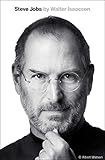
The essential Isaacson — and the most widely read biography published in the last twenty-five years. Steve Jobs, knowing he was dying, gave Isaacson years of access and forty interviews; he also encouraged everyone around him — family, colleagues, rivals, former employees — to speak freely. The result is a portrait of extraordinary completeness and of considerable moral complexity.
Jobs emerges as a man whose creative vision transformed the personal computer, the animated film, the music industry, and the mobile phone — and whose capacity for cruelty, manipulation, and self-contradiction was equally extraordinary. Isaacson does not resolve this tension; he presents it. The biography is a sustained examination of what the quality that makes someone a visionary does to the people around them. The prose is clear and swift; the portrait is vivid; the subject matter — Apple’s products and the creative and personal dynamics that produced them — is of genuine historical significance.
Elon Musk (2023)
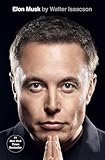
The most recent major Isaacson biography — and the most contested. Musk gave Isaacson extraordinary access over two years, including to internal debates at Tesla, SpaceX, and Twitter. The portrait that emerges is of a man whose ambitions — to multiplanet humanity, to accelerate sustainable energy, to own the internet’s town square — are genuine, and whose treatment of colleagues, employees, and public discourse is frequently reckless. The biography was published mid-controversy; the subject was, at the time, more divisive than Jobs at his most difficult. Isaacson’s attempt at balance has been read as both too sympathetic and as appropriately rigorous.
Einstein (2007)
Isaacson’s scientific biography — and a model of how to make mathematical genius accessible to general readers. The biography covers Einstein’s life from birth through the development of special and general relativity, his political engagement, his relationship with quantum mechanics (which he helped create and then fundamentally disagreed with), and his later years as an American celebrity. Isaacson explains the actual science with considerable clarity, making this a genuine intellectual biography rather than merely a life story.
Leonardo da Vinci (2017)
Isaacson’s historical biography — drawing exclusively on Leonardo’s own notebooks (7,200 pages survive) and the work of art historians. Leonardo emerges as the most complete embodiment of Isaacson’s central argument about creative genius: insatiably curious, unconcerned with conventional categories, a man who applied scientific observation to art and artistic imagination to science. Isaacson’s most beautifully illustrated book.
Why Steve Jobs Is the Ideal First Book
For a reader new to Walter Isaacson, Steve Jobs is the ideal first book because it is among his most famous and successful biographies and a fine expression of his distinctive gifts, the deep research, the engaging narrative, and the illuminating portrayal of brilliant, complex individuals. Steve Jobs is Isaacson’s authorized biography of the Apple co-founder, drawn from extensive interviews with Jobs himself and those around him, presenting a candid, vivid portrait of a visionary, demanding, and flawed genius. As an entry point it is ideal, for it is one of his best-known books and a perfect example of his approach to biography, the marriage of thorough research and compelling storytelling. It welcomes the newcomer with its fascinating subject, its candid portrait, and its engaging narrative, drawing the reader into the life of one of the most influential figures of our time. It is among his most famous works and a fine representation of his gifts, so the new reader encounters Isaacson at his most characteristic. For the newcomer, then, Steve Jobs is an excellent starting point.
What to Expect as a New Reader
As a new reader, you can expect Steve Jobs to be a candid, engaging, and deeply researched biography. You can expect thorough research, for Isaacson drew on extensive interviews with Jobs and with many people around him, lending the book authority and detail. You can expect a candid portrait, for the biography is unflinching about Jobs’s flaws, his difficult temperament, and his contradictions, as well as his brilliance and vision. You can expect engaging narrative, for Isaacson tells the story with momentum, color, and readability. You can expect insight into innovation and creativity, for the book illuminates the qualities and tensions behind Jobs’s achievements at Apple and beyond. You can expect a portrait of a complex, visionary, and demanding figure. You can expect the marriage of research and storytelling that marks Isaacson’s biographies. Expect, in short, a candid, engaging, and deeply researched biography, a fine introduction to Isaacson’s gifts.
Going Deeper After Your First Book
Once Steve Jobs has introduced you to Isaacson’s approach, the reader who wishes to go deeper can explore his other acclaimed biographies, which apply the same deep research and engaging storytelling to a remarkable range of brilliant individuals. His biographies of figures such as the entrepreneur Elon Musk, the scientist Albert Einstein, the Renaissance genius Leonardo da Vinci, and the founding father Benjamin Franklin illuminate the lives and the creativity of the brilliant and the influential across many fields and eras. Reading these after Steve Jobs deepens your appreciation of Isaacson’s distinctive gifts, the deep research, the engaging narrative, and the illuminating portrayal of genius and innovation. His characteristic strengths run through his work, and the reader who has enjoyed Steve Jobs will find them across his biographies. Building your reading journey through Isaacson is a matter of following his biographies from Steve Jobs into his lives of Einstein, Leonardo, and the others. The reader who begins here and continues will find one of the most popular and accomplished biographers writing today.
Reading Walter Isaacson
Isaacson’s biographies are united by a single argument: that extraordinary creative and intellectual achievement is almost invariably accompanied by unconventional personality, and that the qualities enabling the achievement are often the same qualities that make the person difficult. Begin with Steve Jobs for the clearest and most immediately compelling version of this argument; read Einstein or Leonardo da Vinci for its application to scientific and artistic genius.
Frequently Asked Questions
Where should I start with Walter Isaacson?
Steve Jobs (2011) is the essential starting point — the most widely read biography of the twenty-first century and Isaacson's most compelling subject. The biography was written with Jobs's cooperation and draws on years of interviews conducted in the knowledge that Jobs was dying; it presents a man of extraordinary creative vision and genuinely difficult personality without either hagiography or condemnation. Isaacson's gift — rendering complex intellectual and creative processes accessible to general readers — is fully on display. Einstein is the best alternative for readers who prefer scientific genius to technological; The Innovators is the best for readers interested in the history of the digital revolution.
What is the Steve Jobs biography about?
Steve Jobs (2011) is a comprehensive account of Apple's co-founder, drawn from more than forty interviews with Jobs and interviews with hundreds of family members, friends, competitors, and colleagues. Isaacson presents Jobs as a man whose absolute conviction about his creative vision drove Apple to produce transformative products while making him extraordinarily difficult to work with — a portrait of someone whose best and worst qualities were the same quality. The biography covers his childhood, his expulsion from Apple, the NeXT and Pixar years, his return to Apple, and the creation of the iMac, iPod, iPhone, and iPad.
Are Isaacson's biographies independent of each other?
Yes — each Isaacson biography is entirely standalone. Steve Jobs, Einstein, Benjamin Franklin, Leonardo da Vinci, Elon Musk, and The Innovators each functions as a self-contained work; there is no series structure and no required reading order. Readers can begin with whichever subject interests them most. Isaacson's consistent interest — across all his subjects — is in the nature of creative and intellectual genius, particularly the relationship between unconventional personality and transformative achievement. Reading several of his biographies reveals how consistently he applies this lens.
What is Elon Musk about compared to Steve Jobs?
Elon Musk (2023) was written, like the Jobs biography, with the subject's cooperation and after extensive interviews. The parallels between Jobs and Musk are substantial — both are characterised by absolute conviction, treatment of colleagues as instruments rather than people, and transformative product vision — and Isaacson draws them explicitly. The Musk biography generated considerable controversy, as it was published at a time when Musk's public behaviour was more politically charged; some readers found Isaacson overly sympathetic, others found him appropriately balanced. It is a more ambivalent and less clean read than the Jobs biography, partly because the subject's story is still in progress.