Where to Start with Chris Miller: A Reading Guide
Where to start with Chris Miller — how to approach Chip War, his history of semiconductors as the defining strategic resource of the twenty-first century. A complete reading guide.
By Oliver Kane
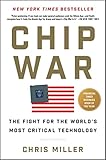
Chris Miller is an economic historian at Tufts University whose research focuses on economic history, US foreign policy, and the geopolitics of technology. Chip War: The Fight for the World’s Most Critical Technology (2022) was published by Scribner, won the Financial Times Business Book of the Year, and has been cited by US government officials as essential reading on the semiconductor question. It arrived at the precise moment when the world began to understand that semiconductor policy was not a niche technology issue but the central strategic competition of the era.
Where to Start: Chip War (2022)
The essential Chris Miller — and the book that made the semiconductor industry’s strategic centrality legible to a general audience. Chip War begins with a fact so simple it barely registers until Miller unpacks its implications: every smartphone, data centre, advanced weapon system, electric vehicle, and modern appliance contains semiconductors. The most advanced chips — the ones that power artificial intelligence, cutting-edge weapons, and the global financial system — are manufactured at a degree of precision that no other industry on Earth approaches, in factories costing tens of billions of dollars to build, using equipment produced by a handful of companies in the Netherlands, Japan, and the United States.
Taiwan’s TSMC manufactures the majority of the world’s most advanced chips. This single fact explains more about current geopolitics than almost anything else.
The book traces seventy years of semiconductor history: from the invention of the transistor at Bell Labs in 1947 through the development of the integrated circuit by Jack Kilby and Robert Noyce, the rise of Silicon Valley, the offshore manufacturing decisions that concentrated advanced chipmaking in Asia, and the current US-China competition for semiconductor supremacy. Miller’s narrative gift is rendering this history as a story about people — engineers who stayed up all night solving manufacturing problems, executives who made gambles that defined industries, military planners who recognised before most civilians that silicon had become the decisive strategic resource.
The technical narrative is handled with exactly the right balance. Miller explains how transistors switch electrical signals, why fitting more transistors on a smaller chip matters exponentially, what the shift from microns to nanometers in chip dimensions represents, and why ASML in the Netherlands produces the extreme ultraviolet lithography machines that no other company on Earth can replicate. Non-engineers get enough to understand the stakes; engineers will find the history illuminating.
The geopolitical argument is the book’s most important contribution. Miller explains, systematically and with economic rigour, why semiconductor control has become the defining competition of the twenty-first century. Advanced military systems — precision weapons, satellite networks, electronic warfare, autonomous vehicles — require chips manufactured at the leading edge of capability. Nations that cannot manufacture frontier chips cannot build frontier weapons. The logic is simple and consequential. China’s current semiconductor deficit — its inability to manufacture at the leading edge without foreign equipment and expertise — is not an accident but the result of deliberate decisions taken over decades, and it is the primary strategic vulnerability that US export controls in 2022 targeted.
The Taiwan question runs throughout. TSMC’s concentration of advanced manufacturing capacity in a geopolitically exposed location is, Miller argues, the most dangerous single-point failure in the global economy. A military conflict over Taiwan would not just threaten the island; it would disrupt chip supply chains that the entire global economy depends on, with consequences no planner has seriously gamed out.
Chip War won its prize at exactly the right moment, as the world began to understand that semiconductor policy was not a technical footnote but the central question of the era.
Why Chip War Is the Ideal First Book
For a reader new to Chris Miller, Chip War is the ideal first book because it is his acclaimed, influential work and the fullest expression of his distinctive gifts, the masterful synthesis of technology, history, and geopolitics into a gripping and clear narrative. Chip War tells the story of the semiconductor, the tiny chip that powers the modern world, and the global struggle for control of its technology, illuminating one of the most important and contested arenas of contemporary geopolitics. As an entry point it is ideal, for it is his best-known book and a perfect example of his clear, well-researched, and gripping nonfiction. It welcomes the newcomer with its fascinating subject, its clear explanation, and its geopolitical sweep, drawing the reader into the story of the chip and the struggle to control it. It is his major work and a fine representation of his gifts, so the new reader encounters Miller at his most characteristic. For the newcomer, then, Chip War is the natural and ideal starting point.
What to Expect as a New Reader
As a new reader, you can expect Chip War to be a gripping, clear, and geopolitically sweeping work of nonfiction. You can expect a fascinating subject, for the book tells the story of the semiconductor, the chip that powers the modern world. You can expect a blend of technology, history, and geopolitics, for Miller weaves together the technical, the historical, and the strategic. You can expect clear explanation, for he makes the complex world of chips and their manufacture understandable. You can expect a geopolitical sweep, for the book illuminates the global struggle for control of chip technology, a central arena of contemporary power. You can expect insight into one of the most important and contested industries in the world. You can expect a well-researched, gripping, and timely read. Expect, in short, a gripping, clear, and geopolitically sweeping work of nonfiction, a superb introduction to Miller’s gifts.
Going Deeper After Your First Book
Once Chip War has introduced you to Miller’s gifts, the reader who wishes to go deeper can carry its themes into the wider literature on technology, geopolitics, and economic history to which his work contributes. Since Chip War is his best-known book, the natural next step is outward, into the broad field of writing on technology and global power, the history of strategic industries, and the geopolitics of the modern economy, where the reader can extend the understanding the book provides. Miller’s broader academic and analytical work also extends his engagement with economic and geopolitical questions. Reading more widely deepens your engagement with the questions about technology and power that his book raises. His characteristic synthesis of technology, history, and geopolitics points toward a rich field of further reading. Building your reading journey from Chip War is a matter of carrying its themes into the wider literature on technology and geopolitics. The reader who begins here will have a clear and gripping foundation for understanding the geopolitics of the semiconductor.
Reading Chris Miller
Chip War is Miller’s essential book. It stands alone and requires no prior reading.
For the full Chris Miller bibliography, reviews, and biography, visit the Chris Miller author page on Editors Reads.
Affiliate disclosure: Links to Amazon on this page are affiliate links. We earn a small commission at no extra cost to you.
Frequently Asked Questions
Where should I start with Chris Miller?
Chip War: The Fight for the World's Most Critical Technology (2022) is Miller's essential book — a masterwork of technology history tracing the semiconductor industry from the invention of the transistor to the US-China technology competition. Winner of the Financial Times Business Book of the Year. Accessible to non-technical readers and makes the strategic centrality of chip manufacturing viscerally clear.
What is Chip War about?
Chip War traces seventy years of semiconductor history — from Bell Labs in 1947 to the current US-China competition for control of advanced chip manufacturing. Miller explains how Taiwan's TSMC came to manufacture the majority of the world's most advanced chips, why this concentration makes the Taiwan Strait the world's most consequential geopolitical flashpoint, and how the US government's 2022 export controls represent the most significant industrial policy decision in decades.
Do I need a technical background to read Chip War?
Chip War requires no technical background. Miller explains how transistors work, what miniaturization involves, and why nanometer measurements matter with exactly the right level of detail — enough to make the stakes intelligible without requiring prior knowledge. The book reads as narrative history rather than technical manual; the characters and strategic decisions are always at the centre, with technology as context rather than subject.
What should I read after Chip War?
After Chip War, Michael Lewis's The New New Thing covers Silicon Valley's culture of disruption at its most revealing. Walter Isaacson's The Innovators traces the full history of the digital revolution from Ada Lovelace through the internet with comparable narrative ambition. For the geopolitical context, Graham Allison's Destined for War covers the structural dynamics of US-China competition with the Taiwan question as its most urgent case study.