12 Best Psychology Books of All Time (Expert Ranked)
The best psychology books ever written — from Freud to Kahneman. Our experts ranked 12 essential psychology books that will fundamentally change how you understand the human mind.
By Lena Fischer
Psychology is the science of why people think, feel, and behave the way they do. But the best psychology books don’t just explain human behaviour — they change how you understand yourself, your relationships, and the decisions you make every day.
This list spans nearly a century of psychological writing, from classics that founded the discipline to modern neuroscience that is rewriting it. We’ve excluded textbooks and selected only books written for a curious general audience.
How We Selected These Books
Our editorial criteria:
- Scientific credibility: grounded in peer-reviewed research or clinical experience
- Accessibility: written for intelligent non-specialists
- Impact: has genuinely influenced how the field or popular understanding developed
- Lasting value: remains relevant beyond the year of publication
The 12 Best Psychology Books
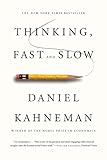
1. Thinking, Fast and Slow — Daniel Kahneman ⭐⭐⭐⭐⭐
The most comprehensive and authoritative psychology book of the last 50 years. Nobel laureate Kahneman’s account of System 1 and System 2 thinking, and the cognitive biases that lead intelligent people to predictably irrational conclusions, is the foundational text of modern behavioural psychology.
Dense in places but endlessly illuminating. No book will make you a more critical thinker about your own reasoning.
➡ Full review → | Buy on Amazon →
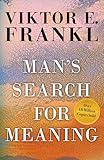
2. Man’s Search for Meaning — Viktor Frankl ⭐⭐⭐⭐⭐
The most profound psychological text ever written from first-hand experience. Frankl’s account of Auschwitz — and the logotherapy he developed from observing who survived — addresses questions about meaning, suffering, and human freedom that no laboratory study can reach.
Short (200 pages), devastating, and ultimately hopeful.
➡ Full review → | Buy on Amazon →
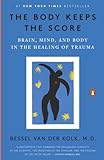
3. The Body Keeps the Score — Bessel van der Kolk ⭐⭐⭐⭐⭐
The definitive work on trauma psychology for a general audience. Van der Kolk’s synthesis of 40 years of clinical research explains why trauma is stored in the body rather than in explicit memory — and why talk therapy alone often fails to resolve it.
Essential reading for therapists, trauma survivors, and anyone who wants to understand why some experiences leave lasting neurological imprints.
➡ Full review → | Buy on Amazon →
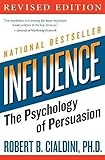
4. Influence — Robert Cialdini ⭐⭐⭐⭐⭐
The science of persuasion: why people say yes, and how to use (and defend against) the six principles of influence — reciprocity, commitment, social proof, authority, liking, and scarcity.
More directly applicable to everyday life than any other psychology book on this list. Essential reading for marketers, negotiators, managers, and anyone who needs to persuade people of anything.
5. Why We Sleep — Matthew Walker ⭐⭐⭐⭐⭐
The most alarming psychology/neuroscience book you’ll read this year. Walker’s account of what happens to the brain during sleep — and the cognitive and physical consequences of chronic sleep deprivation — has changed the behaviour of millions of readers.
After reading it, you will never again take pride in sleeping less.
➡ Full review → | Buy on Amazon →
6. The Power of the Unconscious — Sigmund Freud
A controversial figure whose specific theories have largely been superseded — but Freud’s foundational insight, that much of human motivation operates below conscious awareness, has proven durable and influenced virtually every subsequent psychologist.
Read Freud not as a source of clinical truth but as the originator of questions the field is still answering.
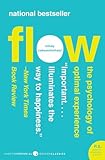
7. Flow — Mihaly Csikszentmihalyi ⭐⭐⭐⭐
The psychology of optimal experience. Csikszentmihalyi’s research on “flow states” — the complete absorption in a challenging, meaningful activity — provides one of the most compelling frameworks for understanding what makes life feel worth living.
Deep Work by Cal Newport is essentially an application of flow theory to knowledge work.
8. The Willpower Instinct — Kelly McGonigal ⭐⭐⭐⭐
Based on McGonigal’s Stanford course on the science of self-control, this book explains why willpower works the way it does — and why the standard advice about self-discipline often backfires. Her research on “willpower as a muscle” and the role of sleep, stress, and glucose is practically useful.
Excellent companion to Atomic Habits — addresses why the habit systems Clear describes actually work neurologically.
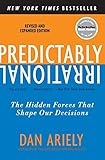
9. Predictably Irrational — Dan Ariely ⭐⭐⭐⭐
A lighter, more accessible entry to behavioural economics than Thinking, Fast and Slow. Ariely’s experiments reveal how predictably irrational human decision-making is — and how marketers, designers, and policymakers exploit this irrationality (or could use it for good).
A good starting point if Kahneman feels daunting.
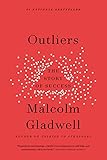
10. Outliers — Malcolm Gladwell ⭐⭐⭐⭐⭐
Gladwell at his storytelling best. The 10,000-hours concept, the relative age effect, and the cultural legacy argument together make a compelling case that extraordinary success is far more contextual and less individual than we believe.
Read critically — Gladwell’s research has been challenged — but read it.
➡ Full review → | Buy on Amazon →
11. The Psychopath Test — Jon Ronson ⭐⭐⭐⭐
A darkly comic investigation into the diagnosis and over-diagnosis of psychopathy, and the role of personality disorder in modern corporate leadership. Ronson is a master of accessible psychological journalism.
Less rigorous than the other entries on this list but more entertaining — a great entry point for readers new to psychology.
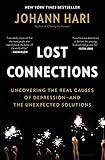
12. Lost Connections — Johann Hari ⭐⭐⭐⭐
A counter-narrative to the prevailing understanding of depression as primarily a chemical imbalance. Hari argues — controversially but with substantial evidence — that social disconnection, lack of meaning, and economic insecurity are the primary drivers of the modern depression epidemic.
An important corrective to purely pharmaceutical models of mental health.
Psychology Books by Category
| Category | Best Book |
|---|---|
| Decision-making & bias | Thinking, Fast and Slow |
| Trauma | The Body Keeps the Score |
| Meaning & resilience | Man’s Search for Meaning |
| Sleep & brain | Why We Sleep |
| Persuasion | Influence |
| Success & achievement | Outliers |
| Optimal experience | Flow |
Frequently Asked Questions
What is the best psychology book ever written?
Thinking, Fast and Slow by Daniel Kahneman is the most comprehensive and scientifically authoritative psychology book written for a general audience. It covers cognitive psychology’s most important findings through the career of a Nobel laureate. However, for personal impact, many readers find Man’s Search for Meaning more transformative — it addresses questions that neuroscience alone cannot answer.
What psychology book should I read first?
For most people, start with Predictably Irrational by Dan Ariely (accessible, entertaining, immediately applicable) or Influence by Robert Cialdini (practically useful in everyday life). Both are shorter and more approachable than Kahneman, and both will make you want to read more deeply into the field.
Are psychology books scientifically accurate?
This varies significantly by book. Kahneman’s work is directly grounded in peer-reviewed research. Gladwell is a journalist who presents research selectively and accessibly — read with scepticism. Frankl’s work is clinical observation rather than controlled experiment. Most general-audience psychology books simplify research to some degree — the best ones do so accurately.
What psychology books do therapists recommend?
Therapists most frequently recommend The Body Keeps the Score (trauma), Man’s Search for Meaning (existential approach), and Flow (positive psychology) to clients. Thinking, Fast and Slow is commonly recommended for clients working on cognitive distortions and decision-making.
Affiliate disclosure: Book links are Amazon affiliate links. We earn a small commission at no extra cost to you.
Frequently Asked Questions
What is the best psychology book ever written?
Thinking, Fast and Slow by Daniel Kahneman is most frequently cited as the most important and comprehensive popular psychology book, covering decades of research into how the human mind makes decisions. The Body Keeps the Score by Bessel van der Kolk is the most significant recent work, specifically on trauma and the nervous system.
What psychology books are accessible to non-experts?
The most accessible psychology books for general readers are Thinking, Fast and Slow by Daniel Kahneman, Influence by Robert Cialdini, and Blink by Malcolm Gladwell. All three are written for a popular audience, are entertaining to read, and require no academic background.
What books help you understand human behaviour?
The best books for understanding human behaviour are Influence by Robert Cialdini (persuasion and compliance), Thinking, Fast and Slow by Kahneman (cognitive biases and decision-making), and Predictably Irrational by Dan Ariely (behavioural economics). Together these three cover the most important ways human behaviour departs from rational self-interest.
What is the difference between psychology books and self-help books?
Psychology books present research findings and theoretical frameworks for understanding the mind. Self-help books apply those findings as actionable advice for personal improvement. Thinking, Fast and Slow is a psychology book; Atomic Habits is a self-help book. The best self-help books are grounded in psychology research; the best psychology books are readable enough to feel personally relevant.