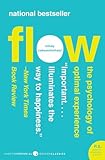
Editors Reads Verdict
Csikszentmihalyi's foundational research on optimal experience is one of the most important contributions to positive psychology. The theory of flow explains why some activities feel timeless while others feel empty.
What We Loved
- Foundational research grounded in decades of empirical study
- The challenge-to-skill ratio model is both elegant and practically useful
- Wide-ranging applications across work, sports, arts, and relationships
- Changed how psychologists think about happiness and meaning
Minor Drawbacks
- Academic writing style slows the pace significantly
- Some case studies feel dated for contemporary readers
- The prescriptions for achieving flow are less specific than readers often want
Key Takeaways
- → Flow occurs when challenge and skill are in balance at a high level
- → Activities that produce flow have clear goals and immediate feedback
- → Happiness is not a passive state but an active condition of engaged challenge
- → Attention is our most limited and precious resource
- → Flow can be cultivated by redesigning work and leisure to provide challenge and feedback
| Author | Mihaly Csikszentmihalyi |
|---|---|
| Publisher | Harper Perennial |
| Pages | 336 |
| Published | August 1, 1990 |
| Language | English |
| Genre | Psychology, Self-Help, Science |
| Difficulty | Intermediate |
| Best For | Psychologists, coaches, educators, and anyone curious about the conditions under which humans perform and feel most alive. |
How Flow Compares
Flow at a glance against 3 similar books readers weigh alongside it.
| Book | Author | Rating | Best for |
|---|---|---|---|
| Flow (this book) | Mihaly Csikszentmihalyi | ★ 4.4 | Psychologists, coaches, educators, and anyone curious about the conditions |
| Deep Work | Cal Newport | ★ 4.7 | Knowledge workers, writers, programmers, academics, and anyone whose job |
| Grit | Angela Duckworth | ★ 4.5 | Students, athletes, educators, parents, and anyone seeking to understand what |
| The Power of Now | Eckhart Tolle | ★ 4.6 | Anyone struggling with anxiety, overthinking, or searching for a practical |
Naming the Experience Everyone Has Had
If you’ve ever been so absorbed in an activity — solving a hard problem, playing music, climbing a difficult route, writing — that you lost track of time entirely, you’ve experienced what Mihaly Csikszentmihalyi (pronounced “cheeks-sent-me-high”) calls flow. His contribution was to name, study, and describe the conditions under which this state occurs, and to argue that it is both the key to happiness and dramatically underutilised in modern life.
Published in 1990, Flow draws on decades of research with thousands of participants across cultures and professions — surgeons, rock climbers, chess players, factory workers. The finding was consistent: peak subjective experience — the moments people described as the best in their lives — occurred not during passive relaxation but during active, challenging engagement.
The Flow Channel
The model at the heart of the book is the challenge-skill ratio. Flow occurs in the narrow band where a task is challenging enough to require full concentration but not so difficult as to produce anxiety. When challenge exceeds skill, the result is anxiety. When skill exceeds challenge, the result is boredom. Only when they are in balance — at a progressively higher level — does flow emerge.
This model has profound implications for work design, education, and game design. The best video games, Csikszentmihalyi notes, are masterclasses in maintaining this balance — constantly raising challenge to match improving skill, keeping players in the flow channel.
Attention as the Currency of Experience
One of the book’s deepest insights concerns attention. Csikszentmihalyi argues that the quality of your life is determined by the quality of what you attend to — and that consciousness is essentially the organisation of attention. Activities that consume your full attention, providing clear goals and immediate feedback, produce the richest conscious experiences. Activities that scatter attention produce neither flow nor satisfaction.
This argument anticipates, by two decades, the contemporary conversation about attention as a finite resource and the costs of its fragmentation.
Applying Flow
The practical prescriptions in Flow are less specific than modern readers accustomed to tactical self-help may prefer. Csikszentmihalyi gestures at restructuring work to increase challenge and feedback but doesn’t provide step-by-step protocols. Cal Newport’s Deep Work can be read as a more operationalised companion to these ideas.
Final Verdict
Flow is a landmark work in positive psychology that changed how researchers and practitioners think about happiness, work, and meaning. Its academic pace demands patience, but the framework it provides is one of the most useful in understanding human experience.
Our rating: 4.4/5 — Foundational and important. Pairs perfectly with Deep Work for a complete picture of optimal performance.
Naming a Universal Experience
The lasting contribution of Flow is that it gave a name and a framework to an experience everyone has had but few had analysed: those moments of complete, energised absorption in an activity, when time seems to fall away and self-consciousness disappears. Mihaly Csikszentmihalyi, drawing on decades of research, called this state “flow,” and argued that it is not only intensely enjoyable but central to a meaningful and fulfilling life. By identifying and studying it systematically, he turned a fleeting, familiar feeling into a subject of serious psychology and a key to wellbeing.
The Conditions of Flow
Much of the book’s value lies in its analysis of when and how flow occurs. Csikszentmihalyi identifies the conditions that produce it — a clear goal, immediate feedback, and above all a balance between the challenge of a task and one’s skill, so that the activity is hard enough to demand full engagement but not so hard as to produce anxiety. This challenge-skill balance is the book’s central practical insight, and it explains why flow is found as readily in work, sport, and craft as in leisure, and why passive entertainment rarely produces it.
A Theory of the Good Life
Beyond the psychology of individual moments, Flow advances a larger argument about happiness itself. Csikszentmihalyi contends that a fulfilling life is built not from the pursuit of pleasure or comfort but from the regular experience of flow — from engagement in challenging, absorbing activities that stretch our abilities and give our attention something worthy to do. This reframes happiness as something actively cultivated through engagement rather than passively consumed, and it is the foundation on which much later positive psychology was built.
Why It Endures
Decades after publication, Flow remains a foundational text in the psychology of happiness and a genuinely influential book, cited across fields from education and sport to work and design. It is more substantial and academic than the self-help books it inspired, and the reader should expect ideas rather than quick tips. But for anyone seeking to understand what makes activity satisfying and life meaningful — and how to arrange their own life to find more of that absorbed, energised engagement — it offers an insight that has proved both durable and practical. Few psychological concepts have travelled as widely or worn as well, and the idea of flow has become part of how athletes, artists, designers, and ordinary people understand their best, most absorbed hours — a lasting contribution to the study of what makes life worth living.
Reading Guides
Frequently Asked Questions
What is "Flow" about?
The landmark study of the state of optimal experience — deep concentration and complete involvement that makes an activity intrinsically rewarding.
Who should read "Flow"?
Psychologists, coaches, educators, and anyone curious about the conditions under which humans perform and feel most alive.
What are the key takeaways from "Flow"?
Flow occurs when challenge and skill are in balance at a high level Activities that produce flow have clear goals and immediate feedback Happiness is not a passive state but an active condition of engaged challenge Attention is our most limited and precious resource Flow can be cultivated by redesigning work and leisure to provide challenge and feedback
Is "Flow" worth reading?
Csikszentmihalyi's foundational research on optimal experience is one of the most important contributions to positive psychology. The theory of flow explains why some activities feel timeless while others feel empty.
Ready to Read Flow?
Check the current price on Amazon.
Check Price on Amazon (paid link)Prices and availability are subject to change. See Amazon for current price.
Review last updated: