15 Books Like Atomic Habits to Read Next
Loved Atomic Habits? These 15 books explore habit formation, behaviour change, motivation, and the psychology of self-improvement with the same depth and clarity.

James Clear’s Atomic Habits has become one of the best-selling books of the past decade for a reason: it takes the science of behaviour change and makes it immediately, practically usable. The four laws of behaviour change — make it obvious, make it attractive, make it easy, make it satisfying — are simple enough to remember and powerful enough to actually work.
But Atomic Habits is one data point in a much richer body of work. If you want to go deeper on the psychology of habits, motivation, willpower, and how humans actually change their behaviour, these 15 books are the natural next reads.
Books Like Atomic Habits at a Glance
| Book | Author | Best for |
|---|---|---|
| The Power of Habit | Charles Duhigg | Anyone interested in the science of behaviour |
| The Willpower Instinct | Kelly McGonigal | Anyone who has struggled with self-control, wants |
| The Compound Effect | Darren Hardy | Anyone who understands what they should be doing |
| Nudge | Richard Thaler and Cass Sunstein | Policy makers, business leaders, and anyone |
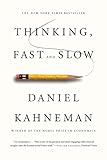
| Thinking, Fast and Slow | Daniel Kahneman | Investors, doctors, lawyers, managers |
| Predictably Irrational | Dan Ariely | Anyone interested in why people make |
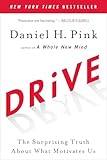
| Drive | Daniel Pink | Managers, HR professionals, educators, and anyone |
| Mindset | Carol Dweck | Parents, teachers, managers, athletes, and anyone |
| Deep Work | Cal Newport | Knowledge workers, writers, programmers |
| Indistractable | Nir Eyal | Knowledge workers struggling with digital |
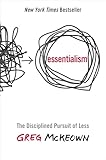
| Essentialism | Greg McKeown | Professionals who feel spread too thin, are |
| Grit | Angela Duckworth | Students, athletes, educators, parents |
| Peak: Secrets from the New Science of Expertise | Anders Ericsson | Anyone serious about reaching the top |
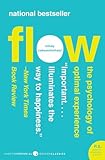
| Flow | Mihaly Csikszentmihalyi | Psychologists, coaches, educators, and anyone |
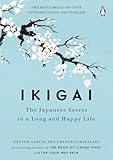
| Ikigai | Hector Garcia and Francesc Miralles | Readers interested in Japanese philosophy |
Directly About Habits and Behaviour Change
#1 — The Power of Habit by Charles Duhigg
The Power of Habit is the book most often recommended alongside Atomic Habits — and for good reason. Where Clear focuses on practical systems, Duhigg goes deeper into the neuroscience: the habit loop (cue, routine, reward), why habits are stored in a different part of the brain than conscious decisions, and how this explains why habits are so hard to break and so automatic once formed. The sections on organisational habits and social habits extend the framework beyond the individual.
#2 — The Willpower Instinct by Kelly McGonigal
McGonigal is a Stanford psychologist who turned her popular course on willpower into this book. She challenges the common view of willpower as a finite resource that depletes with use — a theory, she argues, that is poorly supported by the evidence. What works instead? Understanding the specific triggers that undermine self-control and using that understanding to build systems that don’t rely on willpower at all. Strongly complementary to Clear’s approach.
#3 — The Compound Effect by Darren Hardy
Hardy’s thesis is simple and resonant: small, consistent actions compound into massive results over time. It is a less scientifically grounded book than Atomic Habits but more motivationally direct. Hardy is explicit that the gap between people who achieve their goals and those who don’t is rarely talent — it is the willingness to maintain consistent behaviour over long periods. A useful pairing for readers who want the “why you should bother” argument alongside Clear’s “how to do it.”
#4 — Nudge by Richard Thaler and Cass Sunstein
Nudge approaches behaviour change from an entirely different angle: policy design. Thaler and Sunstein argue that the way choices are presented — the “choice architecture” — profoundly affects what people choose, often without them realising it. The concept of “nudging” people toward better decisions through smarter defaults rather than commands or incentives is directly applicable to designing your own environment the way Clear recommends — just with a more rigorous academic grounding.
The Psychology Underneath the Habits
#5 — Thinking, Fast and Slow by Daniel Kahneman
If habits are automatic behaviours that bypass conscious deliberation, then understanding when the brain uses automatic versus deliberate thinking is foundational to understanding habits. Kahneman’s System 1 (fast, automatic, intuitive) and System 2 (slow, deliberate, effortful) map almost perfectly onto the habit/non-habit distinction. Thinking, Fast and Slow provides the cognitive science framework that underlies much of what Clear discusses.
#6 — Predictably Irrational by Dan Ariely
Ariely’s behavioural economics research reveals that human decision-making is irrational in consistent, predictable ways. For habit-builders, the most valuable insight is understanding what triggers irrationality — why we procrastinate, why we over-value immediate rewards over future ones, why social norms and expectations shape behaviour more than we think. Clear’s “make it attractive” law makes a lot more sense once you’ve read Ariely on how attraction actually works.
#7 — Drive by Daniel Pink
Pink argues that the dominant model of motivation — carrots and sticks, external rewards and punishments — is not just ineffective but often counterproductive for any work involving creativity or complexity. The real drivers of sustained behaviour are autonomy, mastery, and purpose. For habit-builders, Drive is essential reading for understanding why habits built around external rewards tend to collapse, while habits connected to intrinsic motivation are more durable.
#8 — Mindset by Carol Dweck
Dweck’s research on fixed versus growth mindsets is foundational to understanding why some people change their habits and others don’t. People with a fixed mindset believe their abilities are set — failure means they lack talent. People with a growth mindset believe abilities are developed through effort — failure is information. Clear’s entire framework depends on the growth mindset. This book explains the psychological substrate that makes it possible.
Focus, Deep Work, and Productive Routines
#9 — Deep Work by Cal Newport
Newport’s argument is that the ability to concentrate without distraction on cognitively demanding tasks is becoming both rarer and more valuable. Deep Work is essentially a habit book focused on one specific habit: the practice of deep concentration. Newport’s advice — schedule deep work, protect it fiercely, eliminate shallow distractions — is directly actionable and pairs well with Clear’s habit-stacking approach.
#10 — Indistractable by Nir Eyal
Eyal originally wrote Hooked, the bible of addictive product design — then wrote Indistractable as something of a corrective: a guide to building internal triggers and external structures that prevent distraction. Where Atomic Habits focuses on building positive behaviours, Indistractable focuses on eliminating the competing behaviours that undermine them. The two read well together.
#11 — Essentialism by Greg McKeown
McKeown’s premise: you can do anything but not everything, and most people are doing far too many things at too low a standard because they haven’t decided what is truly essential. Essentialism is a habit book in disguise — building the habit of saying no, the habit of evaluating everything against your highest priorities, the habit of protecting your most important contributions. It extends Clear’s framework from “what habits should I build” to “how do I choose which habits matter.”
Grit, Resilience, and Long-Term Effort
#12 — Grit by Angela Duckworth
Duckworth’s research on grit — the combination of passion and perseverance toward long-term goals — addresses the question Atomic Habits doesn’t fully answer: what do you do when the habit is in place but you still want to quit? Duckworth’s answer, supported by decades of research, is that the capacity to sustain effort over time is itself a trainable trait. Habits create the structure; grit fills in when the structure isn’t enough.
#13 — Peak: Secrets from the New Science of Expertise by Anders Ericsson
Ericsson’s research on deliberate practice is the scientific foundation under the “10,000 hours rule” — but his own work is more nuanced and more useful than the popular summary. Peak explains why not all practice leads to improvement, what makes practice deliberate and therefore effective, and how expertise is actually built. For habit-builders who want to turn a habit into genuine mastery, this is the essential follow-up.
Meaning, Flow, and Living Well
#14 — Flow by Mihaly Csikszentmihalyi
Csikszentmihalyi’s concept of flow — the state of complete absorption in a challenging activity — explains something Atomic Habits does not address: what makes certain habits deeply satisfying rather than merely beneficial. Understanding what conditions produce flow helps you design habits that you actually want to perform, not just habits that are good for you in the abstract.
#15 — Ikigai by Hector Garcia and Francesc Miralles
Ikigai is the Japanese concept of “reason for being” — the intersection of what you love, what you are good at, what the world needs, and what you can be paid for. This is a shorter and more philosophical book than the others on this list, but it addresses the question that habit-building eventually forces you to confront: habits in service of what? Understanding your ikigai gives the habit architecture a foundation.
How to Choose Your Next Read
If you want more science: Thinking, Fast and Slow or Grit.
If you want more practical tools: Deep Work or Essentialism.
If you want more motivation: Drive or The Compound Effect.
If you want philosophy and meaning: Flow or Ikigai.
More Self-Improvement Reading
Browse related reading guides:
- Books Like Deep Work — for readers who want to go further on focus, concentration, and doing your best work
- Books Like Thinking, Fast and Slow — behavioural economics and cognitive bias, expanded
- Books Like Mindset — fixed vs growth mindset and the psychology of learning
- Books Like Essentialism — simplification, saying no, and protecting what matters
- Best Self-Help Books of All Time — the definitive ranked list across all categories
- 25 Books to Read in Your 20s — Atomic Habits in the context of the full reading list for early adulthood
Affiliate disclosure: Links to Amazon on this page are affiliate links. We earn a small commission at no extra cost to you. This does not influence our editorial recommendations.
Frequently Asked Questions
What are the best books like Atomic Habits?
The best books similar to Atomic Habits include The Power of Habit by Charles Duhigg, Tiny Habits by BJ Fogg, and Deep Work by Cal Newport. All three focus on evidence-based strategies for building better habits and improving how you work and live.
Is there a sequel to Atomic Habits?
James Clear has not published a direct sequel to Atomic Habits. His closest follow-up content is his newsletter and the companion card deck. For more on habit science, The Power of Habit and Tiny Habits are the recommended next reads.
What should I read after Atomic Habits?
After Atomic Habits, most readers move to Deep Work by Cal Newport for focus strategies, The Power of Habit by Charles Duhigg for the neuroscience behind habits, or Thinking, Fast and Slow by Daniel Kahneman for the psychology of decision-making.
How long does it take to read books like Atomic Habits?
Most habit and self-improvement books in this category run 250 to 320 pages and take 4 to 6 hours to read. Atomic Habits itself is 320 pages with a reading time of around 5 hours.