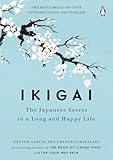
Editors Reads Verdict
A gentle, accessible introduction to a genuinely powerful concept, drawn from the authors' years living in Japan and interviews with Okinawan centenarians — most valuable as an invitation to examine what actually makes your life feel worth living.
What We Loved
- The core concept is genuinely useful and underexplored in Western self-help
- The Okinawan centenarian interviews provide concrete, lived examples
- The book is short enough to read in a single sitting — it respects your time
- The philosophical content draws on multiple Japanese wisdom traditions
Minor Drawbacks
- The famous 'ikigai Venn diagram' (passion/mission/vocation/profession) does not actually appear in the original Japanese concept
- Some readers find the book too brief to fully develop its ideas
- The practical application sections are less developed than the conceptual ones
- Depth is sacrificed for accessibility in ways that occasionally frustrate
Key Takeaways
- → Ikigai is not a grand life purpose but a small, daily reason for getting up — it does not need to be grand
- → The longest-lived communities in the world prioritize community, movement, purpose, and diet
- → Flow states — complete absorption in meaningful activity — are a reliable indicator of ikigai
- → Retirement, in the Western sense, does not exist in cultures with the highest longevity
- → Accepting and finding meaning in the small things is as important as grand purpose
| Author | Héctor García and Francesc Miralles |
|---|---|
| Publisher | Penguin Life |
| Pages | 208 |
| Published | August 30, 2016 |
| Language | English |
| Genre | Self-Help, Philosophy, Japanese Culture |
| Difficulty | Beginner |
| Best For | Readers interested in Japanese philosophy and the science of longevity, or anyone seeking a gentle framework for examining what makes their life meaningful. |
How Ikigai Compares
Ikigai at a glance against 3 similar books readers weigh alongside it.
| Book | Author | Rating | Best for |
|---|---|---|---|
| Ikigai (this book) | Héctor García and Francesc Miralles | ★ 4.1 | Readers interested in Japanese philosophy and the science of longevity, or |
| Four Thousand Weeks | Oliver Burkeman | ★ 4.4 | Readers who have tried productivity systems and found them insufficient, and |
| Man's Search for Meaning | Viktor E. Frankl | ★ 4.8 | Anyone confronting meaninglessness, loss, suffering, or existential questions |
| Think Like a Monk | Jay Shetty | ★ 4.1 | Readers seeking a practical, spiritually grounded self-help framework — |
The Reason for Being
Ikigai (pronounced ee-key-guy) is a Japanese concept that translates roughly as “reason for being” or “that which makes life worth living” — the thing that makes you want to get out of bed in the morning. It is not equivalent to the Western concept of “life purpose,” which tends to imply something grand and singular; ikigai can be as modest as a morning garden, a cup of tea made well, or the company of people who know you.
Héctor García and Francesc Miralles traveled to Okinawa — home to the highest concentration of centenarians in the world — to interview long-lived residents about what they attributed their longevity and vitality to. The resulting book synthesizes these conversations with broader Japanese philosophical and cultural traditions to present a framework for living that prioritizes meaning over achievement.
What Ikigai Actually Is
A note worth making: the famous “ikigai Venn diagram” — which shows overlapping circles of what you love, what you’re good at, what the world needs, and what you can be paid for — is not actually from Japanese tradition. It was invented as a Western interpretation of the concept and became widely circulated. The book itself offers a more nuanced account: ikigai as daily practice, small pleasure, sustained relationship with meaningful activity.
This distinction matters because the Venn diagram version implies that ikigai is something to discover through self-analysis, while the more authentic version suggests it is something to cultivate through consistent engagement with what already matters to you.
The Okinawan Evidence
The book’s most valuable material is the qualitative evidence from Okinawa’s “Blue Zone” — the specific behaviors and attitudes of people who have lived past a hundred in good health. The common threads include: maintaining a strong sense of community (moai — a group of friends who meet regularly throughout life), staying physically active through daily low-intensity movement rather than formal exercise, maintaining a clear and modest sense of purpose, and eating until 80% full (hara hachi bu).
These practices are more accessible than the grand purpose-seeking that Western self-help tends to prescribe, and that accessibility is part of the book’s value.
Flow and the Art of Absorption
A substantial portion of the book is devoted to the psychology of “flow” — the state of complete absorption in a task, drawn from the research of Mihaly Csikszentmihalyi — and its connection to a meaningful life. García and Miralles argue that the long-lived, purposeful people they studied are characterized less by grand ambition than by their capacity to lose themselves in absorbing activity, whether a craft, a garden, or a daily discipline. This pairing of ikigai with flow is one of the book’s more useful moves, because it locates meaning not in a distant goal but in the quality of present engagement. The chapters on cultivating flow — minimizing distraction, choosing tasks at the right level of challenge, building rituals — give the book a practical dimension beyond cultural appreciation, suggesting that a reason for being is found through how one does things, not only what one does.
The Centenarians of Okinawa
The book’s most distinctive material comes from its interviews in Ogimi, a village in Okinawa with one of the world’s highest concentrations of centenarians, and these passages give the abstract concept human texture. The authors report not a single secret but a constellation of habits: a strong, lifelong community in the form of the moai (a circle of friends committed to one another for life), constant gentle movement woven into daily life rather than formal exercise, a diet eaten only until eighty percent full (hara hachi bu), and an unhurried, purposeful relationship to each day. These observations align Okinawa with the broader “Blue Zones” research on longevity, and their value lies in how modest and reproducible they are. The book’s quiet thesis is that a long, vital life is built less from dramatic interventions than from the steady accumulation of connection, movement, moderation, and purpose.
The Venn Diagram Myth
A clarification the book itself partly addresses, and that readers should keep in mind, concerns the famous “ikigai diagram” — the four overlapping circles of what you love, what you are good at, what the world needs, and what you can be paid for. This widely shared graphic is a Western invention, not a Japanese tradition, and it subtly distorts the concept by implying that ikigai is a singular sweet spot to be discovered through analysis, ideally one that pays. The authentic concept is both humbler and more flexible: ikigai need not be lucrative or even singular, and it is cultivated through daily engagement rather than identified through introspection. Recognizing this distinction matters, because the diagram’s career-optimization framing imports exactly the achievement anxiety that the Japanese concept is meant to relieve, while the genuine idea points toward small, sustainable sources of meaning.
A Gentle Corrective to Western Self-Help
The lasting value of Ikigai is as a counterweight to the strain of Western self-help that frames purpose as a grand, singular mission to be heroically pursued. By presenting meaning as something modest, plural, and daily — a garden tended, a friendship maintained, a craft practiced, a reason to rise in the morning — the book offers a more humane and more achievable model of a life worth living. It is not a rigorous work; the science is summarized lightly, the anecdotes do more work than the data, and skeptical readers may find it thin. But read for what it is — a warm, accessible invitation to attend to the small things that make life feel worth living, and to build the connections and routines that sustain longevity — it provides a genuinely useful reframing, and its enormous international popularity speaks to a real hunger for that gentler vision of purpose.
Our rating: 4.1/5 — A gentle, culturally rich introduction to a concept that Western self-help has needed, best read as an invitation to small, daily attention rather than grand purpose-seeking.
Reading Guides
Frequently Asked Questions
What is "Ikigai" about?
An exploration of the Japanese concept of ikigai — your reason for being, the thing that makes you want to get out of bed in the morning — through the lens of Japan's longest-lived communities.
Who should read "Ikigai"?
Readers interested in Japanese philosophy and the science of longevity, or anyone seeking a gentle framework for examining what makes their life meaningful.
What are the key takeaways from "Ikigai"?
Ikigai is not a grand life purpose but a small, daily reason for getting up — it does not need to be grand The longest-lived communities in the world prioritize community, movement, purpose, and diet Flow states — complete absorption in meaningful activity — are a reliable indicator of ikigai Retirement, in the Western sense, does not exist in cultures with the highest longevity Accepting and finding meaning in the small things is as important as grand purpose
Is "Ikigai" worth reading?
A gentle, accessible introduction to a genuinely powerful concept, drawn from the authors' years living in Japan and interviews with Okinawan centenarians — most valuable as an invitation to examine what actually makes your life feel worth living.
Ready to Read Ikigai?
Check the current price on Amazon.
Check Price on Amazon (paid link)Prices and availability are subject to change. See Amazon for current price.
Review last updated: