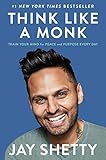
Editors Reads Verdict
Jay Shetty translates his monastic training into a structured self-help framework that has resonated with millions — particularly younger readers seeking purpose-driven alternatives to achievement culture — though the synthesis occasionally prioritizes accessibility over depth.
What We Loved
- Shetty bridges ancient Vedic wisdom and contemporary psychology effectively
- The dharma framework provides a practical tool for purpose discovery
- Accessible and encouraging without being naively positive
- The practical exercises are genuinely implementable in ordinary life
Minor Drawbacks
- Some content mirrors material widely available in mindfulness literature
- The popular media celebrity context sometimes sits awkwardly with the monastic material
- Readers seeking philosophical depth may find the synthesis too simplified
- The book covers a lot of ground at the cost of deep engagement with any single concept
Key Takeaways
- → Dharma — living in accordance with your purpose and values — is the foundation of a meaningful life
- → The mind, like a monk, can be trained: it is not fixed but responsive to practice
- → Service to others is one of the most reliable paths to personal fulfillment
- → Fear and negativity are natural but can be worked with consciously rather than defaulted to
- → Gratitude practiced daily recalibrates the mind toward abundance rather than scarcity
| Author | Jay Shetty |
|---|---|
| Publisher | Simon & Schuster |
| Pages | 352 |
| Published | September 8, 2020 |
| Language | English |
| Genre | Self-Help, Spirituality, Personal Development |
| Difficulty | Beginner |
| Best For | Readers seeking a practical, spiritually grounded self-help framework — particularly younger readers questioning achievement culture and seeking more purpose-driven alternatives. |
How Think Like a Monk Compares
Think Like a Monk at a glance against 3 similar books readers weigh alongside it.
| Book | Author | Rating | Best for |
|---|---|---|---|
| Think Like a Monk (this book) | Jay Shetty | ★ 4.1 | Readers seeking a practical, spiritually grounded self-help framework — |
| Ikigai | Héctor García and Francesc Miralles | ★ 4.1 | Readers interested in Japanese philosophy and the science of longevity, or |
| Man's Search for Meaning | Viktor E. Frankl | ★ 4.8 | Anyone confronting meaninglessness, loss, suffering, or existential questions |
| The Untethered Soul | Michael A. Singer | ★ 4.5 | Readers seeking a practical spiritual framework for working with their own mind |
From Oxford to Ashram to YouTube
Jay Shetty’s personal story — Oxford graduate who left a conventional career path to spend three years as a monk in India, then returned to the West to translate what he had learned into accessible content — is the foundation of his authority in Think Like a Monk. The book is structured as a transmission from that experience: what the monastic tradition taught him about the mind, and how those lessons apply in ordinary contemporary life.
The organizing framework is dharma — the Sanskrit concept of one’s rightful path or purpose, which Shetty uses to mean the intersection of your values, skills, and service to others. Discovering and living according to your dharma is presented as the central task that the book’s practical tools are designed to support.
The Practical Framework
The book is organized into three sections: Let Go (releasing negative patterns — fear, comparison, ego), Grow (developing positive qualities — purpose, routine, mind, gratitude), and Give (turning developed qualities toward service). This structure moves from clearing to building to deploying, and provides a coherent developmental arc that readers find genuinely useful.
The specific practices Shetty recommends — morning routines built around meditation and journaling, the examination of fear triggers, gratitude practices, the deliberate cultivation of the people and environments that support growth — are drawn from both the Vedic tradition and contemporary behavioral science. Shetty is also good on the everyday obstacles that derail such efforts: the comparison trap fueled by social media, the noise of other people’s expectations, the way the “monkey mind” defaults to anxiety and distraction. His framing of negative emotions as signals to be worked with rather than suppressed, and his emphasis on intention over outcome, give the practical advice a steadier psychological foundation than the genre’s usual cheerleading.
The Dharma at the Center
The single idea that most distinguishes Think Like a Monk from generic mindfulness content is its emphasis on dharma. Shetty defines it, accessibly, as the intersection of your natural talents (varna) and the activities that bring you genuine joy and meaning while serving others (seva) — the place where your passion, your skill, and the world’s need overlap. He offers practical tools for excavating it: paying attention to which activities energize rather than drain you, soliciting honest feedback, experimenting rather than over-planning. For readers raised on a relentless message of achievement and status, the reframe is genuinely valuable — it shifts the central life question from “how do I get ahead?” to “what am I actually for?” This purpose-first orientation, more than any single meditation technique, is why the book resonates so strongly with younger readers disillusioned with hustle culture.
A Modern Wellness Phenomenon
Part of the book’s reach comes from the platform behind it. Jay Shetty built an enormous audience through viral motivational videos and his hugely popular On Purpose podcast — among the most-listened-to wellness shows in the world, featuring a parade of celebrity guests — before Think Like a Monk became a number-one bestseller. He occupies an interesting niche: a polished, media-savvy communicator packaging Vedic and Buddhist-adjacent ideas for an Instagram generation, complete with shareable aphorisms and bite-sized practices. For many readers this accessibility is exactly the appeal; the book meets people where they are rather than demanding they study ancient texts.
The Authenticity Questions
That same celebrity packaging is the source of real and legitimate skepticism. Shetty has faced repeated questions about the originality of his content — early in his rise he was criticized for posting inspirational quotes from others without attribution — and, more seriously, a 2024 investigation by The Guardian raised pointed questions about aspects of his backstory and credentials, including details of his time as a monk. These controversies matter, because Shetty’s entire authority rests on the authenticity of his monastic experience, and readers deserve to weigh them. None of it necessarily invalidates the practical advice, much of which is sound and drawn from genuine traditions, but it does warrant approaching the guru persona with healthy critical distance and treating the book as an accessible synthesis rather than the testimony of an unimpeachable sage.
Who This Book Is For
The readers who respond most strongly to Think Like a Monk tend to be those at significant life transitions — post-graduation, mid-career reassessment, recovery from relationship or professional failure — who are questioning whether the conventional success script they were given is actually the right script for them. The dharma framework provides a language for thinking about this question, and the book’s gentle, encouraging tone makes it an unintimidating entry point for people who would never pick up a denser work of philosophy or psychology. Readers already steeped in mindfulness literature, by contrast, will find much of the material familiar, and those seeking real philosophical depth will find the synthesis too simplified.
Verdict
Think Like a Monk is a competent, warm, and genuinely useful introduction to purpose, mindfulness, and intentional living, repackaging time-tested wisdom for a modern, distracted audience. Its three-part arc — let go, grow, give — is a sensible developmental framework, and its practices are easy to start. Its limitations are the limitations of its genre and its author: breadth over depth, and a celebrity-guru framing that invites, and deserves, some skepticism. Take the practical tools, keep your critical faculties engaged about the persona, and it can be a helpful nudge toward a more deliberate life.
Our rating: 4.1/5 — A practical and accessible translation of ancient wisdom for contemporary life, most valuable for readers seeking purpose-oriented alternatives to achievement culture.
Frequently Asked Questions
What is "Think Like a Monk" about?
Drawing on three years spent as a monk in India and a decade synthesizing ancient Vedic wisdom with modern psychology, Jay Shetty offers a practical framework for training the mind for clarity, purpose, and inner peace.
Who should read "Think Like a Monk"?
Readers seeking a practical, spiritually grounded self-help framework — particularly younger readers questioning achievement culture and seeking more purpose-driven alternatives.
What are the key takeaways from "Think Like a Monk"?
Dharma — living in accordance with your purpose and values — is the foundation of a meaningful life The mind, like a monk, can be trained: it is not fixed but responsive to practice Service to others is one of the most reliable paths to personal fulfillment Fear and negativity are natural but can be worked with consciously rather than defaulted to Gratitude practiced daily recalibrates the mind toward abundance rather than scarcity
Is "Think Like a Monk" worth reading?
Jay Shetty translates his monastic training into a structured self-help framework that has resonated with millions — particularly younger readers seeking purpose-driven alternatives to achievement culture — though the synthesis occasionally prioritizes accessibility over depth.
Ready to Read Think Like a Monk?
Check the current price on Amazon.
Check Price on Amazon (paid link)Prices and availability are subject to change. See Amazon for current price.
Review last updated: