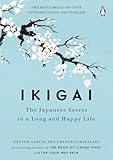
Héctor García and Francesc Miralles are Spanish authors who co-wrote Ikigai, a popular guide to purpose and longevity drawing on Japanese philosophy and the habits of Okinawa's oldest residents.
Héctor García is a Spanish writer based in Japan who has written extensively about Japanese culture, and Francesc Miralles is a Spanish author and therapist. Together they wrote Ikigai, published in Spanish in 2016 and quickly translated into dozens of languages, reaching an enormous global readership drawn to its central concept. Ikigai — roughly translated as “reason for being” — is a Japanese framework for identifying the intersection of what you love, what you’re good at, what the world needs, and what you can be paid for. The book uses this concept as a lens through which to explore the habits and mindsets of the long-lived residents of Okinawa, Japan’s longevity capital.
The book is pleasant and accessible, written in a style that is more conversational guide than rigorous argument. It covers a range of topics — diet, movement, mindfulness, social connection, purpose — that the Okinawan centenaries are said to exemplify, and each is handled briefly and engagingly. For readers encountering ikigai as a concept for the first time, the book provides a clear and appealing introduction.
The criticism most commonly directed at Ikigai is that it is slight — that its central insights are not new, and that the cultural framing can veer into oversimplification of Japanese philosophy for Western consumption. The book is short and the arguments are not developed with great depth. But as an accessible, beautifully produced guide to thinking about purpose and daily life, it delivers a genuine mood of calm reflection and has clearly resonated with millions of readers looking for a framework for meaning.