30 Books to Read in Your 20s That Will Change How You Think (2026)
The books you read in your 20s shape how you see money, relationships, work, and yourself for decades. These 30 choices span personal finance, philosophy, career strategy, and unforgettable fiction.

Your 20s are the decade when the ideas you absorb have the most leverage. The compounding effect is real: a book you read at 24 that shifts how you think about money, work, relationships, or identity will influence thousands of decisions over the next 40 years. A book you read at 54 shapes fewer future decisions by definition.
The list below is deliberately varied. Personal finance sits next to philosophy. Business strategy sits next to memoir. That’s intentional: the people who thrive in their 20s are usually the ones who built a broad enough mental model of the world to navigate its genuine complexity.
All 25 Books at a Glance
| # | Book | Category | Why It Matters in Your 20s |
|---|---|---|---|
| 1 | I Will Teach You to Be Rich | Finance | Start compound growth early |
| 2 | The Psychology of Money | Finance | Time horizons beat income |
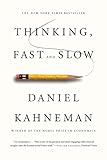
| 3 | Thinking, Fast and Slow | Psychology | Know your cognitive biases |
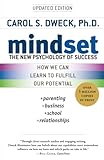
| 4 | Mindset | Psychology | Fixed vs. growth mindset |
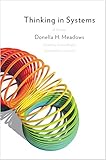
| 5 | Thinking in Systems | Systems | See feedback loops everywhere |
| 6 | Deep Work | Career | Focus is a competitive advantage |
| 7 | Essentialism | Career | Do fewer things, better |
| 8 | Atomic Habits | Career | Systems beat goals |
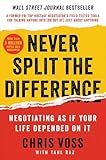
| 9 | Never Split the Difference | Career | Negotiate everything |
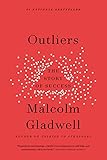
| 10 | Outliers | Career | What success actually requires |
| 11 | The Power of Habit | Career | Understand and redesign your habits |
| 12 | Man’s Search for Meaning | Philosophy | The one question that matters |
| 13 | Meditations | Philosophy | Stoicism for daily life |
| 14 | The Power of Now | Philosophy | Present awareness vs. anxious mind |
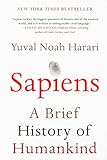
| 15 | Sapiens | World | How civilisation actually works |
| 16 | Educated | Memoir | What education costs and gives |
| 17 | Grit | Psychology | Passion + perseverance = achievement |
| 18 | The Subtle Art of Not Giving a F*ck | Self-Help | Choose what you care about |
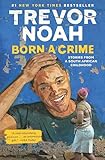
| 19 | Born a Crime | Memoir | Resilience and identity |
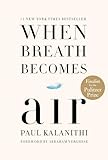
| 20 | When Breath Becomes Air | Memoir | Meaning when time is limited |
| 21 | To Kill a Mockingbird | Fiction | Moral courage and justice |
| 22 | The Alchemist | Fiction | Following your calling |
| 23 | Normal People | Fiction | The complexity of early adult relationships |
| 24 | How to Win Friends and Influence People | Skills | Still the best book on people |
| 25 | The 7 Habits of Highly Effective People | Career | Foundational framework for effectiveness |
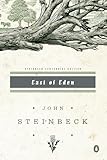
| 26 | East of Eden | Fiction | Steinbeck’s masterwork on free will, legacy, and the nature of good and evil |
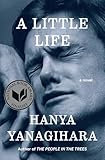
| 27 | A Little Life | Fiction | Devastating but essential — the most emotionally ambitious novel of the 2010s |
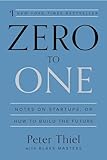
| 28 | Zero to One | Career | Thiel’s contrarian framework for building something genuinely new |
| 29 | Shoe Dog | Memoir | Phil Knight’s account of building Nike — the best business memoir of the decade |
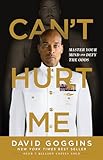
| 30 | Can’t Hurt Me | Self-Help | Goggins on mental toughness and the cost of comfort |
Quick Picks: Best Book for Your Goal
Not sure where to start? Pick by what you need right now:
| I want to… | Read this |
|---|---|
| Get my money sorted before 30 | I Will Teach You to Be Rich |
| Build better daily habits | Atomic Habits |
| Understand my own decision-making | Thinking, Fast and Slow |
| Get more done and stop being distracted | Deep Work |
| Find meaning and direction | Man’s Search for Meaning |
| Stop caring what everyone thinks | The Subtle Art of Not Giving a F*ck |
| Get better at negotiating (salary, rent, anything) | Never Split the Difference |
| Understand the world I inherited | Sapiens |
| Read the novel everyone’s talking about | Normal People |
| Start reading philosophy without pain | Meditations |
Money and Financial Independence
#1 — I Will Teach You to Be Rich by Ramit Sethi
Read this in your 20s while you still have time to take advantage of compound growth over decades. Sethi’s six-week programme — automate savings, invest in index funds, stop debating and start — is the most actionable personal finance advice available. The “conscious spending” framework (cut ruthlessly on things you don’t love, spend freely on things you do) is a better model than generic frugality.
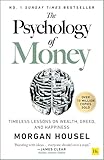
#2 — The Psychology of Money by Morgan Housel
The most important insight this book offers people in their 20s: long enough time horizons make almost everything possible. A person who consistently saves 20% of an average income from age 22 will retire wealthier than most high earners who start at 35. Housel explains why this is true and why most people can’t make themselves act on it.
Thinking Better
#3 — Thinking, Fast and Slow by Daniel Kahneman
Understanding that your brain runs on two systems — one fast and automatic, one slow and deliberate — changes how you evaluate your own decisions. In your 20s, you are making consequential decisions about career, relationships, and money with brains that are systematically biased in specific, predictable ways. Knowing the biases doesn’t eliminate them, but it helps.
#4 — Mindset by Carol Dweck
The distinction between fixed and growth mindsets is the single most useful psychological concept for people in their 20s. A fixed mindset treats ability as innate and failure as evidence of limitation. A growth mindset treats ability as developed through effort and failure as information. Which one you operate from determines how much you are willing to try and how much you learn when things go wrong.
#5 — Thinking in Systems by Donella Meadows
Most people in their 20s are thinking about immediate causes and effects. Systems thinking teaches you to see feedback loops, time delays, and unintended consequences. Once you see them, you cannot unsee them — in organisations, in economies, in relationships, in ecosystems. This is a short book that takes years to fully absorb.
Career and Productivity
#6 — Deep Work by Cal Newport
The ability to concentrate without distraction on cognitively demanding work is becoming both rarer and more economically valuable. Newport’s argument is that the people who develop this ability in their 20s — while most of their peers are optimising for connectivity and shallow busyness — will have a significant and widening advantage. The practical advice on protecting time for concentration is immediately applicable.
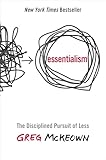
#7 — Essentialism by Greg McKeown
You will be offered an enormous number of opportunities, projects, and obligations in your 20s. Most of them are not worth your time. Essentialism is the discipline of figuring out what is truly essential — to you specifically, not in general — and protecting it aggressively. This is harder than it sounds and more valuable than almost any productivity hack.
#8 — Atomic Habits by James Clear
Building the right habits in your 20s is the most important career move most people never think about. Clear’s four laws of behaviour change are simple enough to actually use. The insight that you do not rise to the level of your goals but fall to the level of your systems is the one sentence from this book that stays with readers for decades.
#9 — Never Split the Difference by Chris Voss
Negotiation is a skill that most people in their 20s believe applies only to hostage situations or car purchases. It doesn’t. Voss’s FBI-developed framework — tactical empathy, calibrated questions, mirroring — applies to salary conversations, apartment negotiations, and any situation where two parties want different things. Reading this book before your first salary negotiation is worth thousands of dollars.
Philosophy and Meaning
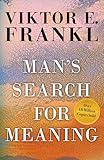
#10 — Man’s Search for Meaning by Viktor Frankl
Frankl was a psychiatrist who survived Auschwitz and developed logotherapy — the idea that the primary human drive is not pleasure (Freud) or power (Adler) but meaning. Written in nine days after liberation, it is one of the most important books of the 20th century. For people in their 20s wondering what they’re supposed to be doing with their lives, Frankl’s answer is both demanding and clarifying.
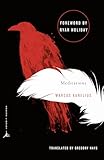
#11 — Meditations by Marcus Aurelius
The personal journal of a Roman emperor who also happened to be one of the most influential Stoic philosophers. Marcus wrote Meditations for himself, not for publication — which gives it an unusual quality of directness. The recurring themes — that you control your response to events but not the events themselves, that death is inevitable and therefore should not be feared, that other people’s behaviour is not your responsibility — are as applicable now as they were in 170 AD.
#12 — The Power of Now by Eckhart Tolle
Whatever your scepticism about spiritual books, The Power of Now offers something specifically useful in your 20s: a vocabulary for noticing when your mind is generating anxiety about the future or regret about the past rather than engaging with what is actually happening now. That distinction — between the thinking mind and present awareness — is practically valuable regardless of your broader worldview.
Understanding the World
#13 — Sapiens: A Brief History of Humankind by Yuval Noah Harari
The most important context-setting book on this list. Harari’s account of how Homo sapiens went from an unremarkable African ape to a species that has reshaped the planet raises questions that every educated person should engage with: What makes human cooperation possible at scale? What does “progress” actually mean? Where are we going? Sapiens gives you a framework for thinking about civilisation that you will use for the rest of your life.
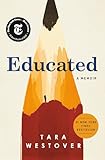
#14 — Educated by Tara Westover
Westover’s memoir of growing up in a survivalist family in rural Idaho — without school, without medical care, without most of the structures most people take for granted — and ultimately earning a PhD from Cambridge is one of the most powerful books about education and self-determination published in the last decade. It reframes what education is for and what it costs.
Self-Knowledge and Resilience
#15 — Grit by Angela Duckworth
Duckworth’s research on sustained effort toward long-term goals has one central message for people in their 20s: the most important trait for long-term achievement is not talent, intelligence, or even work ethic alone — it is the combination of passion and perseverance over time. The ability to sustain effort through setbacks is learnable, and this book explains how.
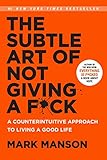
#16 — The Subtle Art of Not Giving a F*ck by Mark Manson
Manson’s counter-intuitive message — that the key to a good life is not caring about more things but caring about fewer, better things — cuts against most self-help advice. For people in their 20s absorbing pressure from every direction about what to value and who to be, the permission to narrow your attention to what actually matters is genuinely liberating.
#17 — Born a Crime by Trevor Noah
Noah’s memoir of growing up mixed-race in apartheid and post-apartheid South Africa is funny, harrowing, and ultimately about the relationship between identity, language, and belonging. It is also, quietly, a book about resilience and the ability to find perspective in impossible circumstances. Among the best memoirs published in the last decade.
Timeless Fiction
#18 — To Kill a Mockingbird by Harper Lee
Scout Finch’s first-person narration of her father’s defence of a falsely accused Black man in 1930s Alabama remains one of the most powerful novels about moral courage, childhood, and justice in the American literary canon. The lessons it contains — about what it costs to do the right thing, about seeing the world from other perspectives — are not lessons that go out of date.
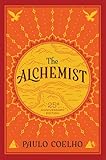
#19 — The Alchemist by Paulo Coelho
Coelho’s fable about a young shepherd who travels from Spain to Egypt in search of treasure is either a profound book about following your calling or a simple parable dressed up as something more — depending on when you read it. In your 20s, when questions about what your “Personal Legend” might be are genuinely pressing, it tends to land as the former.
#20 — How to Win Friends and Influence People by Dale Carnegie
Published in 1936 and as relevant now as it was then: how to make people feel valued, how to listen rather than wait to talk, how to disagree without alienating. Carnegie’s principles are so deeply internalised by successful people that they often don’t know where they learned them. Reading the source in your 20s is a significant social advantage.
Additional Essential Reads
#21 — The 7 Habits of Highly Effective People by Stephen Covey
Covey’s framework predates most modern productivity literature and remains among the most useful. The distinction between urgent and important — the “time matrix” — is the most practical tool this book offers, and the concept of beginning with the end in mind gives young people a structure for intentional career and life decisions before circumstances dictate them instead. The habits are genuinely independent: you can absorb and apply them one at a time.
#22 — Outliers by Malcolm Gladwell
Gladwell’s study of high achievement asks the uncomfortable question: what actually produces exceptional success? His answers — timing, cultural legacy, the 10,000-hour rule, and structural advantages that compound — challenge the meritocratic myth that talent and hard work alone determine outcomes. Reading this in your 20s gives you a more accurate model of how success really works, which is more useful than a flattering one.
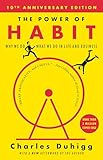
#23 — The Power of Habit by Charles Duhigg
Where Atomic Habits gives you the practical system, The Power of Habit gives you the underlying science. Duhigg’s exploration of the habit loop — cue, routine, reward — and how to change it at the individual, organisational, and societal level is the foundation that makes all other habit advice make sense. Understanding why habits form is the prerequisite for changing them with any reliability.
#24 — When Breath Becomes Air by Paul Kalanithi
Neurosurgeon Paul Kalanithi wrote this memoir while dying of lung cancer at 36 — while still training residents and writing philosophy. It is a book about what makes a life worth living, written by someone confronting that question under conditions of absolute urgency. For people in their 20s who are figuring out what to work toward and why, Kalanithi’s answer is both moving and specific. Few books are this honest about meaning.
#25 — Normal People by Sally Rooney
Rooney’s novel about the on-and-off relationship between two people from different social backgrounds in Ireland — from secondary school through university — is the most accurate fictional portrait of early adulthood and its particular confusions published in the 2010s. The book is about class, communication failure, and the way two people can be completely unsuited and completely necessary to each other simultaneously. Reading it in your 20s while you are living through similar dynamics is a different experience to reading it later.
Five More Essential Reads
#26 — East of Eden by John Steinbeck
Steinbeck’s masterwork and the novel he considered his life’s work. The Trask and Hamilton families across three generations in California’s Salinas Valley, organised around the Cain and Abel story and Steinbeck’s meditation on the Hebrew word timshel — “thou mayest” — as the key to human free will. It is one of the few novels that genuinely earns the word “epic.” In your 20s, when questions about who you are going to be are live and pressing, Steinbeck’s argument that character is chosen rather than determined lands differently than it will at any other age.
#27 — A Little Life by Hanya Yanagihara
A content warning is appropriate: A Little Life is the most emotionally demanding novel on this list, dealing with severe childhood trauma and its lifelong consequences. It is also, many readers believe, the most powerful novel published in English in the 2010s. The friendship between Jude, Willem, JB, and Malcolm — traced from their college years through decades of adult life — is rendered with extraordinary care and specificity. Read it when you are ready for it. It will not leave you.
#28 — Zero to One by Peter Thiel
Thiel’s contrarian argument is simple: going from 0 to 1 (creating something new) is harder and more valuable than going from 1 to n (copying what works). His framework for thinking about competition, monopoly, and technological progress cuts against most conventional business wisdom. You do not have to agree with Thiel’s politics or worldview to find the ideas clarifying. For anyone building a career in technology, startups, or any field where differentiation matters, this is the intellectual framework most early-career professionals never encounter.
#29 — Shoe Dog by Phil Knight
Phil Knight’s memoir of building Nike from a handshake deal with a Japanese shoe company to one of the most recognised brands in the world is the best business memoir published in the last decade. It is honest about failure, near-bankruptcy, and the specific dysfunction of running a company you are in love with. The voice is confessional and the business drama is genuinely tense. Most business memoirs are written from safety; Shoe Dog was written close enough to the uncertainty that you can still feel it.
#30 — Can’t Hurt Me by David Goggins
David Goggins was overweight, broke, and had no direction at 24. He became a Navy SEAL, a record-holding ultramarathon runner, and one of the most recognisable figures in extreme endurance sport. Can’t Hurt Me is his account of how — and the answer is not comfortable. Goggins’ argument is that most people operate at around 40% of their capacity, and that the gap between 40% and 100% is paid for in suffering that most people choose not to endure. Whether you accept his philosophy entirely or partially, the accountability mirror exercise and the callusing-the-mind framework are practically useful for anyone who finds themselves avoiding difficult things.
Reading by Age: What to Prioritise When
Early 20s (18–24): Build the Foundation
Prioritise foundational books with the longest payback horizon: I Will Teach You to Be Rich to start compound growth before 25, Atomic Habits to build the systems that shape your career, Deep Work to develop focus while most of your peers optimise for distraction, and Mindset to reframe failure as information rather than evidence of limitation.
Mid 20s (24–27): Expand the Mental Model
Once your foundations are in place, widen your frame of reference: Sapiens, Thinking, Fast and Slow, Man’s Search for Meaning, and Thinking in Systems. These books change what questions you ask — which is more valuable than any specific answer.
Late 20s (27–29): Depth Before 30
Before turning 30, read at least one challenging novel — Normal People, When Breath Becomes Air, or To Kill a Mockingbird. Read Never Split the Difference before any significant negotiation. Read Outliers to audit your assumptions about how success actually works.
A Reading Schedule
You don’t need to read all 30 books immediately. A useful approach: one book per month means you finish this list in two and a half years, while leaving time to read whatever else calls to you. The mix of genres is intentional — rotate between practical (finance, productivity) and reflective (philosophy, fiction) to avoid saturation in any one direction.
What to Read Next
Our books to read in your 30s guide covers the decade following this one — when the questions shift from building to consolidating. For the decade after that, our books to read in your 40s covers midlife reading on time, mortality, and meaning.
For deeper dives into the individual books on this list:
- Books Like Atomic Habits — 15 habit and self-improvement books for after you finish Clear
- Books Like Deep Work — focus, concentration, and doing your best work
- Books Like Thinking, Fast and Slow — more behavioural economics and cognitive science
- Books Like Normal People — literary fiction about love and early adulthood
- Best Self-Help Books of All Time — the definitive ranked list
Affiliate disclosure: Links to Amazon on this page are affiliate links. We earn a small commission at no extra cost to you. This does not influence our editorial recommendations.
Frequently Asked Questions
What books should you read in your 20s?
The most important books to read in your 20s are Atomic Habits by James Clear for building the habits that compound over a lifetime, The Psychology of Money by Morgan Housel for foundational financial thinking, and a novel that expands your sense of what life can look like. The books you choose in your 20s shape how you think about career, relationships, and money for decades.
What non-fiction books are essential in your 20s?
The most essential non-fiction for your 20s is I Will Teach You to Be Rich by Ramit Sethi for personal finance, Atomic Habits by James Clear for habit formation, and Deep Work by Cal Newport for career building. Add Man's Search for Meaning by Viktor Frankl for perspective and How to Win Friends and Influence People by Dale Carnegie for relationships.
What novels should you read before you turn 30?
The novels most recommended for your 20s are Normal People by Sally Rooney for its portrait of early adulthood relationships, A Little Life by Hanya Yanagihara for emotional depth (if you can handle intensity), and East of Eden by John Steinbeck for its meditation on free will and legacy. One Hundred Years of Solitude by Garcia Marquez is the novel most people wish they had read younger.
What finance or career books have the most impact in your 20s?
The finance and career books with the most impact in your 20s are I Will Teach You to Be Rich (Sethi), The Millionaire Next Door (Stanley), Zero to One (Thiel), and So Good They Can't Ignore You by Cal Newport. Starting these early means the habits and frameworks they teach have decades to compound.
What books should I read in my early 20s?
In your early 20s (18–24), prioritise books that build foundational systems: I Will Teach You to Be Rich for money, Atomic Habits for daily habits, Deep Work for career focus, and Mindset for how you approach learning and failure. These four pay the longest dividends when started before 25.
What books should I read before turning 30?
Before turning 30, read I Will Teach You to Be Rich to lock in savings habits, Man's Search for Meaning to clarify what you are working toward, Thinking Fast and Slow to understand your own decision-making, Never Split the Difference before any major negotiation, and at least one challenging novel — Normal People, When Breath Becomes Air, or East of Eden.
What books should women read in their 20s?
Women in their 20s will get the most from Educated by Tara Westover (education, identity, self-determination), Born a Crime by Trevor Noah (resilience and belonging), Normal People by Sally Rooney (early adult relationships), Daring Greatly by Brené Brown (shame and vulnerability), and I Will Teach You to Be Rich by Ramit Sethi, which is especially valuable for women who face a larger financial penalty from delaying retirement savings.
What are the best self-improvement books for your 20s?
The best self-improvement books for your 20s are Atomic Habits (building systems that compound), Deep Work (developing focus as a career advantage), Mindset (understanding how your beliefs about ability shape your outcomes), Can't Hurt Me by David Goggins (mental toughness), and Grit by Angela Duckworth (the role of sustained effort in long-term achievement).