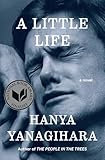
Editors Reads Verdict
A harrowing, devastating, and profoundly beautiful novel about trauma, friendship, and the limits of love — Yanagihara's maximalist approach to suffering produces one of the most intense reading experiences in contemporary literary fiction.
What We Loved
- Yanagihara's prose achieves sustained lyrical intensity across 700 pages
- Jude St. Francis is one of contemporary fiction's most indelible characters
- The male friendship at the novel's center is rendered with extraordinary tenderness
- Unflinching in its exploration of how trauma shapes identity over decades
Minor Drawbacks
- The relentlessness of suffering can feel manipulative to some readers
- Secondary characters occasionally exist primarily to reflect Jude's suffering
- The deliberately vague temporal and geographic setting frustrates some readers
- Demands significant emotional resilience from readers
Key Takeaways
- → Love does not automatically heal trauma, and expecting it to is its own cruelty
- → Shame is trauma's most durable secondary wound
- → Friendship can sustain lives that romantic love cannot reach
- → The body remembers what the mind tries to suppress
- → There is no redemption arc that erases certain kinds of suffering
| Author | Hanya Yanagihara |
|---|---|
| Publisher | Doubleday |
| Pages | 720 |
| Published | March 10, 2015 |
| Language | English |
| Genre | Literary Fiction |
| Difficulty | Advanced |
| Best For | Literary fiction readers prepared for an emotionally demanding novel about trauma, friendship, and grief that does not offer conventional consolation. |
How A Little Life Compares
A Little Life at a glance against 3 similar books readers weigh alongside it.
| Book | Author | Rating | Best for |
|---|---|---|---|
| A Little Life (this book) | Hanya Yanagihara | ★ 4.4 | Literary fiction readers prepared for an emotionally demanding novel about |
| Educated | Tara Westover | ★ 4.7 | Anyone interested in memoir, education, or the psychology of escaping |
| Normal People | Sally Rooney | ★ 4.1 | Literary fiction readers interested in contemporary Irish society, millennial |
| The Goldfinch | Donna Tartt | ★ 4.2 | Readers who want literary fiction of genuine ambition, are comfortable with |
A Novel About the Damage We Carry
A Little Life announces its intentions with its title: this is a small, particular life, not an epic or a parable. Jude St. Francis is not a symbol. He’s a man who was catastrophically hurt as a child and who carries that hurt — in his body, in his habits, in his elaborate systems for keeping people at a safe distance — across the entirety of his life.
Hanya Yanagihara’s second novel is one of the most debated literary books of the twenty-first century. Its defenders see a work of extraordinary emotional ambition that refuses the comforting narratives modern culture imposes on trauma. Its critics find its orchestrated suffering gratuitous, its geography and temporality deliberately obscured to prevent readers from grounding the story in reality and questioning it.
The Architecture of Friendship
The novel begins with four friends — Willem, JB, Malcolm, and Jude — navigating New York City in young adulthood. For the first hundred pages, it resembles a more lyrical, more painful version of the New York literary novel. Then it pivots. Jude’s backstory begins to emerge — not all at once, but in carefully metered fragments — and the book’s true subject asserts itself.
What Yanagihara understands about male friendship — particularly the friendship between Jude and Willem — is that it can achieve forms of intimacy that romantic love often cannot. The men in this novel express love through acts of service, through sustained presence, through refusing to be driven away even when Jude’s self-destruction makes proximity agonizing.
The Question of Extremity
The novel’s central controversy is whether its accumulation of horrors constitutes artistic truth or emotional exploitation. Yanagihara herself has said she wanted to write a novel that didn’t flinch, that followed trauma’s logic wherever it led. Readers who surrender to that logic find the experience transformative. Readers who can’t will find it exhausting or manipulative.
Neither reading is wrong. A Little Life is a maximalist argument for a particular kind of fiction — one that believes the only honest response to certain suffering is to refuse to look away from it.
Unarguable in Its Craft
Whatever one thinks of Yanagihara’s choices, the prose is remarkable — sustained at a pitch of intensity across 700 pages without collapsing into melodrama. The depictions of Jude’s self-harm are clinical and distressing in exactly the right proportion. And the final pages are among the most devastating in contemporary fiction.
Our rating: 4.4/5 — A polarizing, unforgettable, and extraordinarily crafted novel that demands everything from readers and, for those who can give it, returns something rare.
A Deliberately Extreme Novel
A Little Life divides readers more sharply than almost any literary novel of its era, and the division is built into its design. What begins as the story of four friends making their way in New York narrows relentlessly onto one of them, Jude, and the catalogue of trauma in his past and self-harm in his present, rendered at a length and intensity that some readers find overwhelming and others find unbearable. Yanagihara has spoken of deliberately pushing past realism into a kind of fairy tale of suffering, and the novel makes more sense read that way — not as a plausible case history but as a heightened, almost operatic exploration of whether love can ever be enough to repair damage done early and deep.
Who Should Read It, and How
This is a book to approach with open eyes: it deals graphically and repeatedly with abuse, self-harm, and despair, and it does not offer the redemptive arc that readers of trauma narratives often expect. Its admirers find it one of the most emotionally immersive novels they have ever read — a book that makes the reader love its characters so completely that their suffering becomes the reader’s own. Its critics find the relentlessness manipulative. Both responses are legitimate, and which you have may depend as much on what you bring to it as on the book itself. What is not in dispute is the depth of its portrait of friendship over decades, which is the warm centre around which all the darkness turns. Read it when you have the emotional room for it, and not before.
Why It Provokes Such Strong Reactions
No recent literary novel has generated quite the same split between devotion and recoil, and that division is the truest thing to know before beginning. Readers who surrender to it describe an experience unlike any other in contemporary fiction — a book that earns overwhelming love for its characters and then makes their pain almost unbearable to witness. Readers who resist it find the accumulation of suffering excessive, even punishing. Both camps are responding to the same deliberate design, a novel that refuses moderation on principle. What no one disputes is its ambition and its portrait of male friendship sustained over decades, which is why, for all the controversy, it has become one of the most discussed novels of its generation.
Reading Guides
- Books Like A Little Life: 11 Novels That Devastate and Endure
- Books Like The Midnight Library: 11 Novels About Second Chances and Unlived Lives
- Books Like The Secret History: 11 Dark Academia Reads for Fans of Donna Tartt
- Books Like 4 3 2 1: 11 Novels That Hold Multiple Lives Simultaneously
- Books Like The Song of Achilles: 11 Reads for the Devastated
- Books Like Tomorrow and Tomorrow and Tomorrow: 11 Novels About Creativity, Friendship, and Making Something That Lasts
- Books Like Normal People: 11 Literary Novels About Love, Class, and Missing Each Other
Frequently Asked Questions
What is "A Little Life" about?
Four college friends build lives in New York City over decades, but the story centers on Jude St. Francis, whose horrific childhood secrets gradually emerge.
Who should read "A Little Life"?
Literary fiction readers prepared for an emotionally demanding novel about trauma, friendship, and grief that does not offer conventional consolation.
What are the key takeaways from "A Little Life"?
Love does not automatically heal trauma, and expecting it to is its own cruelty Shame is trauma's most durable secondary wound Friendship can sustain lives that romantic love cannot reach The body remembers what the mind tries to suppress There is no redemption arc that erases certain kinds of suffering
Is "A Little Life" worth reading?
A harrowing, devastating, and profoundly beautiful novel about trauma, friendship, and the limits of love — Yanagihara's maximalist approach to suffering produces one of the most intense reading experiences in contemporary literary fiction.
Ready to Read A Little Life?
Check the current price on Amazon.
Check Price on Amazon (paid link)Prices and availability are subject to change. See Amazon for current price.
Review last updated: