Authors Like Kazuo Ishiguro: 7 Literary Writers
Authors like Kazuo Ishiguro for fans of Never Let Me Go and The Remains of the Day — Ian McEwan, Julian Barnes, Haruki Murakami, Marilynne Robinson, and more, with where to start.
Kazuo Ishiguro won the Nobel Prize for fiction of extraordinary restraint and quiet devastation. Whether in the buried regret of a butler in The Remains of the Day, the gentle horror of Never Let Me Go, or the strange tenderness of Klara and the Sun, his narrators reveal themselves slowly, holding profound emotion just beneath a calm surface until it quietly breaks the reader. If you have read your way through Ishiguro and want more of that controlled, memory-haunted literary power, these seven authors deliver different parts of his gift.
Below are the writers who each capture a key element of the Ishiguro experience, with a starting point for each.
What Makes a Kazuo Ishiguro Read-Alike
Ishiguro’s power comes from a few rare qualities. There is the restraint — emotion withheld and implied rather than stated. There is the unreliable narrator, slowly revealing what they cannot quite admit. There is the preoccupation with memory and the past, and how we deceive ourselves about both. And there is the quiet devastation, the way his calm prose detonates softly at the end. Most read-alikes lean into one or two of these, so the best pick depends on which one moves you most.
It also helps to know whether you read Ishiguro for the stillness or the structure. Some of his books are quiet and inward; others (The Buried Giant, Never Let Me Go) bend genre and form. The authors below split the same way — Robinson and Barnes on the still, interior side, Mitchell and Whitehead on the ambitious, formally inventive side, with McEwan, Murakami, and Yanagihara bridging the two.
Ian McEwan — The Controlled Master
For Ishiguro’s precise, withholding prose and slow-building tension, Ian McEwan is the closest British match. Atonement turns a child’s misunderstanding into a lifelong reckoning with guilt and the unreliability of memory — themes at the heart of Ishiguro’s work, executed with the same exacting control. Essential for readers who love the craft.
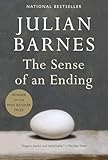
Julian Barnes — The Memory Stylist
Julian Barnes shares Ishiguro’s elegant restraint and his fascination with how memory deceives. The Sense of an Ending, his Booker winner, is a slim, devastating novel about a man forced to reckon with a past he misremembered. Quiet, precise, and quietly shattering — pure Ishiguro territory.
Haruki Murakami — The Dreamlike Melancholy
Haruki Murakami shares Ishiguro’s melancholy and his atmosphere of gentle unease. Kafka on the Shore blends the everyday with the surreal in a story suffused with loneliness and longing. For Ishiguro fans drawn to the dreamlike, uncertain mood of The Buried Giant, Murakami is a natural fit — see our authors like Haruki Murakami guide.
Marilynne Robinson — The Quiet Grace
Marilynne Robinson matches Ishiguro’s stillness and his capacity for quiet transcendence. Gilead, a dying minister’s letter to his young son, is a Pulitzer-winning novel of luminous restraint. For readers who love the calm, accumulating emotional power of Ishiguro’s best, Robinson is the one.
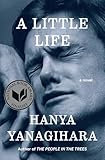
Hanya Yanagihara — The Emotional Plunge
Hanya Yanagihara takes Ishiguro’s emotional undertow and makes it a tidal wave. A Little Life is a harrowing, unforgettable novel of friendship and trauma. More overwhelming than Ishiguro’s restraint, but for readers who want the feeling pushed to its limit, it is essential.
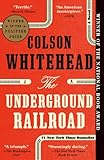
Colson Whitehead — The Formal Ambition
Colson Whitehead shares Ishiguro’s willingness to bend genre toward profound ends. The Underground Railroad, his Pulitzer winner, reimagines history with the same blend of restraint and devastation. For Ishiguro fans who loved how Never Let Me Go used speculative form to deepen its emotion.
David Mitchell — The Structural Innovator
David Mitchell brings the genre-blending ambition of Ishiguro’s more experimental work. Cloud Atlas nests six stories across centuries into a single resonant whole. For readers who love how Ishiguro reinvents form from book to book, Mitchell is a thrilling next step.
Reading Around Ishiguro
It is worth being honest about what makes Ishiguro hard to replace: very few writers are willing to withhold as much as he does, to trust a quiet, unreliable voice to carry an entire novel, and to let the devastation arrive only in retrospect. The authors here each share part of that discipline rather than all of it. McEwan matches the control but applies more overt tension; Barnes and Robinson share the stillness but not the genre-bending; Murakami shares the melancholy but adds the surreal. That is part of the pleasure of reading around him — each writer shows you a different facet of what Ishiguro fuses into a single, unmistakable whole. A practical note, too: several of these novels are Booker or Pulitzer winners that reward slow, attentive reading rather than speed, so save them for when you can give them your full attention. Read that way, this is some of the most quietly powerful fiction in the language, and Ishiguro is the ideal gateway to all of it.
How to Choose Your Next Read
If you read Ishiguro for the controlled prose, start with Ian McEwan. For memory and restraint, read Julian Barnes. For dreamlike melancholy, go to Haruki Murakami. For quiet grace, read Marilynne Robinson. For an emotional plunge, read Hanya Yanagihara. And for formal ambition, read Colson Whitehead or David Mitchell.
What unites them is Ishiguro’s conviction that the deepest feelings are the ones we cannot say aloud. For more, our best Booker Prize novels and best contemporary literary fiction roundups gather many more. Start with whichever Ishiguro quality you would miss most, and a shelf of the finest literary fiction opens before you.
Frequently Asked Questions
Who writes books like Kazuo Ishiguro?
The closest authors to Kazuo Ishiguro are literary novelists who work with memory, restraint, and quiet devastation. Ian McEwan and Julian Barnes are his nearest British contemporaries in elegant, controlled prose about guilt and the past. Haruki Murakami shares his dreamlike melancholy, Marilynne Robinson his stillness and grace, and Hanya Yanagihara, Colson Whitehead, and David Mitchell his emotional and structural ambition.
What should I read after Never Let Me Go?
After Never Let Me Go, try Ian McEwan's Atonement and Julian Barnes's The Sense of an Ending, both built on memory, regret, and an unreliable narrator. For the same quiet, devastating restraint, Marilynne Robinson's Gilead is a perfect next read, while Hanya Yanagihara's A Little Life offers a more harrowing emotional plunge.
Why is Kazuo Ishiguro's writing so restrained?
Ishiguro's power comes from what his narrators leave unsaid — the emotion held just beneath a calm, controlled surface until it quietly overwhelms. Julian Barnes and Marilynne Robinson share that restraint, while Ian McEwan builds similar tension through precise, withholding prose, making them the closest stylistic matches.